The Mt Kenya Times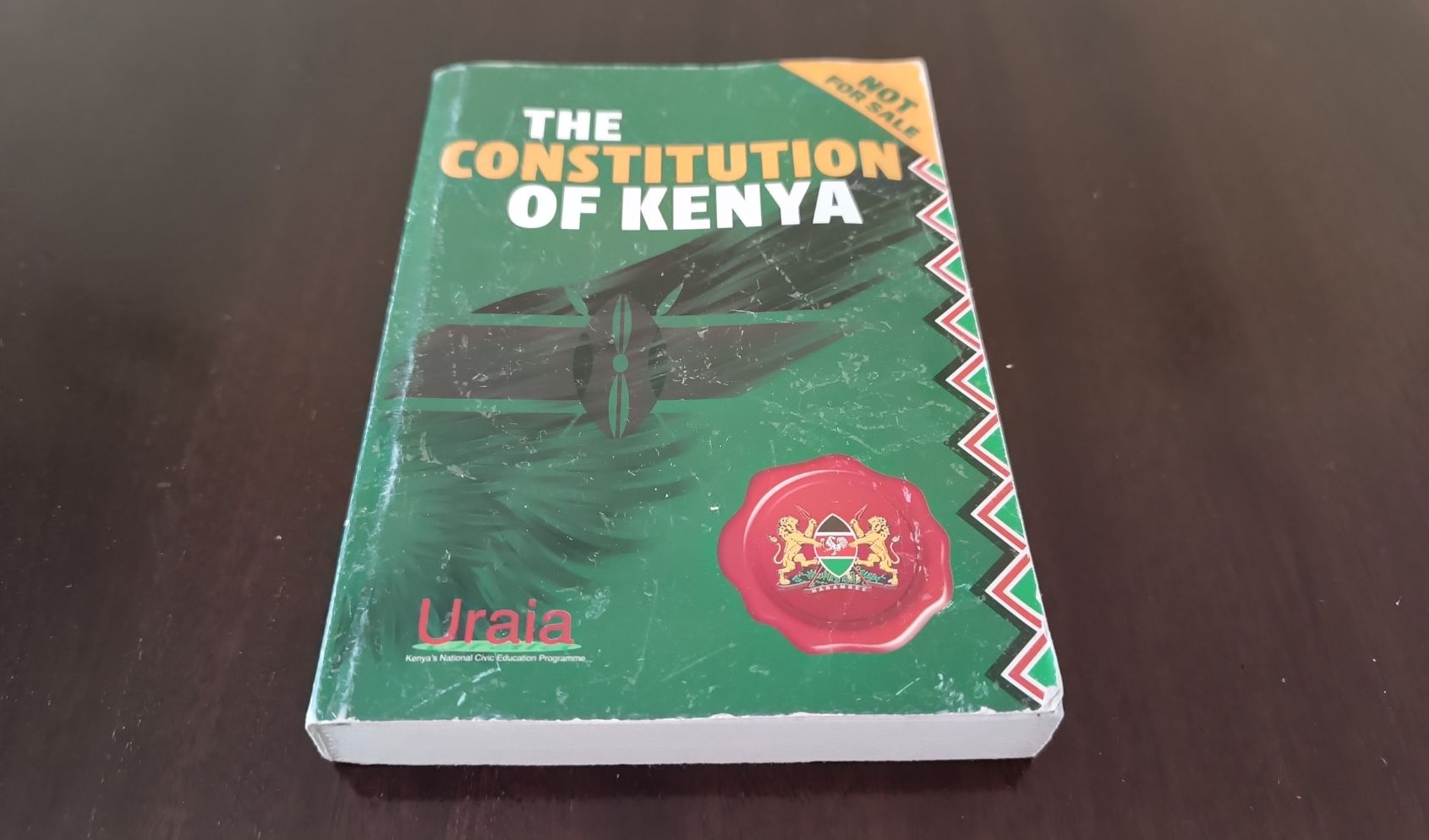
Sixteen years of political experience have exposed gaps that neither BBI nor NADCO has fully closed
By Dennis Wendo
Kenya’s constitutional journey has reached a point where an honest national conversation is overdue — not about whether the 2010 Constitution should be discarded, but about whether it has sufficiently responded to the political and governance realities that have shaped the country over the past sixteen years.
This is not a call to replace the Constitution or reopen every provision. It is about examining what has worked, what remains unfinished and whether experience has exposed areas requiring targeted constitutional and legislative reform rather than continued improvisation through political agreements.
The journey from the Building Bridges Initiative to the National Dialogue Committee and, more recently, the Kenya Kwanza-ODM framework agreement demonstrates that many concerns surrounding Kenya’s political settlement remain unresolved. Each process has revisited broadly similar questions. Each has fallen short of producing durable institutional answers.
The BBI process brought national attention to questions of inclusivity, representation and the consequences of intensely competitive presidential elections. Although the proposed amendments were halted by the courts, the underlying questions of national cohesion and political inclusion did not disappear. NADCO subsequently revisited several of those issues, among them electoral justice, IEBC reforms, the two-thirds gender principle, parliamentary strengthening and institutionalisation of the opposition. The March 2025 Kenya Kwanza-ODM framework further committed the parties to implementing NADCO recommendations while promoting inclusivity, strengthening devolution and addressing corruption and public accountability. It was, in many respects, a restatement of commitments made before.
Taken together, these developments point to a persistent national concern. Kenya has repeatedly attempted to address questions of inclusion through post-election political negotiations rather than through durable institutional arrangements. The pattern is familiar and its costs are real.
The presidential system produces a clear electoral winner, as it should in a competitive democracy. However, the concentration of power attached to the presidency can create the perception that winning State House provides disproportionate control over national opportunities, while citizens who voted differently are left waiting for another electoral cycle. This concern becomes more acute when elections are decided by narrow margins. Treating such contests simply as events in which one side wins and the other loses can deepen divisions along ethnic, regional and economic lines.
This is the deeper meaning behind winner takes all. It is not simply about who becomes president. It is about whether political competition can coexist with a genuine sense of belonging and equitable opportunity for citizens and communities that voted differently.
The Constitution already provides important safeguards. Devolution has redistributed political authority and resources. The Bill of Rights protects citizens regardless of political affiliation, while independent commissions provide institutional checks. Equality, participation, inclusivity and protection of marginalised groups are established as national values. The challenge has consistently been implementation. The two-thirds gender principle remains unachieved across successive parliaments. Representation of marginalised groups falls short of constitutional aspiration. Public confidence in electoral institutions remains fragile — a serious concern as Kenya approaches 2027.
Electoral credibility is central to national stability. Where citizens do not trust the electoral process, an election becomes more than a contest for office. It becomes a test of institutional legitimacy, and when institutions fail that test, the consequences extend well beyond the ballot.
Kenya must also reconsider the place of opposition politics. A democracy cannot be reduced to government alone. Effective opposition is essential to accountability, and Parliament must have sufficient independence to scrutinise the executive without political consequence. The NADCO proposal for an institutionalised office of the Leader of the Official Opposition is part of a wider debate about ensuring political competition continues constructively after election day through oversight, not perpetual confrontation.
Equity must remain central to this conversation. Kenya carries significant historical and regional inequalities. Equality before the law does not automatically produce equitable outcomes. Inclusion must extend beyond ethnic and regional balancing to encompass women, youth, persons with disabilities and communities historically excluded from national opportunity. Political inclusion and economic equity cannot be separated. A citizen who sees no improvement in economic opportunity experiences exclusion even when formally represented. The same applies to young Kenyans who vote actively but remain absent from meaningful decision-making.
Kenya must also draw lessons from BBI. Constitutional reform should never become an instrument of political convenience or elite negotiation. Any future process must be citizen-led, evidence-based, transparent and firmly anchored in constitutional principles. There is equally no justification for amending the Constitution every time the country encounters a political disagreement. Many persistent challenges can be addressed through better implementation, targeted legislation, stronger institutions and enforcement of existing law.
The starting point should be a comprehensive constitutional audit — a systematic assessment of the 2010 framework over sixteen years that distinguishes between provisions requiring better implementation, those needing legislative intervention and those where experience has revealed a genuine constitutional gap. Such an approach would prevent reform from becoming a political shopping list and focus national attention on areas that recur across transitions: electoral justice, institutional independence, gender inclusion, devolution, parliamentary oversight, campaign financing and protection of marginalised communities.
As the country moves toward 2027, this conversation must not become an electoral weapon or a vehicle for political advantage. Nor should the proximity of an election silence legitimate discussion of long-term institutional questions.
The central objective is straightforward. Kenya needs a democratic system in which elections determine who governs, but do not determine who belongs. Winning should confer a mandate to govern within constitutional limits. Losing should not translate into exclusion. Opposition should be a legitimate constitutional role, not a temporary condition awaiting the next election.
The country may not need a new Constitution. But after sixteen years, it is reasonable and responsible to consider whether the 2010 Constitution requires carefully targeted evolution to close persistent gaps in inclusion, equity, electoral confidence and institutional accountability. The goal is not to eliminate winners and losers. It is to ensure that whoever wins governs within constitutional limits, whoever loses remains a legitimate participant in the Republic, and every Kenyan retains an equal stake in the nation regardless of how they voted.
That is the constitutional conversation Kenya should be prepared to have.
Similar Posts by The Mt Kenya Times:
- Gachagua’s Dallas reckoning: prophecies, intelligence wars and a challenge to Ruto from Texas
- Permagardens take root after three dry years in coastal Kenya’s Mbuguni region
- Did Raila win in 2022? Ruto and Uhuru reopen an old debate
- Dolly Parton, Múgithi and the soundtrack of Kikuyu homes
- The study of speech culture at the societal level
About the Author