
By: Muhammad Adnan Gujjar and Tajalla Qureshi

Freedom means free will, freedom of opinion, freedom of expression, thinking, and doing without any barriers! Faiz Ahmed Faiz eloquently captured the essence of freedom in his thought-provoking poem ‘Dawn of Freedom’.
These tarnished rays, this night-smudged light –
This is not that Dawn for which, ravished with freedom,
we had set out in sheer longing,
so sure that somewhere in its desert the sky harbored
a final haven for the stars, and we would find it.
We had no doubt that night’s vagrant wave would stray
towards the shore,
that the heart rocked with sorrow would at last reach its port.

Friends, our blood shaped its mysterious roads.
When hands tugged at our sleeves, enticing us to stay,
and from wondrous chambers Sirens cried out
with their beguiling arms, with their bare bodies,
our eyes remained fixed on that beckoning Dawn,
forever vivid in her muslins of transparent light.
Our blood was young — what could hold us back?
Now listen to the terrible rampant lie:
Light has forever been severed from the Dark;
our feet, it is heard, are now one with their goal.
See our leaders polish their manner clean of our suffering:
Indeed, we must confess only to bliss;
we must surrender any utterance for the Beloved — all yearning
is outlawed.
But the heart, the eye, the yet deeper heart –
Still ablaze for the Beloved, their turmoil shines.
In the lantern by the road the flame is stalled for news:
Did the morning breeze ever come? Where has it gone?
Night weighs us down, it still weighs us down.
Friends, come away from this false light.
Come, we must search for that promised Dawn.
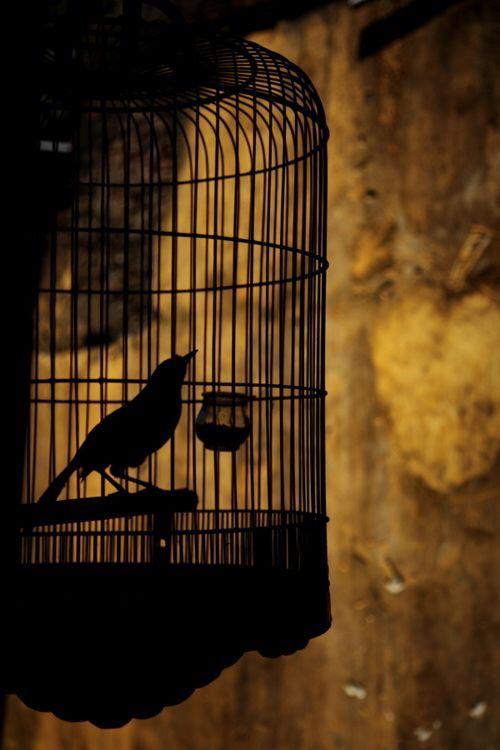
Since the internet’s hecticness in diverse parts of the country, the poem has echoed in my mind. It was frozen in my mind; I tried hard to get rid of it but failed. It`s stuck and remains stuck for long. As a nation, I reckon we are a herd of cattle that are undesirably knotted, prisoned pigeons that can’t fly with our will. We are not free to choose what we want, or what we like. We are not free to apt the place to breathe on. Freedom from 1947 to now, I reckon, is the dusk of freedom – twilight, and we are still in this twilight. We know neither the smoothness of night nor the freshness of dawn. Yet, we are labeled as free individuals – an illusion. Most of us do not know the walls of this illusionary cell. Those who know are silenced, their tongues are stitched, and they are sidelined as antagonists to the state.
Mangu a famous character by Sadat Hassan Manto also clicks in my mind.
Mangu is a tongawala in Lahore. He stands for the common man of the sub-continent. He is keenly interested in the politics of the country. His political awareness comes from contact with educated people who sometimes happen to travel by Tonga. He has heard a lot about the New Constitution, which is going to be promulgated on the first of April. This new constitution promises to ensure basic human rights for all the people in the country. Like everybody else Mangu, too, is very hopeful. He hoped that the new constitution would bring British rule to an end. Then no gora will be able to bully an Indian.
Mangu shares his awareness with other tongawalas on the Tonga stand. He tells them what he hears from his fares about the new constitution every day. This has made him quite a leader of his community.
Like every common man in our country, Mangu too is very optimistic about the future of the nation. He faiths that things will improve under the new setup. But when the setup comes, he learns that he was mistaken. The promised change does not come with it. The alien rulers are still the masters. Every person in their nation still enjoys the same prestige. Mangu’s fight with the gora soldier brings this miserable fact to light for him. We pity him for having fought with a member of the ruling nation. Mangu is not just a poor tongawala. He embodies the Indian nation under the British rule. His hatred for the white rulers imitates the general hatred. It was this hatred that eventually led to the exit of the white rulers.
While articulating the meaning of freedom, I identify with Mangu. In some cases, we are all Mangu, yearning for change, but it remains elusive. Whenever and wherever we assert our claims, we are labeled unpatriotic and disloyal to the state. Sometimes, as Mangu in my country, I forget the meaning of freedom. It has diverse meanings for people from miscellaneous backgrounds. Those in the bureaucracy inhabit a ‘seventh heaven’, while those in the Pakistan Army capture the ‘sixth sky’, and parliamentarians possess the ‘fifth heaven’. The rest are rootless, belonging to nowhere. They are the Mangus, still paying the price for being born in this country.
I often notice that people who are honest, diligent, and true to their profession remain alone and aloof, living in a fool’s paradise. Such heroes are not heroes; rather, they are tagged as antagonists. Dr. Abdul Qadeer was also one of them, who is nowhere on the list of heroes.
So, freedom will take time. I hope our generation can taste it, but currently, it is in prison. It is called a revolution. Revolution requires blood. So, to taste the freedom we often see in Western countries, we must be ready for the stream of blood to cherish that freedom.
Freedom is truly enjoyed in the West, where basic rights prescribed by the Constitution are upheld. These rights protect one’s health, wealth, privacy, and secrecy, ensuring the safeguarding of self-integrity. However, in our context, the opposite holds. Privacy, secrecy, and self-integrity are commodities for sale. We are trapped in our prison cells. Speaking outcomes at the cost of our self-integrity being brutally suppressed. Not even our homes, our supposed sanctuaries, offer solace. The state’s guardians invade our private spaces, stealing and spying on our most intimate moments. They peddle our integrity and nakedness for their gain.
Time and again, we question the true meaning of freedom. Is this freedom? I believe it’s the downfall of freedom, the worst stage of it, where the mantra is ‘eat or be eaten,’ and we’re forced to contemplate death or killing our opponents. There’s no alternative, no option ‘C.’ So, be warned: the last stage of freedom, which I term ‘The Fall of Freedom,’ is the most abhorrent form of freedom. It’s like an injured cat, lashing out with its final scratch before succumbing to its fate.
Writers; Muhammad Adnan Gujjar, Lecturer at the University of Chenab, Pakistan and Tajalla Qureshi, Poetess, Author, University of Lahore, Gujrat Campus, Pakistan.
Similar Posts by The Mt Kenya Times:
- Phantom fortunes: Kenya’s grand illusion of turning intellectual gold into bankable dust
- Old Mutual revamps savings products to deepen long-term financial wellness
- Emirates to bring A350 to Nairobi from October
- Agnes Wanjiru’s daughter fundraising to attend accused soldier’s extradition hearing in London
- Kenya’s first oil moves closer as drilling rig arrives at Mombasa port
About the Author