Using Songs In Teaching


By: Begdullaeva Uldaulet Khamidulla
Annotation: Songs are a perfect tool for learning English while having fun. They can be used to learn or practice the target language in a motivating and enjoyable way. Songs a powerful means of teaching English and you can use songs as a classroom activity to enrich your students’ vocabulary, to improve their grammar and accents. Using songs in teaching English is unquestionably very natural, very scientific. You can be very effective, provided you are quite selective with the songs and activities. Here are some ideas on how to use songs with your classes.
Keywords: Teaching English, young learners, songs, music, pre-teaching activities, song, learners, children, pupils, young learners, teacher, while-teaching activities, new songs, music.
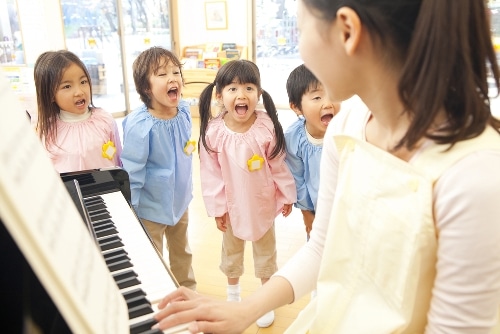
The idea of using song in teaching English in not a new idea, but it is still favorite for the teachers and students, since the songs are always interesting for the people. Nihada and Alisa (2016) point out that Songs are one type of listening activity that has broad potential. Music and songs are important parts of growth and learning. Children love singing and teachers naturally use songs to teach them concepts and language in a fun way. Some important song characteristics are that the song is fun and can make students excited. However, the most important song feature is repetition. They not only contain patterns of language, but also develop listening skills, pronunciation and rhythm, and provide a pleasant atmosphere. Even if the teacher plays songs several times a day, most students may not be bored. In addition, songs are a very useful type of activity. There are so many aspects of language that can be delivered and recycled through the use of songs. They can be used at each stage of the lesson and there are many ways to include them in the lesson. Sometimes, they are used only as fillers and warm-ups, sometimes as the main part of the lesson, but sometimes they are there to provide a pleasant atmosphere.
In addition, Anna (2016) states that Songs are appreciated for their linguistic, pedagogical, cultural and entertaining features and they are precious language learning materials. They can be used to teach and develop every aspect of a language. This paper aims to verify these claims and confirm the effectiveness of using songs as a means to improve young learners’ English language vocabulary and to determine whether songs influence young learners’ motivation to learn English. The paper deals with theoretical explanations of young learners, listening skills, and different aspects of using and teaching songs. It also discusses how songs influence motivation and the connection of songs with some language learning theories. The analytical part of the paper explains the procedure and the results obtained from the pre-tests, post-tests and delayed tests for three different children’s songs as well as from the questionnaire that was done in order to collect information about motivation provided by songs. The results showed that songs have a positive influence on vocabulary retention of young learners. Whatever setting is used, aural or aural/visual, the results prove that songs are suitable for different learning styles, they encourage positive learning experience, and enhance their knowledge. Songs aid motivation and help learners develop a love for language learning. Students motivated in this way are imaginative, creative, and eager to learn and succeed.[1]
Suggestopedia, a teaching methodology, de- veloped by Dr. Lozanov from Bulgaria (1975) claims “the use of music one of the prominent features of it”. The idea of using the music is apparently to relax stu dents defences and to open up their minds to the lan- guage. Songs are useful for “freeing the speech muscles and evoking positive emotions”..
The importance of music has been stressed by Gaston in 1968 (Music and Therapy). Its uses are: to facilitate the establishment and mainte- nance of personal relations, to increase self-esteem, to use rhythm and energy and bring order. Sapgestopedia uses background music as an integral part of the course. So we can conclude that music and song is not re ally one of the conventional categories of language study (reading, listening, comprehension, speaking. grammar, vocabulary etc.), but it can be the content matter of any of these categories.
The use of songs in foreign-language teaching and learning is nothing new. It was especially common during the era of the Audiolingual method, from the 1950s through the 1970s.
This method emphasized repetition and drill, and songs could make such work less tedious (Degrave, 2019). Since then, research has pointed to many other affordances of songs as a resource for foreign-language learning. Opportunities for vocabulary acquisition, pronun- ciation practice, and the lowering of foreign-language anxiety and stress are just some of the key words here.
Today, the potential of songs as a resource in the foreign-language classroom is clearly on the increase. Because of digitaliza- tion, teachers have access to an endless variety of recordings, often with visu- als and even educational materials attached. This means that the size of their own repertoire and their self-confidence as singers need no longer decide the degree to which they use songs in their classrooms.
Many people use background music to reduce stress, and the use of music and song in the classroom has also been found to reduce foreign-language anxiety (Dolean, 2016). The link to something pleasant and familiar is one aspect of this. Another aspect is the fact that when learners sing together with others, they can produce language and get valuable practice without having to expose themselves. This can lead to a sense of accomplishment and boost the learners’ self-confidence as language users.
Other studies also indicate that, although teachers have a positive attitude to the use of songs, they use them mainly with young beginners and mostly merely as a fun break from the ordinary, rather than as a resource for language learning (Degrave, 2019). Therefore, calls have been made from different parts of the world for teachers to get more explicit training on how to select appropriate songs for the learners in question and how to use them in the classroom (Bokiev & Ismail, 2021; Nguyen & Nguyen, 2020).
Listening to music helps in learning a foreign language even a little. Many young people like to listen to foreign language music. But some people hear it without understanding its meaning. Therefore, it is necessary to choose the right song.
Nowadays, foreign language teachers find it useful to use songs and music because songs are considered as motivational sources and therefore useful in language learning. One aspect of a foreign language that can benefit from teaching and learning through songs is vocabulary. Teachers play an important role in teaching vocabulary. They help their students to expand and create new words to choose from.
Similar Posts by The Mt Kenya Times:
- Mt Kenya Times ePAPER October 24-25, 2026
- Muturi calls on IEBC to keep election technology tender clean and on schedule
- Ruto meets UAE minister in push to deepen trade ties
- Gideon Moi breaks silence on Ruto fallout, cites broken promises
- The doctor who refused to abandon a sick Uganda
About the Author