The Mt Kenya Times
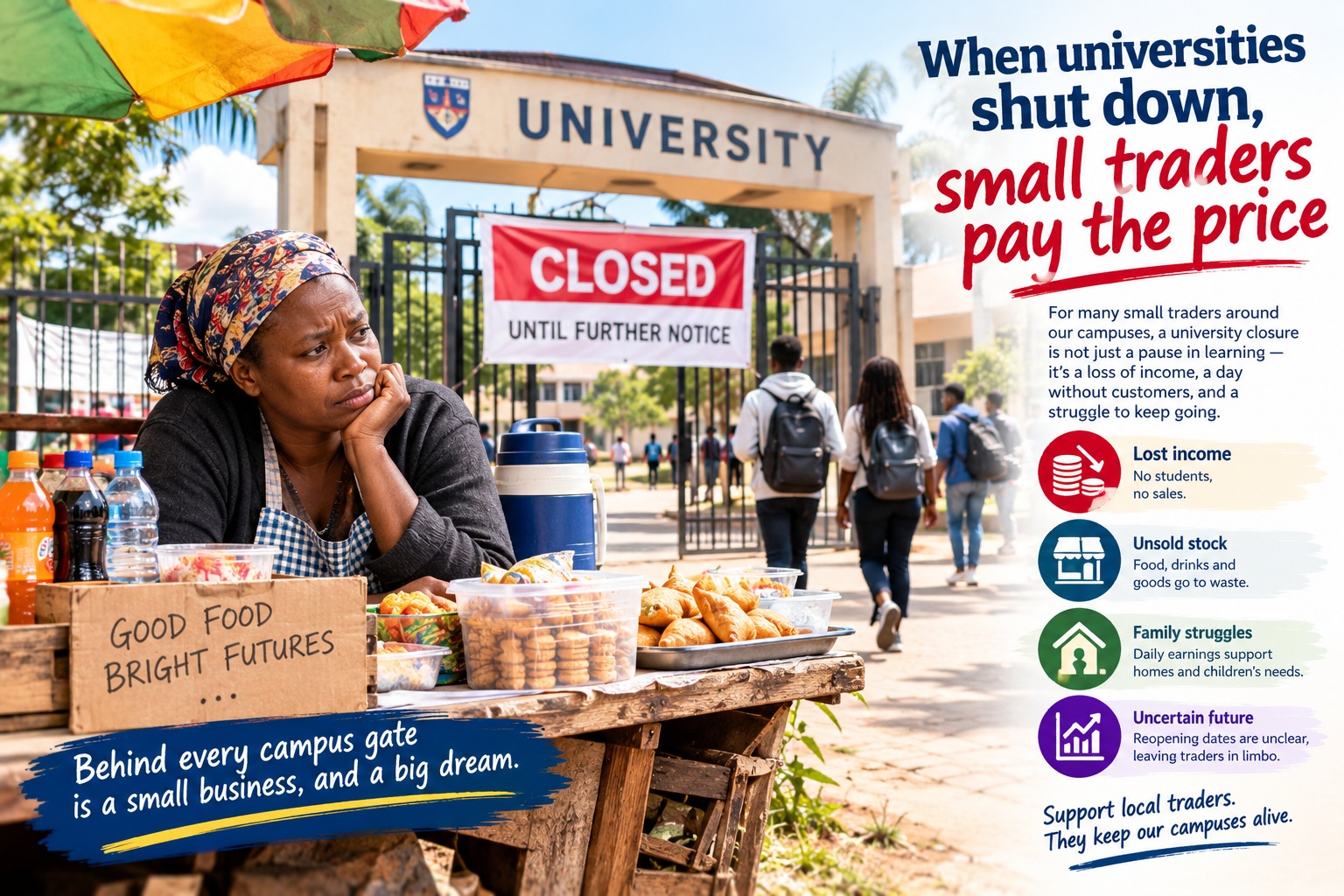
Kenya’s lecturers’ strike has emptied lecture halls — but its sharpest economic pain is being felt by the vendors, shopkeepers and food stalls that live and die by student footfall.
By Hadassah Karangu
Every morning, a mama mboga near a Kenyan university campus arranges her tomatoes, onions and leafy greens and waits for customers who may not come. The lecturers’ strike has sent students home — and with them, the daily transactions that keep her business alive.
The national conversation has focused, understandably, on frustrated students losing learning time and lecturers seeking implementation of their collective bargaining agreement. But a third group is absorbing the consequences in silence: the traders, food vendors, butchers, kiosk operators and landlords whose livelihoods are built entirely around university communities. For them, the university is not merely an academic institution. It is a marketplace and a source of daily income. When it closes, their earnings close with it.
The mama mboga cannot pause her expenses while waiting for students to return. She has already paid for her produce, transport and stall rental. Vegetables wilt. Tomatoes soften. Stock purchased in anticipation of a busy week becomes a loss when footfall collapses. Across the same neighbourhood, the butcher purchases less meat. The chapati vendor prepares fewer portions. The cybercafé sits quiet. Landlords in student areas struggle to collect rent from tenants who have returned to rural homes.
Each lost transaction ripples outward. A restaurant earning less may cut the hours of casual staff. A shopkeeper postponing restocking means less business for the wholesaler and, further up the chain, for the farmer and transporter who depend on those orders. A boda boda rider who ordinarily ferried students between hostels and lecture halls now sits idle for much of the day. What appears to be an institutional disagreement about salary increments reaches into market stalls and family kitchens of people who had no voice in the dispute and no power to resolve it.
The damage extends beyond traders. Final-year students face acute personal anxiety, with graduation timelines now uncertain. For these students, graduation represents years of sacrifice and the sustained financial commitment of parents who invested in a better future. Delayed academic clearance can disrupt employment applications, postgraduate admissions and professional opportunities requiring proof of a completed degree. A graduate who expected to enter the job market this year may instead spend months in limbo, while the family that saved for a celebration cannot say with confidence when that day will arrive.
The underlying dispute raises legitimate grievances. Lecturers seeking implementation of the 2025–2029 Collective Bargaining Agreement are not making unreasonable demands. University staff deserve fair remuneration and working conditions that reflect their professional contribution to the country’s development. These concerns require serious engagement, not delays and deflection.
But the cost of an unresolved impasse is never shared equally. The Ministry of Education, the National Treasury and the relevant unions sit at the negotiating table. The mama mboga does not. The butcher has no seat in those discussions. The food vendor preparing fewer meals each day was not consulted when implementation schedules were drawn up. Yet all three are paying part of the bill for a dispute they did not create and cannot resolve. People with no influence over the outcome are carrying a disproportionate share of the burden — and that is a fundamental injustice that official statements rarely acknowledge.
The government must move beyond statements and act with urgency. Meaningful negotiations, conducted with transparent financial data and clear accountability, are overdue. Students cannot be asked to sacrifice semester after semester while talks stall. Small traders cannot absorb indefinite uncertainty because the institutions around which they built their businesses cannot function. Lecturers cannot be expected to return on the strength of promises already made and broken.
When teaching resumes, universities must publish credible recovery plans for lost learning time, with particular attention to programmes requiring laboratory sessions, clinical placements and practical training that additional classroom hours cannot adequately replace. Students in final year and those already stretched financially must receive targeted support. A return to work should mark the beginning of structured recovery, not the conclusion of government responsibility.
Kenya cannot continue treating university strikes as an unavoidable feature of the academic calendar. Every disrupted semester erodes public confidence in higher education, strains family finances, delays graduates from entering the workforce and quietly hollows out the local economies that depend on students being present.
The mama mboga deserves to sell her vegetables. The student deserves an uninterrupted education. The lecturer deserves fair working conditions. The graduate deserves a degree without unnecessary delay. These are not competing interests — they are interconnected ones, sustained by the same functioning institution.
The question is no longer simply when lecturers will return to class. It is how much longer students, families and small traders must pay for a disagreement they had no part in creating.
Similar Posts by The Mt Kenya Times:
- Mt Kenya Times ePAPER October 26, 2026
- Sakaja challenges Kamukunji police over Eastleigh suspect bail
- Muturi demands binding livestreaming rules for 2027 polls to prevent repeat of 2022 chaos
- NTSA calls for road safety to be declared a national disaster after 24 die in Mtito Andei crash
- Ruku turns on Waiguru over deputy president ambitions: ‘That seat is not being contested for’
About the Author