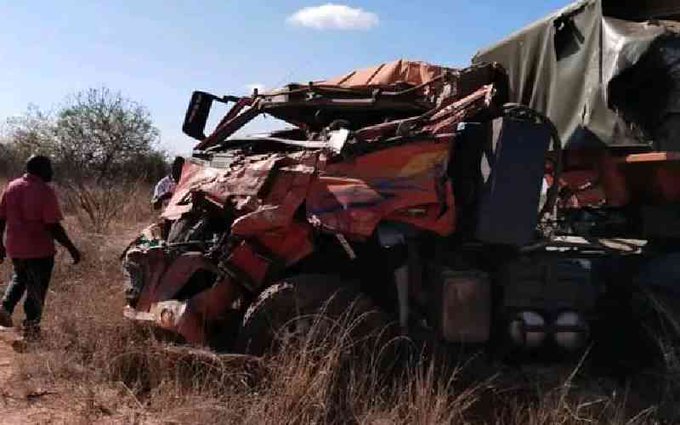
NTSA calls for road safety to be declared a national disaster after 24 die in Mtito Andei crash

NTSA Director General Nashon Kondiwa
Kenya loses more than 5,000 lives on its roads every year — and the authority charged with preventing those deaths says the crisis has now reached emergency level
By Anne Njeri
The National Transport and Safety Authority yesterday called for road safety to be declared a national disaster following a collision on the Nairobi–Mombasa Highway near Mtito Andei on Sunday that killed 24 people, making it the second fatal mass-casualty accident on the same road within a month.
The crash occurred at approximately 7am in the Kanga area when a bus and a lorry collided head-on. Twenty people died at the scene. Four others succumbed to their injuries while receiving treatment at nearby hospitals. The dead are the latest addition to a toll that NTSA Director General Nashon Odhiambo Kondiwa says has long since passed the threshold of a manageable transport problem and entered the territory of a national emergency.
“Road crashes have reached a national emergency level, with about 20,000 crashes claiming over 5,000 lives annually, destroying families, overwhelming our health system and eroding economic productivity,” Kondiwa said in a statement released on Sunday. He argued that a formal disaster declaration would unlock whole-of-government coordination, secure adequate and dedicated funding and establish measurable accountability across road agencies, the National Police Service, the health sector and county governments. “Our goal is simple: save lives, reduce fatalities and serious injuries, and protect Kenya’s human capital. Road safety is not just a transport issue — it is a national development and security priority,” he added.
The weight of those words is sharpened considerably by the timing. On 3rd October, Catholic pilgrims from St. Mathias Mulumba Catholic Church in Mikindani, Mombasa County, died in a multi-vehicle crash at Mlima Kiu in Makueni County, killing 17 people. The Kanga collision, occurring on the same highway less than four weeks later, has reignited public anger over a stretch of road that has become synonymous with carnage and institutional failure.
The Nairobi–Mombasa Highway is Kenya’s most economically critical road corridor, carrying the bulk of freight traffic between the port of Mombasa and the interior. It is also, by any honest reckoning, one of the country’s most dangerous. The combination of heavy commercial vehicles, long-distance buses, inadequate road markings on certain sections and drivers operating under severe fatigue creates conditions in which tragedy is not merely possible but statistically predictable.
NTSA’s call for a disaster declaration is significant because it represents the authority openly acknowledging that the existing framework — periodic enforcement campaigns, public awareness messaging, post-accident investigations — is insufficient. What is required, Kondiwa argues, is a structural escalation: emergency-level resourcing, cross-agency coordination and political commitment at the highest level of government.
Whether that commitment materialises will determine whether Sunday’s 24 deaths become a turning point or simply another entry in a register that grows longer every year.
Kenya has the data. It has the recommendations. What it has consistently lacked is the sustained political will to act on them before the next disaster strikes.
Similar Posts by The Mt Kenya Times:
- Mt Kenya Times ePAPER October 26, 2026
- Sakaja challenges Kamukunji police over Eastleigh suspect bail
- Muturi demands binding livestreaming rules for 2027 polls to prevent repeat of 2022 chaos
- Ruku turns on Waiguru over deputy president ambitions: ‘That seat is not being contested for’
- Instruments required for professional oral hygiene procedures and the requirements for these instruments
About the Author