Gideon Moi breaks silence on Ruto fallout, cites broken promises
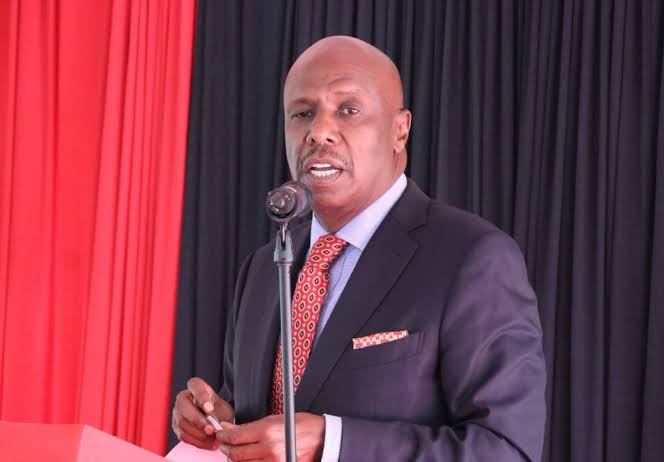
KANU Chairman Gideon Moi
The KANU chairman says a political agreement struck a year ago has gone unfulfilled — and he is asking his Kalenjin community to forgive him for making it in the first place
By David Kimani
KANU Chairman Gideon Moi publicly accused President William Ruto of failing to honour a political agreement between them yesterday, saying the President’s broken commitments have shattered a reconciliation that was, barely a year ago, celebrated as a turning point in Rift Valley politics.
Speaking before Kalenjin elders at his Kabarak home in Nakuru County, Moi offered his most detailed account yet of what went wrong between him and Ruto — and his remarks land with particular force at a moment when Kenya’s political landscape is being redrawn ahead of the August 2027 General Election. What began as a quietly managed rupture has now become an open wound, and Moi has chosen to expose it fully, in front of his community and on the record.
The agreement, Moi said, was struck when he stood aside in the Baringo senatorial by-election late last year, clearing the path for a candidate aligned with the President. He was emphatic that what he sought in return was not personal enrichment but development commitments for Baringo residents — projects he had not managed to deliver during his time as senator. “In everything, I did not ask for a personal thing. I want this, I want this business — no. I asked for specific things for the people of Baringo that I had not accomplished,” he said.
That distinction matters. It positions Moi not as a transactional politician negotiating patronage but as a community leader seeking accountability on behalf of constituents. Whether that framing is accepted will depend on how much credibility he retains in a county where his family’s name still commands deep loyalty but where the political ground has shifted considerably since the peak of his father’s era.
The timing of the breakdown is telling. Moi said the relationship began to deteriorate following the death of former Prime Minister Raila Odinga, whose passing last October removed a key political figure whose presence had shaped the architecture of national coalition-building for decades. With Odinga gone, the calculations that had held various political arrangements together were thrown into flux, and Moi says he found himself repeatedly told to wait. “Raila’s death came up — he told me, ‘Wait for some time, we finish this matter.’ I waited and waited until now,” Moi said.
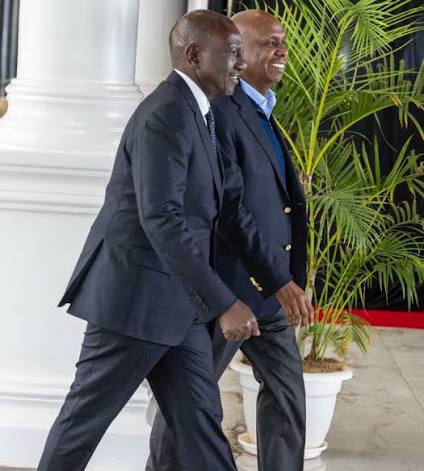
That account places Ruto in a difficult position. The President had publicly framed his reconciliation with Moi as evidence of a maturing political relationship and a consolidation of support in the Rift Valley. If Moi’s account is accurate — and no rebuttal from State House had emerged at the time of going to press — then the reconciliation was built on commitments that were never met, and the unity it projected was, at least in part, a performance.
The President’s response to the earlier stages of this fallout has itself become part of the story. Ruto publicly accused Moi of sponsoring opposition activities and attributed hostile newspaper coverage to his influence. “If it were not for those Standard headlines by Gideon Moi, you would be nowhere,” Ruto said at a public rally, in remarks that drew widespread attention. Moi dismissed those accusations with a rhetorical flourish that landed sharply. “Do I look like a journalist, writing headlines at night?” he said, framing Ruto’s accusations as a distraction from the substantive question of whether the agreement had been honoured.
The most striking moment of Moi’s address, however, was not his indictment of the President. It was his apology to his own community. “Please forgive me — my Kalenjin people, I did what I did with a clean heart,” he said, describing his decision to work with Ruto as a misstep. A politician of Moi’s stature asking his community’s forgiveness is not a small thing. It is a signal that he regards the alliance as a political liability he must now distance himself from, and that he is actively repositioning ahead of 2027.
The political significance of that repositioning cannot be overstated. The Kalenjin community represents one of Kenya’s most consequential electoral blocs, and its internal politics have historically determined the outcome of presidential contests. Ruto, himself Kalenjin, has long relied on the assumption of near-total community solidarity as a foundation of his political arithmetic. Moi’s public break — delivered in the Kalenjin dialect, before elders, at Kabarak, the home his father built — is a direct challenge to that assumption and a signal to other community leaders that unity behind the President is neither unconditional nor guaranteed.
The opposition constellation taking shape around former Deputy President Rigathi Gachagua, former Vice-President Kalonzo Musyoka and Linda Mwananchi leader Edwin Sifuna will be watching Moi’s next move with intense interest. A Moi who campaigns actively against Ruto, or who lends his name and networks to the opposition cause, would add a dimension to the 2027 contest that Ruto’s strategists have not yet had to fully account for. The Rift Valley, long assumed to be secure presidential territory, may be less settled than it appears.
For Ruto, the challenge is immediate and practical. He can attempt to repair the relationship with Moi through the delivery of the promised development projects — a move that would require acknowledging, at least implicitly, that commitments were made and not kept. Or he can continue to frame Moi as a disgruntled political actor whose grievances are personal rather than principled, a narrative that the President’s own previous statements have already established. Neither path is without risk.
What is clear is that the political period between now and August 2027 will be defined not only by the formal declarations of candidacy and the construction of coalitions but by moments precisely like this one — a man returning to his ancestral home, speaking his mother tongue, asking his elders to forgive him for a partnership that he now believes was a mistake.
In Kenyan politics, that kind of moment does not fade quietly. It echoes.
Similar Posts by The Mt Kenya Times:
- Wamunyoro Alliance Takes Shape; Gachagua, Kalonzo, Wamalwa unite
- Gachagua, Kalonzo, Wamalwa unite: Kenya’s 2027 opposition battle takes shape
- Beyond the rubble: Nairobi’s building collapses are a failure of systemic oversight
- Political alliances intensify ahead of Kenya’s 2027 elections
- The pressure to make it before thirty
About the Author