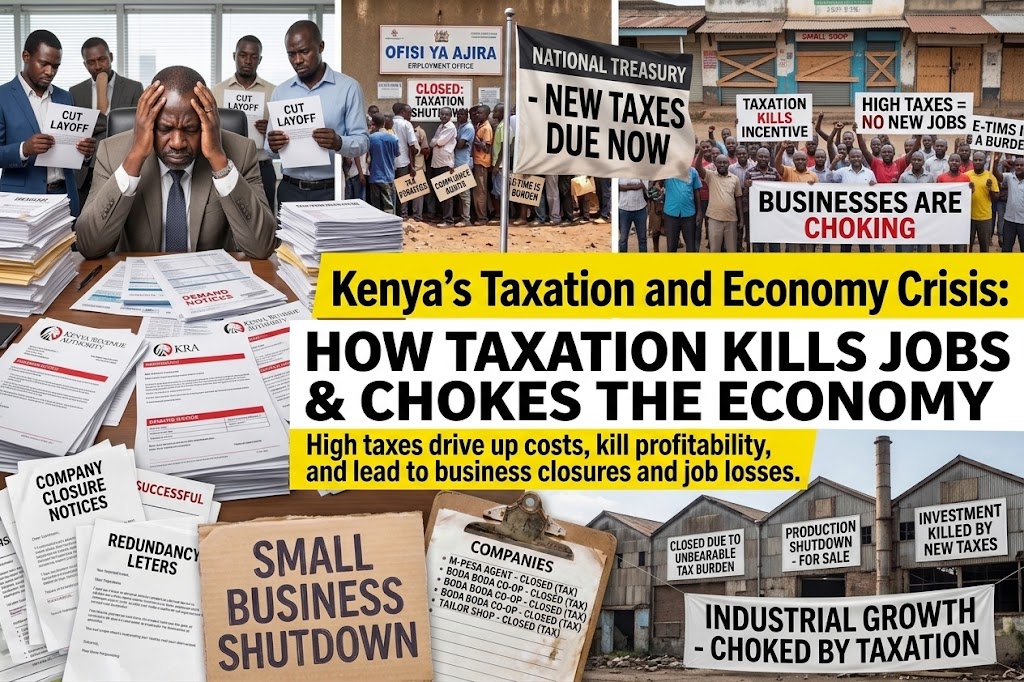
Punitive tax regimes are driving away investors, stifling enterprise and deepening the unemployment crisis Kenya can least afford.
By Bonnie Musembi
Kenya’s tax burden is quietly strangling the very economic activity the government needs to create jobs. When taxes inflate the cost of goods and services, consumer demand falls, businesses contract and the job opportunities that millions of unemployed Kenyans desperately need simply fail to materialise.
The consequences extend beyond Kenya’s borders. Excessive taxation deters foreign investors who weigh the country’s fiscal environment against more competitive regional alternatives. When those investors choose elsewhere, they take their capital — and the jobs it would have created — with them. A shrinking investor base means fewer businesses, fewer opportunities and a workforce left competing fiercely for an ever-narrowing pool of positions.
The cycle is self-defeating. A government that taxes aggressively in pursuit of revenue ends up undermining the productive base from which that revenue must come. Unemployment rises, poverty deepens, dependency on state support grows and the fiscal pressure on government intensifies — precisely the opposite of what heavy taxation is meant to achieve.
The solution demands political courage. Targeted tax relief on key sectors, abolition of levies that demonstrably suppress investment and a fundamental review of Kenya’s taxation model are not radical proposals — they are economic necessities. A government serious about ending unemployment must first stop making it harder to create jobs.
Tax policy that kills enterprise is not revenue strategy. It is a social crisis with a political signature.
Bonnie Musembi is an entrepreneur.
Similar Posts by The Mt Kenya Times:
- The media’s role in saving Kenya’s vanishing heritage
- Cracks in Linda Mwananchi: Can the opposition hold together for 2027?
- Kenya’s unemployment crisis demands action, not excuses
- Mt Kenya Times ePAPER November 3, 2026
- Kang’ata: ‘I turned down the Deputy President’s job — it was a trap’
About the Author