


By Naomi Simiyu
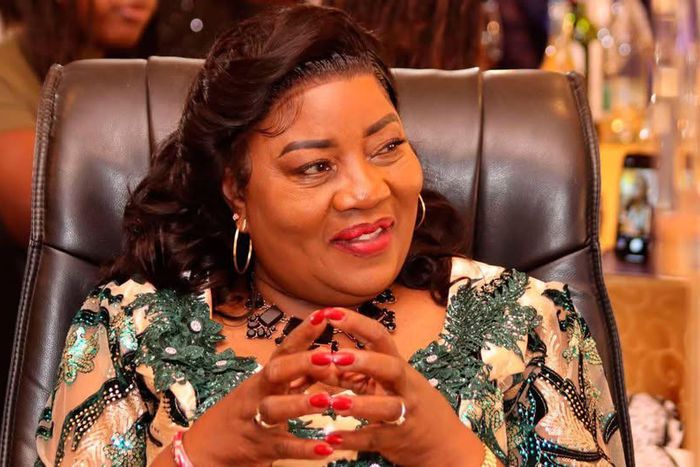
The announcement that Mama Ida Odinga, widow of the late opposition leader Raila Odinga, has been nominated by President William Ruto to serve as a United Nations Environment Programme (UNEP) envoy has stirred both admiration and debate across Kenya’s political and civic landscape. For Ida, the nomination is a deeply personal honour, arriving at a time when she continues to mourn the loss of her husband, a man whose name has been synonymous with Kenya’s democratic struggles for decades.
“This is a great honour, especially following the death of my husband,” Ida said, her words carrying both gratitude and solemnity. The statement reflected the delicate balance between grief and duty, between personal loss and public service.
The nomination was formally transmitted to the National Assembly for consideration and approval, in line with constitutional requirements governing appointments to the Foreign Service. Chief of Staff Felix Koskei described Mama Ida as “a distinguished educationist, civic leader and advocate for social justice and gender equity.” He traced her career from her early days as a teacher at Highway Secondary School and later at Kenya High School, where she spent more than a decade shaping young minds. Koskei emphasized her role in advancing women’s education and empowerment, standing against authoritarianism, and championing democratic reform. “In the early 1990s, amid the national clamour to transition from a single‑party State to a multiparty democracy, she played a key role in advancing calls for change as the founding Chairperson of the League of Kenya Women Voters,” he noted.
The nomination has been widely interpreted as both a recognition of Ida’s personal achievements and a symbolic gesture in the wake of Raila’s death. Leaders across the political spectrum have weighed in, offering praise, caution, and analysis of what the appointment means for Kenya’s political future.
Siaya Governor James Orengo, a close ally of the Odinga family, hailed the nomination as “a fitting tribute to Mama Ida’s lifelong commitment to justice and equality.” He argued that her appointment reflects the continuity of Raila’s legacy, even in international platforms. “Ida has always been more than Raila’s partner; she has been a leader in her own right. This recognition is overdue,” Orengo said, reminding Kenyans of her role in the pro‑democracy movement of the 1990s.
Nairobi Senator Edwin Sifuna, ODM’s Secretary General, echoed the sentiment but warned against politicizing the appointment. “We must respect Mama Ida’s contribution to this nation. Her nomination should not be seen as a political transaction but as recognition of her service. She deserves this honour,” Sifuna remarked, while cautioning that ODM remains vigilant about the government’s broader political maneuvers.
Embakasi East MP Babu Owino described the nomination as “a moment of pride for ODM supporters.” He insisted that Ida’s new role should inspire young leaders to embrace civic responsibility. “Mama Ida has fought for democracy, for education, for women’s rights. Her appointment is a lesson to us that service pays,” Babu said, though he added that ODM must remain united and not allow external forces to exploit the moment.
From the ruling side, Majority Leader Aaron Cheruiyot praised the move as “a demonstration that the government values merit and service beyond political divides.” He argued that Ida’s appointment shows Kenya can honour leaders from across the spectrum, even those who once stood in opposition. “This is how we build unity—by recognizing service, not just politics,” Cheruiyot said.
Former Interior Cabinet Secretary Fred Matiang’i welcomed the nomination but urged the government to ensure it is not used to silence dissent. “Mama Ida’s appointment is commendable, but we must guard against tokenism. Her voice must remain independent, especially in matters of justice and democracy,” Matiang’i cautioned.
Jeremiah Kioni, Jubilee Party Secretary General, expressed concern that the nomination might be interpreted as an attempt to co‑opt ODM into government. “We celebrate Mama Ida, but we must be clear: this is not a coalition. It is an appointment. Raila’s legacy cannot be diluted by political manoeuvres,” Kioni said, echoing sentiments voiced earlier by ODM leaders in other contexts.
Eugene Wamalwa, leader of the Democratic Action Party of Kenya, described the nomination as “a healing gesture” but warned that Kenya’s opposition must remain vigilant. “We must celebrate Mama Ida, but we must also remember that democracy thrives when opposition remains strong. Her appointment should not be used to weaken ODM,” Wamalwa said.
Martha Karua, Narc Kenya leader and a long‑time ally of Raila, offered a more personal reflection. “Ida has carried the weight of struggle alongside Raila for decades. She has endured harassment, intimidation, and sacrifice. This honour is well deserved. But let us also remember that her journey is part of a larger struggle for justice that continues,” Karua said, reminding Kenyans that the fight for democracy is far from over.
Oburu Odinga, Raila’s elder brother, struck a conciliatory tone, suggesting that Ida’s appointment could serve as a bridge between ODM and the government. “This is a positive step. It shows that even in grief, the nation can recognize service. Ida’s role will strengthen Kenya’s voice internationally and honour Raila’s memory,” Oburu said, hinting at the possibility of dialogue between ODM and Ruto’s administration.
Civil society groups have also weighed in. Amnesty International Kenya welcomed the nomination, noting Ida’s history of advocating for women’s rights and democratic freedoms. “Her appointment to UNEP is an opportunity to amplify Kenya’s voice on environmental justice, which is deeply connected to human rights,” Amnesty said in a statement. The National Council of Churches of Kenya (NCCK) praised the move as “a recognition of the role women have played in shaping Kenya’s democracy.”
The public reaction has been equally layered. Many Kenyans expressed pride in seeing Ida honoured on an international stage, viewing it as a continuation of Raila’s legacy. Others questioned the timing, suggesting that the government might be using the appointment to soften opposition criticism. Social media platforms lit up with debates, with hashtags like #MamaIda trending as supporters and skeptics alike weighed in.
Analysts argue that the nomination reflects both personal honour and political calculation. Professor Peter Kagwanja observed that “Ida’s appointment is a recognition of her service, but it also signals Ruto’s attempt to reach across the aisle. It is both symbolic and strategic.” He noted that the move could ease tensions between ODM and the government, though it risks being interpreted as co‑optation.
In the end, Ida Odinga’s nomination as UNEP envoy is a moment of national reflection. It honours a woman who has stood at the intersection of education, activism, and democracy for decades. It also raises questions about the interplay between grief, honour, and politics in Kenya’s evolving landscape. For Ida, the role is a continuation of service; for the nation, it is a reminder that leadership can take many forms, even beyond the political arena.
As the National Assembly prepares to deliberate on her nomination, Kenyans will watch closely, not just to see if she is confirmed, but to see how her new role shapes the narrative of Raila’s legacy and the future of ODM. For now, Mama Ida stands as a symbol of resilience, honoured in grief, and ready to serve on a global stage.
 Jerameel Kevins Owuor Odhiambo
  Elizabeth Angira