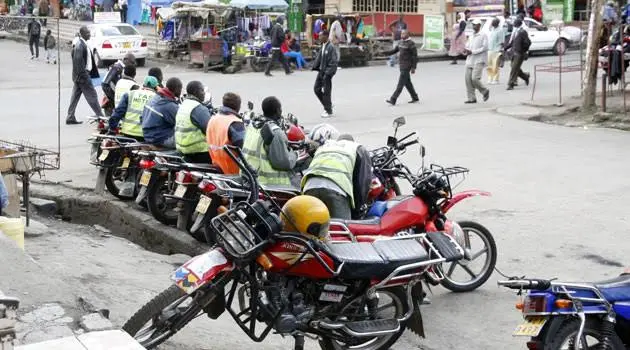
Boda Boda Compliance

By: Dennis Wendo
Worth Noting:
- As we focus towards sanitizing the sector, the national and in particular county governments should address growing concerns about crimes the sub-sector is being associated with, accidents, deaths and impunity, which are compromising public safety. Existing control measures should be re-examined to establish their effectiveness and ways of strengthening them.
- The new registration and vetting process that commenced on 28th March and runs to 24th June, is geared towards promoting road safety and security for all boda boda operators and their clients. Through this initiative, the government intends to support the sub-sector through necessary reforms to protect legitimate operators and their clients, whileweeding out criminal elements hiding among genuine operators by ensuring each rider is identifiable.
The government ordered a census of motorcycle cabs across the country and their re-registration with the ministry of transport authorities for subsequent issuance of Smart Driving Licenses or face ban.
Boda bodas stand as a popular mode of transport in Kenya, with the number rising to over two million as at May 2020; which directly and indirectly impacts the lives of close to 6 million Kenyans, more than 10 per cent of the country’s population. More or less 17,000 motorcycles are being registered each month; an attribution to the fact that the government zero-rated all motorcycles below 250cc, in a move aimed at enticing the youth into an alternative source of income generation. Though the sub-sector is recognized as a potential economic– spur, it still remains with a score of challenges and the national and county governments must reorganize the industry for optimum returns.
The sector is at censure for a number of increased reported social ills, including riders becoming law unto-themselves; thriving in lawlessness and openly defying traffic rules. “They have little regard to other road users’ right of way and ride on pavements and footpaths designated for pedestrians, conduits of increased burglaries, muggings, smuggling of contraband goods and rape” .This situation has been attributed to the fact that the sector largely operates with minimal regulations and control, weak registration, policing and oversight.
The borough is dominated by youth, with family obligations , most of whom have low-level schooling .”What we are witnessing are situations where riders train one another, and with a quest to make quick money, some begin transporting people and goods even before they grasp the basics of road safety” this has resulted into increased and unprecedented road accidents and deaths. The problem is major such that many hospitals have set aside wards, specifically, for victims of motorcycle-related accidents, which continue to be on high increase and frightening. The sub-sector too has college and university graduates, pointing to the pervasiveness of unemployment in the country.
The recent directives by the President in line with revamping boda boda operations which includes ; fresh comprehensive training and capacity building to mitigate negative trends on the road, mandatory insurance policy cover for both riders and passengers, structured saccos for the bodabodas, establishment of a strengthened framework co-operation by the Ministry of Health and St. John Ambulance to co-opt 26,000 volunteers to offer primary healthcare, emergency preparedness, and response interventions to registered groups; establishment of national and highway trauma centres and provision of support towards equipping them should be holistically addressed and actionably put into implementation by the tasked multi-sectoral authorities to streamline the sector. The country survey report by Africa Community Access Partnership (AfCAP) conducted in June 2019; “Enhancing Understanding on the safe motorcycle and three-wheeler use for rural transport” indicates a majority of riders in Kenya are untrained, have no license, no insurance and are not members of any association.
“The President further directed the Ministry of Health, jointly with the National Treasury and the Attorney General’s office, to come up with amendments to St. John Ambulance of Kenya Act (Chapter 259 of the Laws of Kenya), to strengthen the partnership between the emergency agency and the government”
As we focus towards sanitizing the sector, the national and in particular county governments should address growing concerns about crimes the sub-sector is being associated with, accidents, deaths and impunity, which are compromising public safety. Existing control measures should be re-examined to establish their effectiveness and ways of strengthening them.
The new registration and vetting process that commenced on 28th March and runs to 24th June, is geared towards promoting road safety and security for all boda boda operators and their clients. Through this initiative, the government intends to support the sub-sector through necessary reforms to protect legitimate operators and their clients, while weeding out criminal elements hiding among genuine operators by ensuring each rider is identifiable.
It is equally important to put into consideration the current challenges by a bulk of the Boda bodas. There is apathy in complying with the new rules, majority of riders citing need to travel far distances in order to access the limited huduma centres which are traditionally located at County headquarters offices in many parts of the country. Many youths acquired motorbikes on loans and are forced to skip the registration process to meet their daily targets. Fuel shortage crisis and a hike on fuel prices is an impediment to the riders too. Devolving this process to sub-county offices, is bound to bring target- end meets, sigh of relief and a motivation to comply with the ballooning sector.
Africa Community Access Partnership (AfCAP)recommended the need for; careful consideration to be given to the most effective legal framework for allowing motorcycle and three-wheeler taxis to operate on low volume rural roads, without leading to their unmanaged use on highways and in urban or peri-urban areas. This may involve the use of local bylaws. Driving schools’ capacity to operate in rural areas should be increased, for example through the provision of local government bursaries.
The distinction between training and sensitization must be understood. Sensitization has a role to play but is no substitute for training. Efforts should be made to reduce the risk and severity of crashes, including through training and use of personal protective equipment, especially helmets. Borrowing from such recommendations with strong law enforcement and regulation, taming corruption; impunity; drug and substance abuse will pasteurize the industry however stringent it may be.
Dennis Wendo
Founder Integrated Development Network
Email: dambehi@gamil.com
Similar Posts by The Mt Kenya Times:
- Mt Kenya Times ePAPER September 19-20, 2026
- Kenya joins US and UK to put citizens on the terrorism frontline
- Kenya’s parliament races to tame the AI frontier
- Kalonzo calls Ruto to order over Uhuru attacks
- Gachagua takes his 2027 campaign to America
About the Author