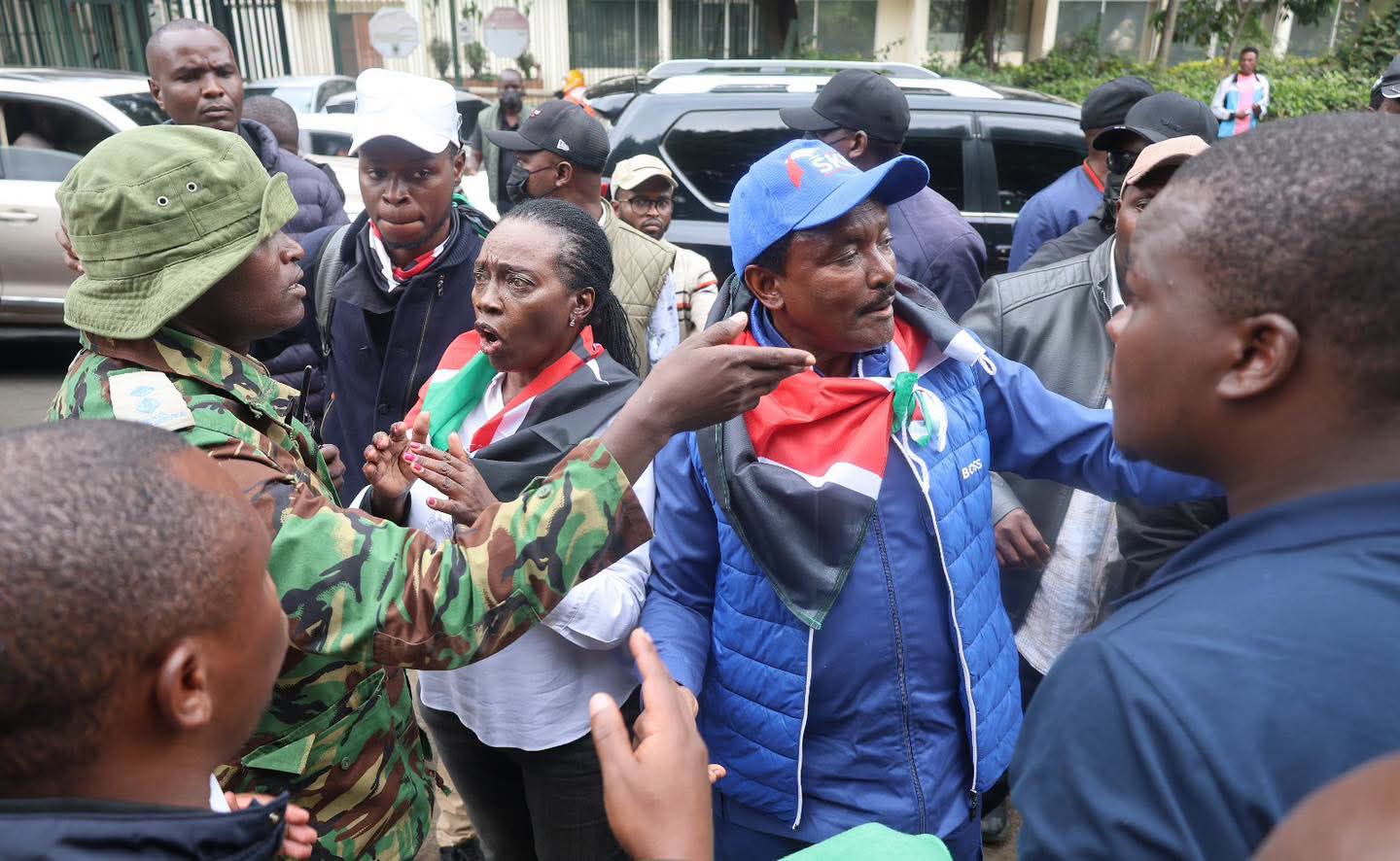
Two years after young people stormed Parliament and changed Kenya’s political conversation, the nation paused yesterday to remember the fallen — but not without confrontation
By MKT Correspondents
Two years ago, Kenya’s young people did something their parents’ generation had only imagined. They breached Parliament. They forced a president to withdraw a finance bill. And dozens of them paid for it with their lives.
Yesterday, the country paused to remember them.
Thousands of Kenyans across the nation marked the second anniversary of the historic Gen Z protests, commemorating those who lost their lives during the June 25, 2024 anti-Finance Bill demonstrations that culminated in the unprecedented storming of Parliament — a moment that reshaped Kenya’s political landscape and reverberated far beyond its borders.
The anniversary was observed through peaceful marches, memorial services, candle-lighting ceremonies, moments of silence, and the laying of wreaths in Nairobi, Mombasa, Kisumu, and towns across the country. Citizens also paid tribute online, sharing photographs, personal messages, and memories of those who died during protests that many describe as a generational turning point in Kenya’s democratic history.
Opposition leads commemorations
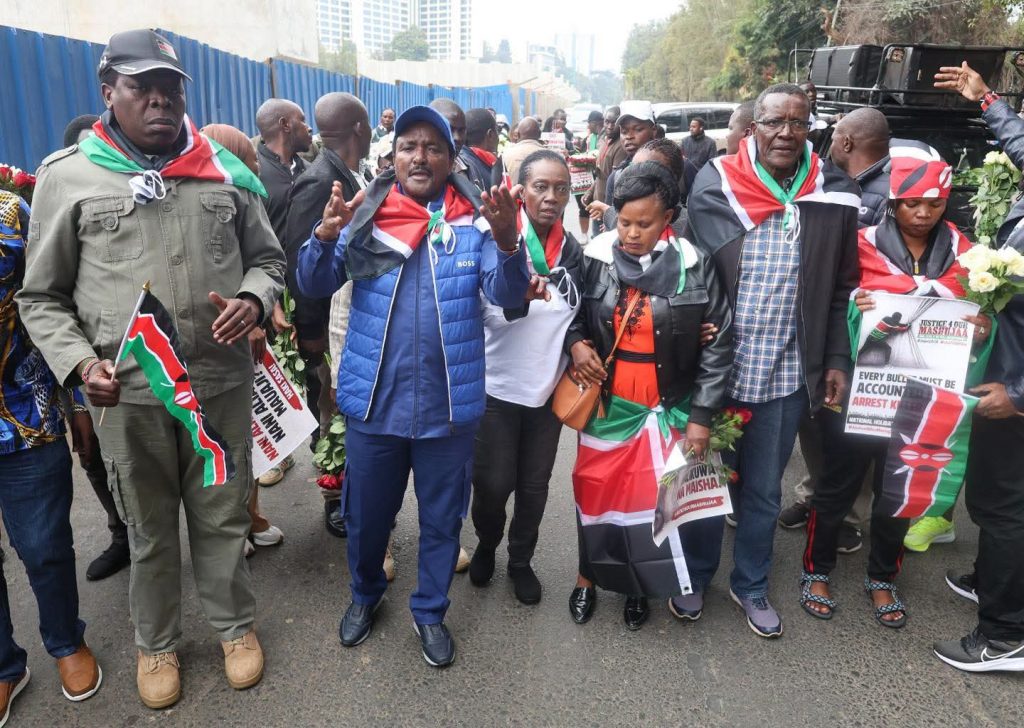 Leading the commemorations in Nairobi were prominent opposition figures, including Wiper Patriotic Front leader Kalonzo Musyoka, DAP-Kenya leader Eugene Wamalwa, People’s Liberation Party leader Martha Karua, and Siaya Governor James Orengo, who joined mourning families and supporters in honouring the victims.
The leaders praised Kenyans who participated in the commemorations despite what they described as organised attempts to intimidate peaceful citizens. In a joint statement, they declared: “Today, I stood with courageous Kenyans in Nairobi, Mombasa, Kisumu and across the nation to mark the historic Gen Z protests anniversary. I salute every patriot who took to the streets, and every citizen who honoured this day from home.”
The opposition went further, alleging that groups deployed to disrupt peaceful demonstrations were operating with direct state backing and under active police protection. “The mask has completely fallen. It is now undeniably evident that the goons unleashed to harass peaceful citizens were state-sponsored, operating under police escort. But intimidation cannot silence a nation,” they said.
The government did not immediately respond to those allegations.
Heavy security, restricted access
Despite repeated assurances from Interior Cabinet Secretary Kipchumba Murkomen that June 25 would proceed as an ordinary working day, the reality on the ground told a very different story.
In Nairobi, police mounted roadblocks on all major entry points into the city. Key roads leading to Parliament, State House, and other government installations were barricaded with razor wire and guarded by heavily armed security officers. Public service vehicles were prevented from accessing large sections of the Central Business District, forcing thousands of commuters to walk long distances in the morning heat.
Much of the city centre recorded unusually low activity. Businesses remained shuttered, many traders chose to stay away, and residents who ventured out did so cautiously, wary of possible confrontations between protesters and security forces. Similar scenes unfolded in several other towns, where heightened security deployments disrupted transport networks and suppressed normal economic activity for much of the day.
Critics argued that the extensive restrictions directly contradicted the government’s public assurances. For many ordinary Kenyans, the closure of roads, disruption of public transport, and the sheer weight of the security presence amounted to an unofficial lockdown — one that left working people unable to earn a living on a day that was supposed to be normal.
Nevertheless, groups of protesters managed to gather at multiple locations across Nairobi and beyond, carrying Kenyan flags, flowers, candles, and placards bearing the names and photographs of those killed during the 2024 demonstrations. The images were striking — young people in black, holding portraits of peers who never came home.
Nationwide commemorations
In Nairobi, opposition leaders and families of victims marched towards Parliament to lay wreaths in honour of those who fell during the anti-Finance Bill protests. The ceremony drew hundreds of supporters who observed moments of silence and offered prayers for the dead. For many of the families present, it was their second year of marching without closure — still waiting for answers, still waiting for accountability, still waiting for justice.
Mombasa witnessed sizeable gatherings of young people who marched through sections of the coastal city carrying flowers and placards calling for justice. Many participants dressed in black as a symbol of mourning, while others carried hand-painted portraits of victims. The mood was solemn but resolute.
In Kisumu, although demonstrations remained relatively subdued compared to Nairobi and Mombasa, residents joined the national remembrance through prayer meetings, community gatherings, and coordinated online campaigns honouring the victims. Businesses in parts of the lakeside city also remained closed while security personnel maintained a visible presence throughout the day.
Commemorative activities were also reported in Nakuru, Kisii, Nyeri, Eldoret, Kitengela, and other towns, where citizens held peaceful gatherings, candle-lighting vigils, and memorial events. In several of these towns, young people who had been active in the 2024 movement gathered to reflect on what had been achieved, what had been lost, and what remained undone.
Online tribute and renewed calls for justice
Across social media platforms, Kenyans shared messages of remembrance throughout the day, describing the Gen Z movement as a defining chapter in the country’s democratic history. Many paid tribute to the courage of young people who challenged what they viewed as economic injustice, corruption, and entrenched poor governance — and who did so at tremendous personal cost.
The anniversary also intensified calls for justice over deaths, injuries, and alleged human rights violations linked to the 2024 demonstrations. Human rights organisations, families of victims, and opposition leaders maintained that the fundamental questions surrounding many of the deaths remain entirely unanswered. No senior security official has been charged. No independent inquiry has delivered public findings. For the families of the dead, impunity remains the loudest statement the government continues to make.
As commemorations drew to a close across the country, opposition leaders delivered a final word to those who had hoped the anniversary would pass without notice.
“They tried to bury our youth,” they said. “They forgot they were seeds. The struggle for a just Kenya continues.”
Two years after protests that captured global attention and forced a sitting president to reverse course, the memory of June 25, 2024 remains deeply embedded in Kenya’s national consciousness. The flowers laid yesterday, the candles lit, the names read aloud in town squares and church halls across the country — they are not the gestures of a movement fading from memory.
They are a demand. And they are still waiting for an answer.
Similar Posts by The Mt Kenya Times:
- Mt Kenya Times ePAPER October 1, 2026
- Museveni backs Lamu but keeps Uganda’s money at home
- Sifuna’s party wins its name — and Kenya’s opposition race begins in earnest
- Lamu’s $16B gamble: Africa’s biggest refinery divides the region
- Ruto launches KSh2.2 trillion Lamu refinery in East Africa’s biggest energy bet
About the Author