Kenya’s dairy sector at a turning point as quality, growth and farmer welfare take centre stage
 The Mt Kenya Times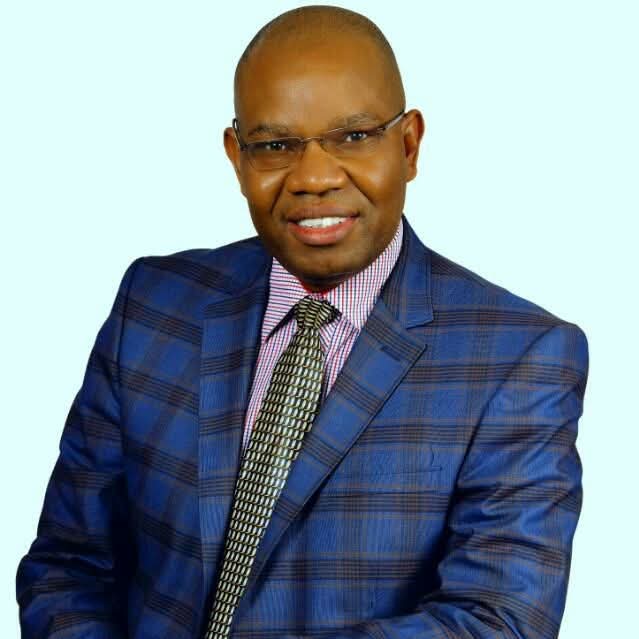
Kenya Dairy Board Chairman Genesio Njagi Mugo
Kenya Dairy Board Chairman Genesio Mugo’s reappointment signals continuity at a critical moment for an industry valued at more than KSh162B and supporting 1.8 million households
By John Kariuki
Kenya’s dairy industry is undergoing a significant transformation, with record formal milk intake, expanding processing capacity and a sharper focus on quality, productivity and farmer incomes placing the sector at one of the most consequential crossroads in its history.
At the centre of that transition is Kenya Dairy Board Chairman Genesio Njagi Mugo, whose reappointment for a second three-year term beginning February 2026 provides the continuity the industry needs at a moment when sustained reform matters more than short-lived intervention. The stakes are considerable. Kenya’s dairy sector is valued at more than KSh162B, supports approximately 1.8 million households, sustains more than 700,000 jobs and contributes roughly four per cent of the country’s GDP and 14 per cent of agricultural GDP — making it one of the most important value chains in the Kenyan economy.
The numbers underpinning recent growth are striking. Milk purchased by processors reached a record 908.4 million litres in 2024, a 12 per cent increase from 810.8 million litres the previous year and the highest annual volume recorded since 2001, according to Kenya Dairy Board data. The momentum carried into 2025, when formal processors received approximately one billion litres of milk valued at KSh52.2B — an 11.6 per cent rise from 2024 and a 25.1 per cent increase compared with 2023. Recorded marketed milk climbed to 1.013 billion litres, while processed milk and cream reached 704.4 million litres. These figures point unmistakably to a sector becoming more commercialised, more integrated into formal markets and more consequential to the national economy with each passing year.
Behind the statistics, however, are structural challenges that no amount of optimism can paper over. High feed costs, low productivity per cow, climate variability, animal disease burdens, inadequate cold-chain infrastructure, weak market linkages and persistent milk quality concerns continue to threaten the sustainability of the gains being recorded. It is in navigating these competing pressures that Mugo’s stewardship of the Kenya Dairy Board becomes particularly significant.
Mugo, first appointed Non-Executive Chairperson in February 2023, has consistently placed farmers at the centre of his public interventions. In 2024, he issued pointed warnings against illegal powdered milk imports, arguing that unregulated products undermine the market for locally produced milk and threaten the livelihoods of the farmers who supply it. He has repeatedly emphasised the importance of creating stronger, more reliable markets for Kenyan cow, camel and goat milk — a position that reflects a clear understanding that production growth means little if farmers cannot sell what they produce at prices that cover their costs.
Those costs remain the industry’s most stubborn challenge. The Kenya Dairy Board estimates the cost of producing a litre of milk at between KSh30 and KSh37, depending on the farming system and scale of operation. Rising feed prices, electricity costs and other input expenses have compressed farmers’ margins significantly. Demanding higher farmgate prices offers only a partial solution, since higher prices can also reduce the competitiveness of locally produced milk against imports and place additional pressure on consumers. The more sustainable answer lies in improving productivity — enabling farmers to produce more milk from the same land, labour and resource base through better genetics, improved feeding practices, stronger animal health management and more efficient water use.
It is on this front that one of the most significant institutional developments of recent years becomes relevant. In September 2025, the Kenya Dairy Board and the International Livestock Research Institute signed a five-year partnership agreement aimed at strengthening research, institutional development and capacity building across the dairy value chain. The agreement seeks to connect scientific knowledge and regulatory oversight from farm to glass, addressing challenges including climate change adaptation, animal disease management, genetic improvement and milk quality through evidence-based approaches rather than guesswork. For an industry that has too often relied on informal knowledge and inconsistent practice, the partnership represents a meaningful step towards a more scientifically grounded future.
Quality has emerged as a defining theme of the current dairy leadership. For years, the sector’s conversation revolved primarily around production volumes and farmgate prices. But Kenya cannot compete sustainably by producing more milk alone. Safety, traceability and value addition will increasingly determine the industry’s long-term trajectory. Training activities supported by the Kenya Dairy Board have focused on hygienic milk handling, animal health and breeding, fodder and feed management, quality control and regulatory compliance. Mugo has engaged directly with county leadership on building farmer capacity and promoting sustainable dairy practices, most recently during a farmers’ field day in Murang’a. The underlying principle is straightforward: farmers should ultimately be rewarded not simply for the volume of litres they deliver, but for producing milk that is safe, clean and nutritionally valuable.
The Kenya Dairy Board has also moved to extend its geographical reach beyond the traditional high-production counties — Kiambu, Murang’a, Nyandarua, Nakuru, Uasin Gishu, Meru and Kericho among them — to emerging dairy areas with significant untapped potential. In Garissa, the Board has sought to strengthen its presence and build dairy knowledge among farmers and stakeholders operating within pastoral and agro-pastoral systems. This wider approach reflects an understanding that dairy can serve as a powerful tool for rural economic transformation when adapted thoughtfully to local conditions and production systems.
Processing capacity has grown considerably, with the 2026 dairy sector factsheet estimating total capacity at approximately 5.2 million litres per day across processors, mini dairies, cottage industries and small-scale operations. Yet capacity alone cannot deliver its full economic value unless farmers consistently supply adequate volumes of quality milk. During an inspection of the underutilised New KCC Runyenjes facility in Embu, Mugo argued that placing greater control in the hands of farmers could help increase production, processing and value addition while improving their earnings. The message was clear: dairy farmers should not remain suppliers of raw materials while the greatest economic value is captured further along the chain by processors and retailers.
Kenya’s long-term dairy ambition is substantial. The Kenya Dairy Board’s own projections envision milk production reaching 12 billion litres by 2030 — a target that would require dramatic improvements in per-cow productivity, which currently remains low due to poor genetics, inadequate feeding practices and weak farm infrastructure. Achieving that ambition will require sustained investment in breeding programmes, extension services, cold-chain infrastructure and cooperative development, as well as the kind of consistent regulatory oversight and strategic leadership that Mugo’s reappointment is intended to provide.
For Mugo, the dairy sector has never been merely about milk. It is about the farmer who rises before dawn to milk a cow, the cooperative that collects the produce, the processor that transforms it, the retailer who delivers it to consumers and the millions of Kenyan families who depend on dairy for both nutrition and income. That farmer-centred vision, pursued consistently over three years and now extended for another term, gives Kenya’s dairy industry a leadership voice that has placed the right questions firmly on the national agenda.
The transformation is underway. Whether it delivers on its promise will depend on how honestly and ambitiously Kenya answers those questions in the years ahead.
Similar Posts by The Mt Kenya Times:
- Mt Kenya Times ePAPER October 1, 2026
- Museveni backs Lamu but keeps Uganda’s money at home
- Sifuna’s party wins its name — and Kenya’s opposition race begins in earnest
- Lamu’s $16B gamble: Africa’s biggest refinery divides the region
- Ruto launches KSh2.2 trillion Lamu refinery in East Africa’s biggest energy bet
About the Author