


By Felix Njenga
The Kiambu National Polytechnic (KINAP) hosted its 5th International Research Conference, a landmark two-day event that brought together 12 Technical and Vocational Education and Training (TVET) institutions presenting research papers geared toward strengthening Kenya’s industrial resilience and sustainability.
Themed “TVET: The Engine of Adaptable and Resilient Industrialization for Sustainable Development in Kenya,” the conference attracted scholars, policymakers, industry leaders, and practitioners to deliberate on strategies that position TVET as a driving force for Kenya’s sustainable economic growth.

Dr. Dina Changamu from the State Department of TVET, who graced the event, highlighted the government’s efforts to integrate greening and sustainability in vocational institutions.
“We are integrating greening and sustainability practices into the curriculum. We are also greening our campuses, our communities, and research initiatives. This approach will help mitigate the challenges of climate change and prepare our trainees and trainers to embrace sustainability beyond tree planting,” she said.
Dr. Changamu emphasized that such conferences are critical for sharing ongoing research and disseminating findings that inform policy and innovation in the TVET sector.
KINAP Chief Principal Sammy Waititu hailed the conference’s theme as timely, noting that TVET remains “a cornerstone of inclusive and sustainable growth,” equipping youth with essential skills to power Kenya’s industrial transformation. He added that research-based strategies are key to aligning institutional goals with Kenya Vision 2030 and the UN Sustainable Development Goals (SDGs).
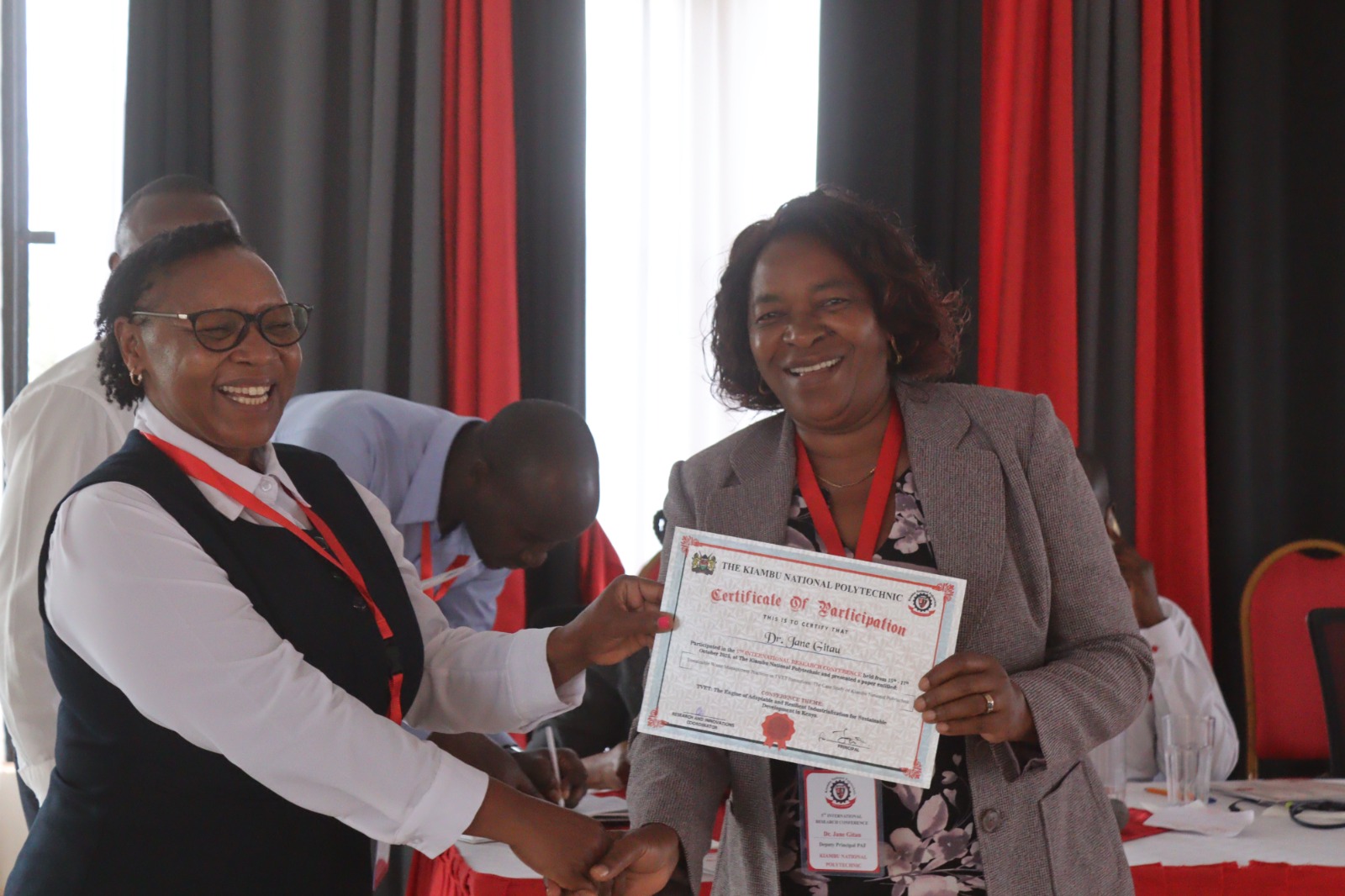
Deputy Principal for Planning, Administration, and Finance Dr. Jane Gitau expressed optimism that the research presented will attract funding to transform innovative ideas into viable enterprises, thus creating employment and fostering industrial competitiveness.
The conference featured critical sub-themes such as Modularization of CBET for Flexible and Lifelong Learning Pathways, Digital Transformation in TVET, and Greening for Environmental Sustainability.
Among the notable research presentations were; Modularized CBET for Adaptable Development – by Isaac Nyakundi Mokaya, exploring how modularized Competency-Based Education and Training (CBET) can enhance employability and labor market responsiveness, despite challenges like limited infrastructure and weak industry linkages.
Harnessing AI in TVET; by Brian Gekonge, examining how Artificial Intelligence (AI) can personalize learning and enhance training simulations, while calling for a comprehensive national AI strategy to overcome technological and ethical barriers.
Sustainable Waste Management at KINAP; by Dr. Jane Gitau and Timothy Warari, revealing challenges in waste segregation and disposal. The study recommends strengthened waste management systems, recycling initiatives, and training to position polytechnics as models of environmental stewardship.
Deputy Principal for Academic and Quality Assurance Mr. Isaac Nyakundi Mokaya reaffirmed KINAP’s commitment to quality assurance, emphasizing the institution’s focus on producing “competent, resilient, and adaptable graduates ready to contribute meaningfully to national development.”
Head of Research and Innovations Mr. Peter Kirui lauded the level of engagement and quality of papers presented, expressing confidence that the conference outcomes will “stimulate robust discussions and innovative policy recommendations” to advance TVET excellence in Kenya.
Selected papers from the conference will be published in a journal, ensuring the dissemination of new knowledge and cementing KINAP’s role as a hub for research-driven sustainable development in the TVET sector.
 Elizabeth Angira
  Mt Kenya Times