LSK demands transparency over KSh375 billion JKIA deal with Chinese contractor
The Law Society warns the airport financing model risks burdening travellers and calls for full disclosure of contract terms

By Charles Kanjama President, Law Society of Kenya
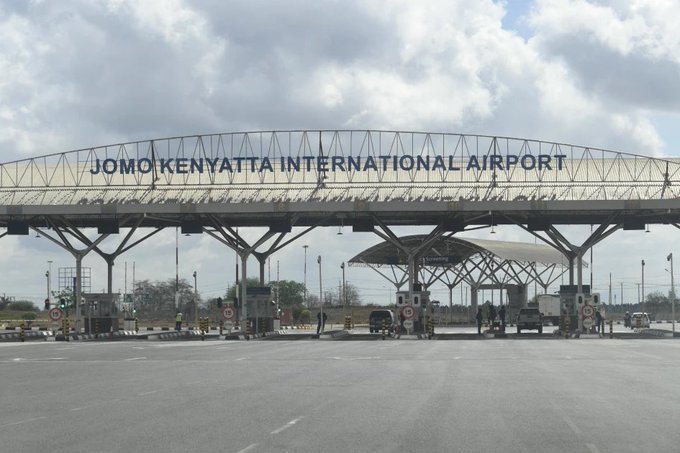
The Law Society of Kenya has demanded full public disclosure of the terms and procurement process governing the KSh375.4 billion contract awarded to China Communications Construction Company for the expansion and modernisation of Jomo Kenyatta International Airport.
The government awarded the contract to the Chinese state-owned firm under the newly established National Infrastructure Fund, months after President William Ruto announced that construction would begin in June 2026 following the receipt of seed capital from the privatisation of the Kenya Pipeline Company. The award comes nearly two years after a proposed public-private partnership with India’s Adani Group collapsed amid legal challenges, labour unrest, and mounting public opposition.
The project is transformative in scale. The first phase is designed to raise JKIA’s capacity to 12 million passengers annually within 18 months, while the second phase will deliver a new 4,500-metre parallel runway and a 230,000-square-metre terminal capable of handling an additional 10 million passengers each year. The expansion will be guided by a 20-year master plan running through 2045.
The ambition is not in dispute. What is in dispute is the method. The project is expected to be funded partly through proceeds invested in the National Infrastructure Fund and commercial loans backed by securitised air passenger service charges — a structure the Law Society warns risks placing an unfair and opaque financial burden on Kenyan travellers and airlines.
“The Air Passenger Service Levy must not become a hidden financial tool that inflates the cost of flying without delivering clear benefits to ordinary citizens,” said LSK President Charles Kanjama. The Society is demanding rigorous oversight to guarantee meaningful local content participation for Kenyan firms, alongside independent verification that the project delivers genuine value amid serious national debt sustainability concerns.
Kanjama invoked Article 201 of the Constitution, which enshrines public finance principles requiring openness, accountability, and the equitable sharing of benefits and burdens. “The Law Society of Kenya will monitor this development closely and stands ready to take swift legal action on any constitutional violations that arise,” he said.
A contract this large, in a procurement environment this opaque, demands sunlight — not reassurances.
Similar Posts by The Mt Kenya Times:
- Mt Kenya Times ePAPER October 1, 2026
- Museveni backs Lamu but keeps Uganda’s money at home
- Sifuna’s party wins its name — and Kenya’s opposition race begins in earnest
- Lamu’s $16B gamble: Africa’s biggest refinery divides the region
- Ruto launches KSh2.2 trillion Lamu refinery in East Africa’s biggest energy bet
About the Author