


By: Herman Ngatia
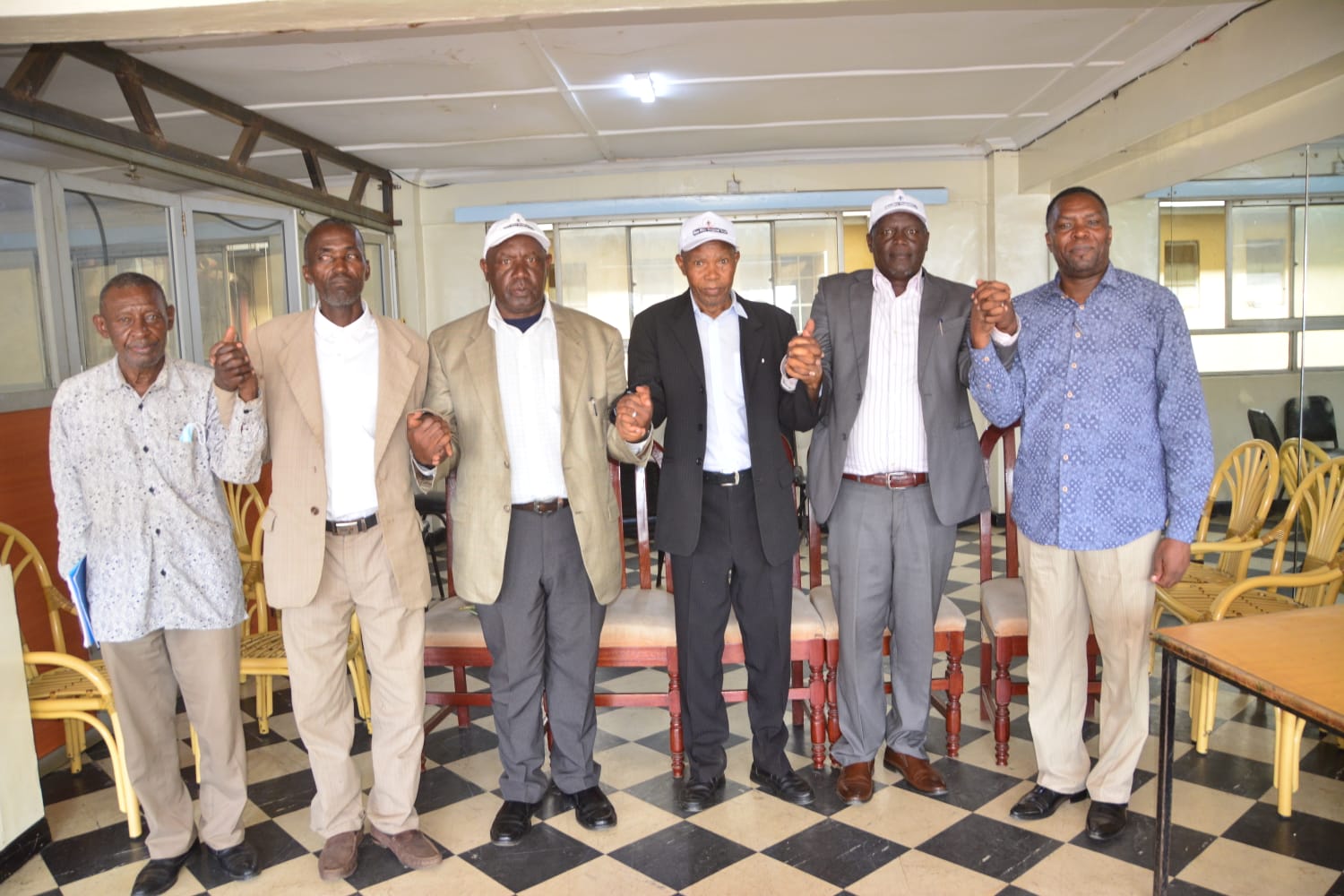
The Mau Mau Original Trust is turning up the heat in its long-running quest for justice. Under the leadership of Dr. Field Marshall Ngacha, the Trust has renewed its call for compensation over historical injustices suffered during Kenya’s colonial era — and it’s urging all Kenyans to stand together in pursuit of what it describes as long-overdue reparations.
Speaking ahead of a major public gathering planned for Uhuru Park, Dr. Ngacha was clear and impassioned: the struggle for compensation is deeply rooted in decades of dispossession, violence, and economic exploitation inflicted under British colonial rule. For members of the Trust, this is not ancient history — it is a wound that has never truly healed.
“The enslavers were the British, and wealth was taken through fear and the suppression of resistance by the gun,” Dr. Ngacha said, giving voice to the enduring grievances that continue to fuel the Trust’s demands.
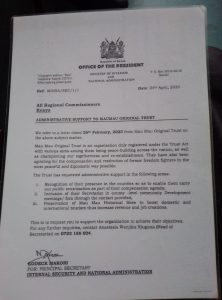 Despite the passage of time, justice has remained frustratingly out of reach. Dr. Ngacha expressed concern that the Trust’s efforts have too often been overlooked, even as survivors and descendants of those who suffered continue to seek recognition and restitution. He did, however, welcome recent moves by the government to formally recognise the Mau Mau Original Trust — a development he described as a positive signal of growing institutional acknowledgment of the group’s place in Kenya’s liberation history.
At the heart of the Trust’s position is a compensation claim estimated at 395 trillion British pounds — a figure derived, they say, from historical losses and benchmarked against national data, including the 2019 Kenya Population and Housing Census. Under their proposal, individual beneficiaries could receive up to KSh 1.2 billion, a projection that underscores the sheer scale of restitution being sought.
Dr. Ngacha also revealed that engagement efforts are ongoing at the international level. He referenced sentiments attributed to the British monarch, suggesting a preference for preserving a cordial status quo even as broader conversations around historical accountability continue to gain traction globally.
To build public awareness and galvanise support, the Trust has organised a national meeting at Uhuru Park on the 10th. The gathering is expected to draw members from across the country — especially those whose families were directly affected during the colonial period. Organisers say the forum will serve as a platform to educate, enlighten, and empower Kenyans on their rights under international law, including provisions they link to frameworks such as the Geneva Convention.
“We want to remove the incapacity and the belief that one cannot claim their rights,” Dr. Ngacha said. “This is about correcting historical wrongs and ensuring that justice is not denied simply because time has passed.”
He also pointed to a notice published in the Kenya Gazette dated March 6, which he said affirms that all Kenyans have a stake in this matter — reinforcing the national significance of the compensation discourse.
Organisers have extended an open invitation to all Kenyans, particularly those who believe their ancestors suffered under colonial rule, to attend and engage with the issue. The planned forum is expected to draw wide participation, reflecting a growing national appetite for conversations around historical justice and reparations.
As Kenya continues to grapple with its past and chart a path forward, the renewed push by the Mau Mau Original Trust adds meaningful momentum to ongoing conversations about accountability, restitution, and national healing.
For Dr. Field Marshall Ngacha and his fellow advocates, the message is unambiguous: the quest for justice may have taken decades, but it remains as urgent — and as necessary — as ever.
 John Kariuki