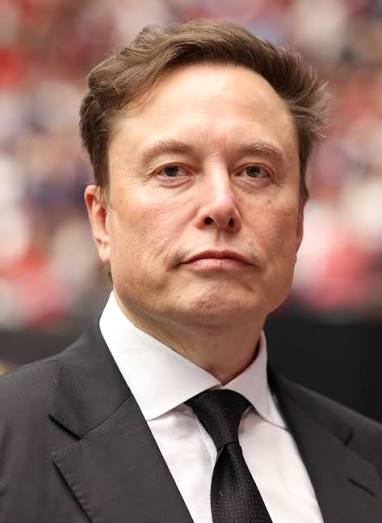
Elon Musk
Elon Musk became the world’s first trillionaire on Friday after SpaceX made its Nasdaq debut in the largest initial public offering in stock market history — a milestone that has thrilled investors, minted thousands of new millionaires, and reignited a fierce global debate about wealth, power, and inequality
By MKT Reporter
Elon Musk became the world’s first trillionaire on Friday after shares in his rocket and technology company SpaceX surged during the largest initial public offering in the history of financial markets, pushing his personal net worth to approximately 1.11 trillion dollars and cementing a concentration of individual wealth that has no precedent in recorded history.
SpaceX shares opened at 150 dollars, rose as high as 176.52 dollars during the session, and closed at 161.11 dollars — up 19.34 per cent from the IPO price of 135 dollars set the previous evening. The company’s market value stood at around 2.26 trillion dollars within hours of its debut on the Nasdaq, placing it on track to become the sixth most valuable publicly traded company in the United States. By any measure, it was a day that rewrote financial history.
Speaking from Texas, where he helped ring the Nasdaq’s opening bell, Musk reflected on the journey that brought the company to this point. “It is certainly hard to believe that a little company that started in a warehouse in El Segundo is now going public with the largest IPO ever,” he said. It was a rare moment of evident sentiment from a man not typically given to public reflection — and one that carried genuine weight. SpaceX was incorporated in 2002 with a mission that most of the financial establishment at the time regarded as fantasy: to make humanity a multiplanetary species.
Musk’s net worth from SpaceX and Tesla combined stood at roughly 1.05 trillion dollars at market open, with his SpaceX stake alone worth more than 766 billion dollars. The SpaceX IPO added more than 180 billion dollars to his fortune in a single day. He is now worth more than the next five richest people on earth combined, and his personal net worth exceeds the gross domestic product of Taiwan, Ireland, or Sweden.
The company raised 75 billion dollars from the IPO, which valued it at 1.77 trillion dollars at the time of pricing. That figure was already a record before trading began. The day’s gains pushed the total valuation considerably higher. Starlink, SpaceX’s satellite internet subsidiary, which drives as much as 80 per cent of the company’s revenue, was widely credited as the commercial engine behind investor confidence.
The listing also created wealth beyond Musk himself. More than 4,400 current and former SpaceX employees are expected to become millionaires through shares they received as part of their compensation, and several executives are understood to have joined the billionaire class. For the engineers and technicians who spent years building rockets in the knowledge that their equity would one day be worth something, Friday was the realisation of that long bet.
And yet SpaceX remains, by conventional standards, a company that loses money. Despite the spectacle of a two-trillion-dollar valuation, SpaceX posted a loss of nearly five billion dollars last year and generated only a fraction of the revenue brought in by similarly valued technology giants. Its IPO prospectus is candid about the uncertainties ahead, acknowledging that many of its most ambitious initiatives “involve significant technical complexity, unproven technologies or technologies that do not exist, and such initiatives may not achieve commercial viability.” Investors on Friday did not appear troubled by that admission.
The sceptics, however, were not silent. Susannah Streeter, chief investment strategist at Wealth Club, observed that Friday’s rally was “being driven as much by hype and scarcity as fundamentals.” Nancy Tengler, chief executive of Laffer Tengler Investments and a buyer of SpaceX shares, was more pointed still, describing the company’s artificial intelligence division as a “cash incinerator.” “It’s important to take some of the projections with a grain of salt,” she said — before adding that she was investing anyway, with a horizon of three to ten years. That combination of caution and commitment perhaps best describes the mood among serious institutional investors: sceptical of the near term, but unwilling to miss whatever the long term might bring.
The political reaction was swift and, on the left, withering. Senator Bernie Sanders focused on Social Security taxes, arguing that a trillionaire should not face the same taxable earnings cap as a worker making 184,500 dollars annually. “Today, Elon Musk, a trillionaire, pays the same amount into Social Security as someone making $184,500,” he said, while promoting legislation that would lift the cap on taxable income. In a separate remark he called Musk’s trillionaire status “a moral travesty,” noting that 60 per cent of Americans live paycheck to paycheck. Senator Elizabeth Warren was more direct still. “The world will get its first trillionaire while Americans across the country are scraping together every dollar to save for retirement,” she wrote, calling on index providers to do their part to protect ordinary families whose pension funds and savings accounts will be exposed to SpaceX’s share price volatility through index-linked funds.
Those concerns about passive investors are not without foundation. The inclusion of a company of SpaceX’s size in major indices means that millions of ordinary savers — many of whom will never knowingly choose to own a share in a rocket company — will be indirectly exposed to whatever happens to the stock from here.
Musk’s fortune has grown roughly tenfold since 2019, a rate of accumulation unmatched even by the decade’s previous “world’s richest person” titleholders — Amazon’s Jeff Bezos, Microsoft’s Bill Gates, and LVMH’s Bernard Arnault. The trajectory is without parallel. Whether it continues will depend in large part on whether SpaceX can translate its engineering ambition into lasting commercial returns — and whether the lunar economy it envisions ever becomes more than a line in a prospectus.
For now, the number stands: one trillion, one hundred billion dollars. The stars, it seems, have a price.
Similar Posts by The Mt Kenya Times:
- Sifuna’s party wins its name — and Kenya’s opposition race begins in earnest
- Lamu’s $16B gamble: Africa’s biggest refinery divides the region
- Ruto launches KSh2.2 trillion Lamu refinery in East Africa’s biggest energy bet
- Keep off politics from teachers – West Mugirango MP tells off sponsors at Kiangungu Prayers Day
- Seven women’s rights organisations in Africa launch coalition for gender equality and media sustainability
About the Author