
Health Cabinet Secretary Aden Duale yesterday inaugurated the Benefits Package and Tariffs Advisory Panel and its Secretariat, to spearhead the development of inclusive, evidence-based health benefits and tariff structures critical to the implementation of Universal Health Coverage (UHC) in Kenya. The Panel was established through Gazette Notice No. 5044 of 23rd April 2025. The Advisory Panel, chaired by renowned public health expert Prof. Walter Jaoko, will provide technical guidance to the Ministry of Health and the Social Health Authority (SHA) on key areas including the design and regular review of health benefits packages through Health Technology Assessment (HTA), updating healthcare tariffs to ensure cost-effectiveness and affordability, and identifying priority interventions that are currently unavailable but urgently needed. Speaking during the inauguration, the CS underscored the importance of a structured, data-informed approach to health policy. He noted that the Panel will assess disease burden, population health needs, and service accessibility to inform decision-making, while also fostering inclusive stakeholder engagement across the healthcare ecosystem.

At the 92nd World Organisation for Animal Health (WOAH) Annual Delegates Meeting in Paris, Cabinet Secretary Mutahi Kagwe detailed Kenya’s groundbreaking initiative to vaccinate over 70 million livestock against Peste des Petits Ruminants (PPR) and Foot-and-Mouth Disease (FMD). He underscored the campaign’s strategic importance in safeguarding livelihoods, boosting regional trade, and securing Kenya’s position as a leader in livestock health. The CS also highlighted the government’s multi-faceted approach, which includes robust stakeholder engagement, cutting-edge vaccine production through KEVEVAPI, and innovative public-private partnerships to ensure last-mile delivery.
He stressed Kenya’s commitment to regional collaboration, working closely with AU-IBAR, IGAD, and neighboring nations to harmonize vaccination efforts and strengthen cross-border disease surveillance.
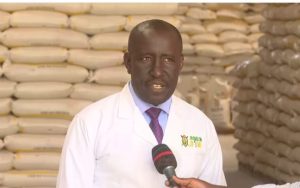
The government has released the first batch of 200,000 bags of maize from the National Strategic Grain Reserve (NSR) to registered millers to help stabilize flour prices and curb a potential shortage.
The stocks held by the National Cereals & Produce Board will be allocated to Miller Associations and individual millers in 90 Kg bags at a subsidized rate of Ksh 4,250 per bag. The first batch will be distributed through select depots in the North and South Rift regions.
The Kwale County Government has taken a significant step towards modernizing revenue collection by introducing a digital revenue management system (RMS). Counties are increasingly automating their revenue management processes to generate adequate revenues that can sustain their administrative and development obligations to the citizens, which currently cannot be met by the fiscal transfers from the national government. This initiative aims to simplify the payment of business licenses, land rates, and other county charges to cashless making the process more efficient and convenient for residents.
Governor Fatuma Achani says that the digitalization of the revenue collection in the county will not only ease the burden for the business owners but also boost the county economy through the business charges.

The Ministry of Health (MOH), in collaboration with other health stakeholders, has officially launched the Obstetric Fistula Routine Services Playbook. The event took place during the national celebrations of the International Day to End Obstetric Fistula held at Gusii Stadium in Kisii town.
The playbook is a strategic user-friendly guide developed to support counties in effectively delivering routine obstetric fistula prevention, treatment and comprehensive care services. Speaking at the event, the Ministry of Health Representative Dr Denver Mariga said the playbook will empower health managers and providers to strengthen service delivery models for fistula prevention and repair, enhance early detection and referral mechanisms, improve community awareness and reduce stigma and monitor and evaluate outcomes for continuous improvement.
Similar Posts by The Mt Kenya Times:
- Diaspora Times Global Sep 19 – Sep 25, 2026
- Tibet’s glacial catastrophe: Behind Beijing’s wall of silence, a climate disaster reshapes a region
- Museveni says Uganda overpaid for fuel through Kenyan middlemen as new terminal breaks ground
- Court orders throw KPL season kickoff into doubt
- Can Kenyans abroad become the untapped force that transforms Kenya?
About the Author