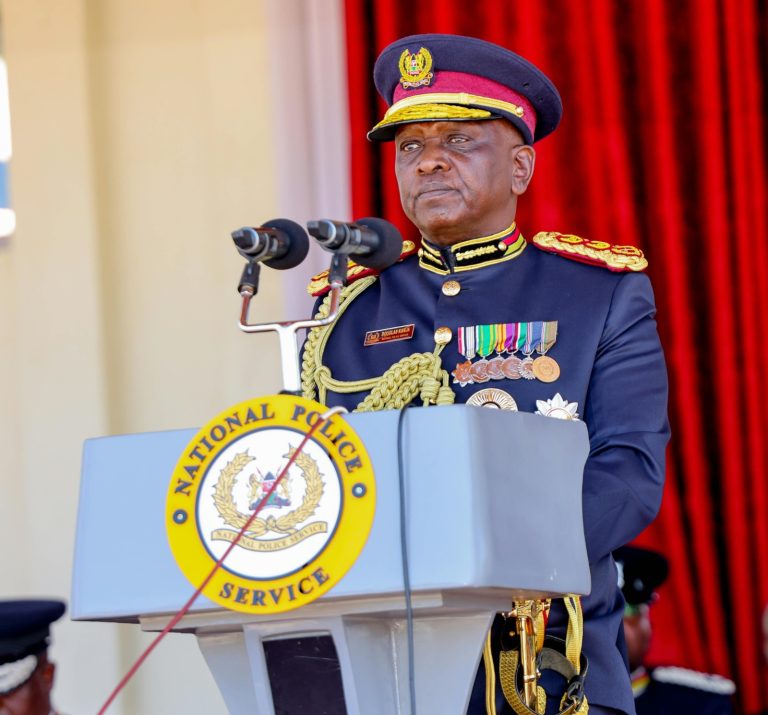

The Kenya Medical, Practitioners and Dentist Council (KMPDC) has shut down 80 health facilities in Kajiado County over noncompliance to licensing regulations.
An additional 3 facilities have also been partially closed for not maintaining stipulated standards.
A total of 27 health practitioners operating at the facilities without proper licenses were also arrested in a crackdown conducted by both council officials and detectives from the Directorate of Criminal Investigations (DCI).
Speaking in Kajiado town Friday, KMPDC Chief Executive Officer David Kariuki revealed that a total of 368 out of the 428 registered health facilities had already been inspected and the exercise was still on going to ensure that all facilities have complied with the set standards.
“Some of the facilities closed were operating below the stipulated standards, others were either unregistered or unlicensed, while others had employed persons that were unregistered or unlicensed, “he said.
Dr Kariuki emphasised that KMPDC stands firm in its mission to regulate medical practitioners and facilities to ensure that quality healthcare is accessible to all Kenyans.
He warned that legal action will be taken against health practitioners operating without valid licenses issued by the council.
County Executive Committee Member for Health Alex Kilowua, reiterated the county government’s commitment towards providing quality and accessible health care.
Kilowua applauded KMPDC for conducting the inspection exercise adding that private health facilities operating without the required licenses and set standards were putting the lives of Kenyans at risk.
“We have seen many people masquerading as licensed health practitioners and putting the lives of Kenyans at risk. We are happy with the ongoing inspection and will be keen to ensure that legal action is taken against them to deter others,” he added.
Kilowua further called for the inspection of public hospitals to ensure that they are compliant with health standards set by the council.
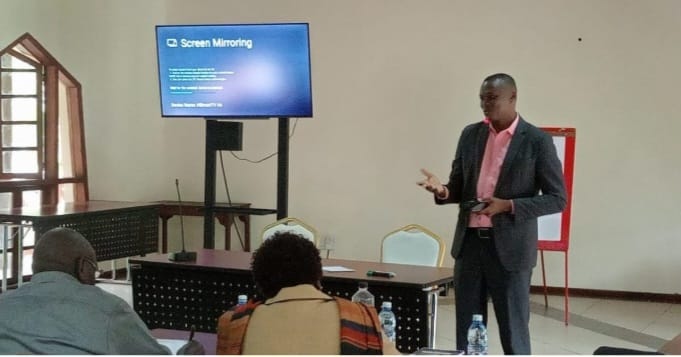 The Makueni County Environment Committee has adopted environmental bills that will improve environmental management and conservation efforts across the county.
Among the bills that have been adopted include the Makueni County Sustainable Forest Management Bill of 2023, the Solid Waste Management Bill of 2023, Makueni County Environment Bill of 2023, and the Makueni County Forestry and Landscape Restoration Plan (FOLAREP) (2023-2032).
The bills will be escalated to the County Executive Committee (CEC) chaired by the governor who will deliberate on the bills before they are taken to the Makueni County Assembly for enactment.
The adoption of the bills was done at a hotel in Makindu Sub County in a meeting chaired by the Chief Officer Dr. Geoffrey Muthoka on behalf of the Lands, Urban Planning, Environment, Mining and Natural Resources Executive Committee Member (ECM) Mr. Nicolas Nzioka.
The above bills and plan have been developed through the funding from partners like World Resources Institute (WRI), Reconcile, ICRAF and UK PACT Kenya among others.
During the meeting, members said that the 10-year plan will help in the restoration of the ecologically and sensitive degraded lands of Makueni especially to ensure the county plants 335 trees million in accordance with the presidential directive of planting 15 billion trees by 2032.
The two-day event was funded by the World Resource Institute. The county assembly has also been sensitized about the bills which have also undergone public participation.
 The Government will distribute food stuffs worth KSh123,052,000 to vulnerable Muslim households during the Ramadhan period, expected to start next week.
Government Spokesperson, Dr. Isaac Mwaura, said the government started the initiative to have the vulnerable access nutritious meals, as a way to promote religious observance, reduce financial strain, encourage social inclusion, to demonstrate the government’s dedication to fairness, empathy and unity among all citizens.
Speaking at the Konza TechnoCity, during a press briefing, Mwaura said the foodstuffs to be distributed include 50 bags of Rice (32,640,000), 50 bags of beans (90M), 190 cartoons of vegetable oil (76,000 and 28 boxes of sardines (336,000).
The month of Ramadhan is expected to start on Monday.
Ramadan is the Ninth Month of the Islamic Calendar, observed by Muslims worldwide, as a month of fasting (sawm), prayer, reflection, and community. The observance of Ramadan is regarded as one of the Five Pillars of Islam and lasts twenty-nine to thirty days, from one sighting of the crescent moon to the next.
 The World Vision Kenya has put a smile to about 12,000 residents of Sololo town and its environs after it delivered two water projects bringing to an end an acute water shortage spanning for decades.
The organization which also marked its 50th year of existence in Kenya has also extended support to the local Moyale Constituency bursary kitty with a donation of Sh9 million to enable needy students to continue with their education.
World Vision country director Gilbert Kamanga said the project which entailed the sinking and equipping of two boreholes at a cost of Sh26 million was informed by the suffering that members of the community particularly women and children endured when sourcing for the essential commodity.
Kamanga pointed out that the organization implemented the project in collaboration with the Moyale constituency development office and the Omeriye Foundation in line with the government’s Vision 2030 development plan.
He said during the commissioning of the project that would provide 976 households with potable water for both domestic and livestock use that the availability of the essential service would also enhance access to quality education for local children.
On the same note, the country director advised local communities who are predominantly pastoralists against the practice of early marriages and to instead embrace education in order to accord their children a bright future irrespective of gender.
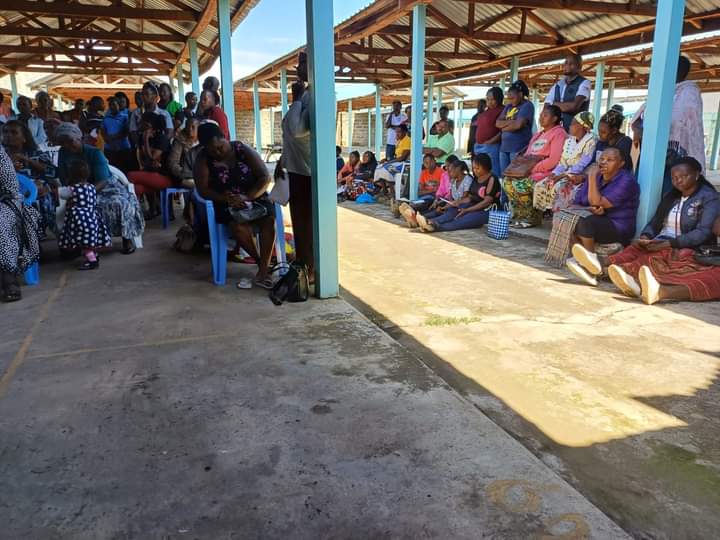 CARE International plans to train small groups in agri-nutrition health and economic empowerment in Nakuru county.
Subsequently, the County Chief Officer for Gender, Social Services and Inclusivity Gladys Kamuren has held a meeting with over 20 Economic Empowerment Groups from Kaptembwo Ward.
The meeting centered on discussing CARE International’s role as an economic empowerment partner. During the meeting, Kamuren urged women to fortify their groups by prioritizing accountability and transparency.
This, she emphasized, would render the groups more sustainable and attractive to additional funding opportunities.
Additionally, she pledged her commitment to collaborating with CARE International to achieve their shared mission of community empowerment and improve the livelihoods of women groups.
However, a woman leader from the area, Monica Onsoti, urged the NGO to consider funding individual women who have businesses and find it difficult to operate in groups.
Onsoti said such self-made women also require support to grow their enterprises, instead of being ignored by NGOs who purport to be supporting only groups, since growth is important and should be encouraged instead of always herding women together like sheep.
Similar Posts by The Mt Kenya Times:
- Mt Kenya Times ePAPER August 27, 2026
- Opposition will have a candidate by April, says Gachagua
- Kalonzo takes his campaign to the people across three counties
- Kenya’s election technology tender: A KSh10B procurement under fire
- The goon question: What Ruto’s vow to act personally really means for Kenya
About the Author