Pay and apologise: IEBC orders Muhia to cough up KSh1.5m and face the public within 72 hours
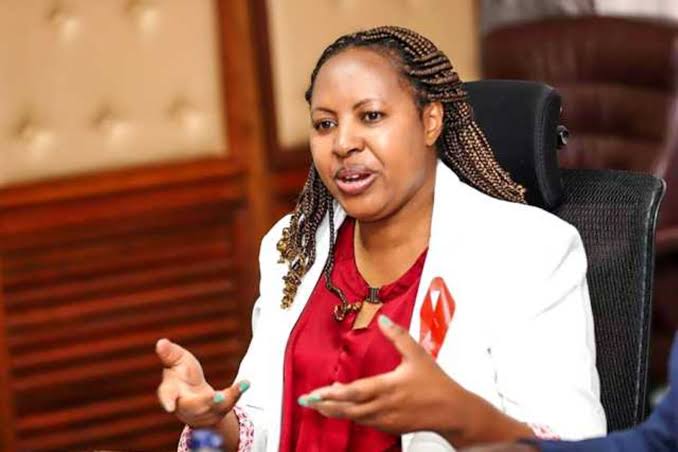
Kipipiri Member of Parliament Wanjiku Muhia
The commission’s stiff penalty against the Kipipiri MP signals a new era of electoral accountability — and puts every politician on notice ahead of 2027
By Hadassah Karangu
The Independent Electoral and Boundaries Commission yesterday delivered one of its most significant enforcement actions in recent memory, fining Kipipiri Member of Parliament Wanjiku Muhia KSh1.5 million and ordering her to issue a public apology within 72 hours over violations of the Electoral Code of Conduct — a ruling that has sent shockwaves through Kenya’s political establishment and reignited a fierce national debate about accountability, political speech, and the future of the country’s democracy.
The penalty, among the stiffest the commission has handed down against a sitting legislator, landed with immediate force. Supporters, critics, political analysts, and ordinary Kenyans reacted with equal intensity — some welcoming the ruling as long overdue, others questioning whether the commission was applying its standards with consistency and without political motivation.
But beyond the legal arguments and political noise lies a much larger conversation — one that goes to the very foundation of what kind of democracy Kenya intends to be.
For years, Kenyans have watched political leaders make inflammatory statements with little or no consequence. During election seasons, rallies routinely become arenas of confrontation, opponents are attacked personally, and supporters are mobilised through emotion rather than ideas. In some cases, careless rhetoric has pushed communities toward tension and deep mistrust. Many Kenyans still carry the memory of periods when political speech brought the country dangerously close to the edge. Those memories remain raw.
That is precisely why the Electoral Code of Conduct exists.
The code was not designed to silence politicians. It was designed to protect democracy — to ensure that campaigns are conducted peacefully, respectfully, and within the law, and to remind leaders that elections should be contests of ideas, not vehicles for insults, threats, or incitement.
From the commission’s perspective, enforcing these rules is not discretionary. It is a constitutional duty. Where allegations are raised and evidence presented, the IEBC is obligated to act. Failure to do so would invite far more damaging questions about its credibility and commitment to impartiality.
The 72-hour apology deadline adds a sharp public dimension to the ruling that distinguishes it from a simple financial penalty. Muhia is not merely being asked to pay. She is being required to stand before the public and account for her words — a condition that many observers regard as the more politically consequential of the two sanctions.
Whether she complies, challenges the ruling, or attempts to negotiate its terms will be watched closely. Her response in the coming hours may prove as revealing as the ruling itself.
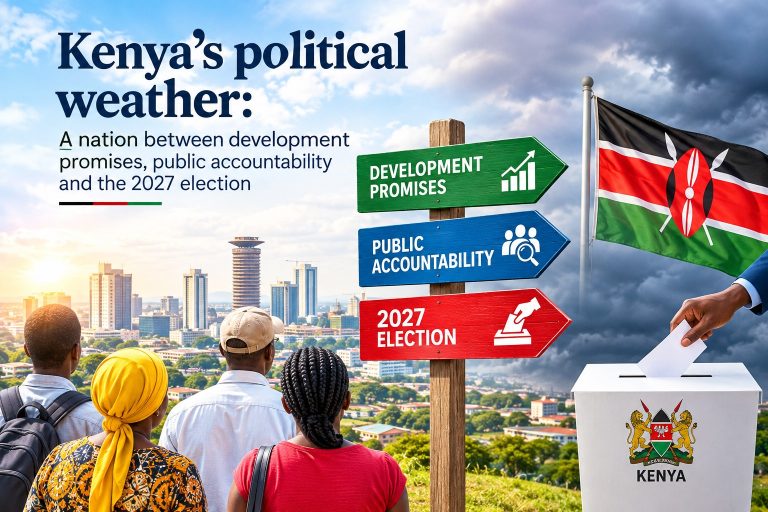
The timing of the IEBC’s action carries its own significance. Though 2027 remains some distance away, Kenya’s political engines are already running. Alliances are forming, camps are positioning, and leaders are traversing the country testing messages and measuring public appetite. By acting now — and acting firmly — the commission appears to be sending an unmistakable signal that the era of unchecked political rhetoric must end before campaigns reach full intensity.
If so, that message is not addressed solely to Muhia. It is addressed to every politician in Kenya. A warning that leadership carries responsibility. A warning that words have weight. A warning that public influence must be exercised with care.
Yet the controversy also exposes a deeper and more stubborn challenge facing Kenya’s public institutions: trust. Years of political disputes have left many citizens genuinely sceptical about whether laws are applied equally. Whenever action is taken against one politician, a familiar question surfaces almost immediately — what about the others?
It is a fair question, and not one the commission can afford to dismiss. The credibility of any institution rests not only on what it does, but on whether the public believes it is acting without favour. If Muhia faces consequences while others escape scrutiny for comparable conduct, accusations of selective justice will be difficult to deflect.
Consistency will therefore be the defining test of whether this ruling represents a genuine turning point or simply a high-profile exception. The law must apply regardless of political status, popularity, or party affiliation. It must recognise only conduct. Anything less risks corroding public confidence at precisely the moment the commission needs to be rebuilding it.
In this sense, the Muhia ruling places the IEBC itself under the microscope. As the MP’s conduct is debated, the commission’s own independence, impartiality, and resilience under political pressure are being examined just as closely.
Politicians across the board would do well to treat this moment as a serious invitation to reflect. Kenya faces real and pressing challenges. Young people are searching for work. Families are struggling with the rising cost of living. Farmers are contending with unpredictable weather and volatile markets. Businesses are trying to stay afloat in difficult economic conditions. These are the concerns filling the minds of ordinary citizens — yet far too often, political discourse revolves around personalities, rivalries, and endless blame.
Kenyans deserve better. They deserve leaders who compete through ideas rather than insults, campaigns centred on solutions rather than sensational headlines, and public figures who understand that political power is a responsibility, not a reward.
The KSh1.5 million fine and the 72-hour apology order may ultimately matter less as individual sanctions than as a statement of intent. The IEBC appears to be drawing a line — and inviting Kenya’s political class to decide which side of it they intend to stand on.
Every statement made today will shape tomorrow’s political environment. Every institutional decision will either strengthen or erode public trust. And every leader will ultimately be judged not only by the promises made on a campaign stage, but by the conduct displayed long before polling day.
Whether one supports Muhia or not, whether one trusts the IEBC or not, this moment confronts Kenya with a question that is uncomfortable but inescapable: do we want politics driven by accountability and ideas, or politics driven by noise and impunity?
The answer may determine not only the credibility of the next election, but the future direction of the nation’s democracy. And that is why this ruling matters — not because of one MP and one fine, but because of the standards Kenya chooses to uphold on the road to 2027.
Similar Posts by The Mt Kenya Times:
- Mt Kenya Times ePAPER October 12, 2026
- Gachagua’s party storms Kikuyu from afar as 2027 countdown begins
- Counties caught: The KSh100B payroll scandal Kenya can no longer hide
- CS Ogamba: tree planting could generate carbon credit millions to fund education
- Farouk Kibet calls for unity and development as leaders rally behind Ruto’s 2027 re-election bid
About the Author