Police accountability on trial as seven officers face probe over journalist’s arrest
The investigation into the detention of Citizen TV’s Francis Odee on Kimathi Street will test whether Kenya’s oversight institutions can deliver credible answers ahead of a critical election year
By Collins Kibet
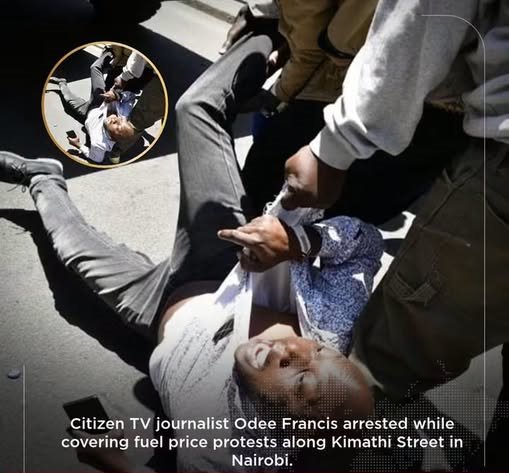
Seven police officers are under investigation by the Independent Policing Oversight Authority following the arrest and alleged assault of Citizen TV journalist Francis Odee during fuel price demonstrations along Kimathi Street in Nairobi on Tuesday, in an incident that has reignited debate about press freedom, police conduct and constitutional rights with fourteen months to the 2027 general election.
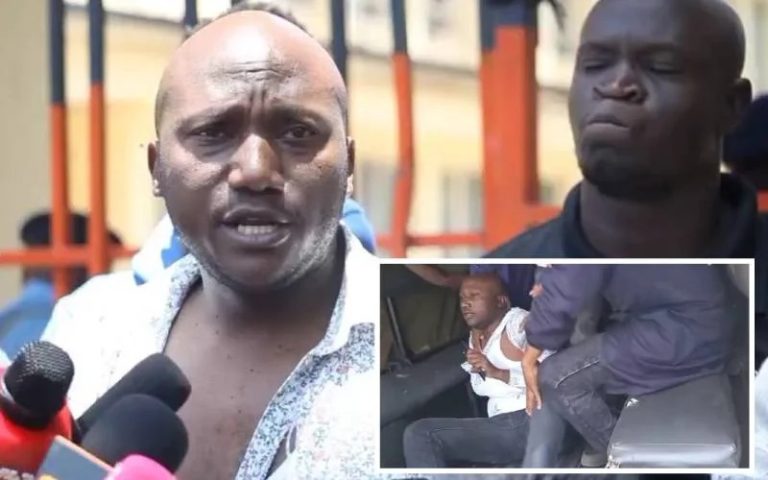
Odee was covering the demonstrations when officers allegedly moved to arrest protesters in the area. According to published accounts, an officer pointed towards the journalist and directed colleagues to detain him. Odee identified himself as a journalist and presented his press credentials. Officers proceeded regardless. He was reportedly dragged along the street, beaten and had his clothing torn before being taken to Central Police Station alongside protesters, though he was not formally booked into custody. He was subsequently released following intervention by senior police officers.
His release, however, has not closed the matter. The circumstances of his arrest, the conduct of the officers involved and whether proper procedures were followed remain unanswered questions that investigators must now resolve.
IPOA confirmed it is questioning seven officers in connection with the incident, including senior officers at Central Police Station and five others allegedly involved in the confrontation. The investigation is expected to establish whether there were lawful grounds for the arrest, whether any force used was necessary and proportionate, and whether supervisory failures contributed to the incident. Being under investigation does not constitute a finding of guilt — the process must be grounded in evidence, witness testimony and applicable legal standards before any conclusions are drawn.
Investigators have significant material to work with. Video recordings from the scene, statements from witnesses, Odee’s own account, officers’ explanations and police records from the day could collectively help reconstruct what happened with sufficient precision to reach credible findings. The quality of the investigation will depend on how thoroughly and impartially that material is examined.
The incident has drawn swift condemnation from media organisations. The Media Council of Kenya, the Kenya Editors Guild and the Crime Journalists Association of Kenya have all raised concerns about the reported treatment of Odee. The Kenya Editors Guild has gone further, demanding a formal investigation and a public apology from Inspector General of Police Douglas Kanja. These calls reflect a broader concern that journalists must be able to document public events without facing unjustified arrest or physical harm.
The constitutional framework is clear. Article 34 of Kenya’s Constitution protects the freedom and independence of the media. Article 29 protects individuals against violence and cruel, inhuman or degrading treatment. Article 37 guarantees the right to assemble and demonstrate peacefully. None of these provisions exempt police from enforcing the law, but all of them require that enforcement remain within constitutional limits. A journalist covering a demonstration is not a participant in it. Professional status does not place anyone above the law, but it equally does not remove the right to lawful treatment.
Why this case matters extends beyond Odee personally. When journalists are detained or physically harmed while covering public events, the effects ripple outward. Reporters assigned to similar events may become reluctant to attend. Editors may hesitate before deploying staff. The cumulative result is a narrowing of independent coverage at precisely the moments when public information is most needed — during protests, crises and confrontations between citizens and the state.
The timing sharpens the stakes. As Kenya moves towards the 2027 general election, political demonstrations, civic campaigns and public debates will multiply. The capacity of journalists to report those events freely, and the willingness of oversight institutions to investigate alleged abuses credibly, will shape public trust in both the media and the security services during a period when that trust will be tested repeatedly.
Whether this investigation restores confidence or deepens scepticism will depend on one thing: whether the authorities establish the facts impartially, communicate their findings clearly and act on the evidence wherever it leads. If misconduct is established, those responsible must face appropriate consequences. If the allegations cannot be substantiated, the investigation must explain its conclusions with equal transparency.
What happened on Kimathi Street on Tuesday deserves a full and honest answer. Releasing a journalist is not accountability. It is the beginning of a question, not the end of one.
Similar Posts by The Mt Kenya Times:
- Mt Kenya Times ePAPER October 22, 2026
- Ruto heads to Harare for COMESA summit on trade and regional security
- Mudavadi and Wetangula walk out as Sifuna speaks at Nabwera memorial
- Learners, teachers graduate from thrive for good organic farming training
- Future Is Female Mentorship Program opens applications for 6th edition, to unveil top 25 at Africa Fintech Summit in Kigali
About the Author