Retirement is not disenfranchisement: Reclaiming the constitutional rights of Kenya’s former presidents
 The Mt Kenya Times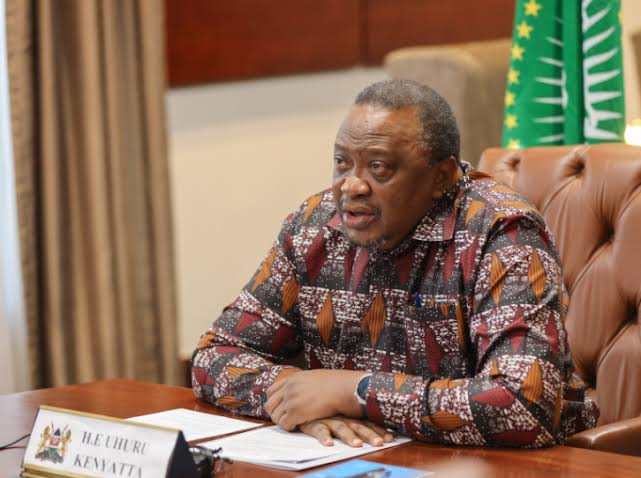
Retired President Uhuru Kenyatta
By Mr. Fredrick Kipchumba Chelimo PWD
Email: fkipchelimo@yahoo.com
“A President may leave State House, but he does not leave behind his citizenship. Retirement should mark the end of an office—not the beginning of a lesser constitutional life.”
A republic must be judged not only by how it treats those who hold power, but also by how faithfully it protects their rights after they relinquish it. Kenya’s Constitution did not establish citizenship in instalments, nor did it create a class of citizens who surrender their political freedoms upon leaving public office. Retirement from the presidency terminates an office; it does not, by itself, terminate citizenship, dignity, freedom of association or the constitutional right to participate in public affairs.
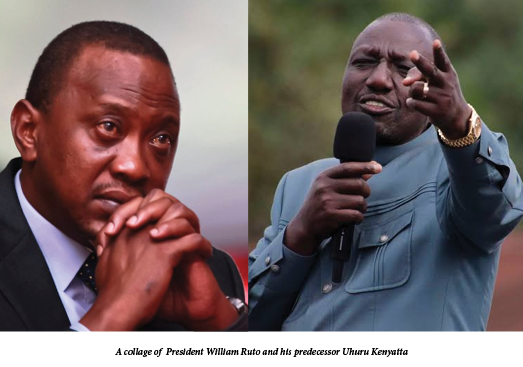
That principle is particularly important in the continuing debate surrounding retired President HE Uhuru Kenyatta. The question should not be reduced to whether Kenyans like or dislike his political interventions. It should instead be examined through the constitutional architecture of the Republic: what rights does a former President retain, what limitations may Parliament lawfully impose, and where should the boundary lie between legitimate regulation and unnecessary political disenfranchisement?
Article 2(1) of the Constitution establishes its supremacy, declaring that the Constitution is the supreme law and binds all persons and State organs. Article 2(4) is even more explicit: any law, including customary law, that is inconsistent with the Constitution is void to the extent of that inconsistency. The starting point, therefore, cannot be political convenience. It must be constitutional fidelity.
Article 38 protects the political rights of every citizen including retired presidents. It guarantees the right to make political choices, to form, join or participate in the activities of a political party, to campaign for a political party or cause and to participate in free, fair and regular elections. Article 36 protects freedom of association, while Article 27 guarantees equality and equal protection and benefit of the law. These provisions do not contain a general exception for former Presidents.
Article 24 nevertheless permits limitation of constitutional rights by law, but only where the limitation satisfies a demanding constitutional test. The limitation must be reasonable and justifiable in an open and democratic society based on human dignity, equality and freedom. The Constitution requires consideration of the nature of the right, the importance and purpose of the limitation, the relationship between the limitation and its purpose, and whether there are less restrictive means of achieving that purpose.
The statutory provision at the centre of the controversy is section 6 of the Presidential Retirement Benefits Act. It provides that a retired President shall not hold office in any political party for more than six months after ceasing to hold office. It also envisages a consultative and advisory role for a retired President. Importantly, the provision does not prohibit a former President from being a citizen, expressing political views, belonging to a political party or participating generally in political discourse. The High Court has now expressly upheld this restriction, holding that the six-month limitation is constitutionally proportionate.
That judgment must be acknowledged honestly. It would be legally irresponsible to pretend that the matter has not been judicially determined. Justice Lawrence Mugambi concluded that the restriction serves the constitutional objective of preventing a former Head of State from retaining or extending political power beyond the constitutional term and found that the limitation satisfies Article 24.
Yet a judicial determination does not end constitutional debate forever. Kenya’s Constitution deliberately establishes mechanisms through which constitutional questions can be revisited through appellate litigation, legislative reform and constitutional interpretation. A citizen may therefore legitimately argue that the restriction should be reconsidered without claiming that the High Court has already declared it unconstitutional.
The case for reconsideration begins with a simple constitutional proposition: retirement from public office does not erase citizenship. A former President remains subject to the same Constitution, possesses fundamental rights and retains human dignity. If ordinary citizens can join parties, hold party positions and participate in political activity, the question whether a former President should be subjected to a special political disability deserves continuing constitutional scrutiny. The distinction between a former President and other citizens may be constitutionally permissible, but differential treatment must remain rational, proportionate and connected to a legitimate constitutional purpose.
Article 10 further requires national values including human dignity, equality, inclusiveness, democracy, participation of the people, good governance, integrity, transparency and accountability to guide State action. The constitutional conversation should therefore ask whether there are less restrictive mechanisms capable of protecting institutional stability without permanently diminishing the political participation of a former Head of State.
There is another principle that Kenya should never forget: laws and institutions create precedents. Those now demanding the narrowing of constitutional rights enjoyed by a former President should remember that constitutional protections are not designed exclusively for today’s political allies or opponents. Political power changes hands. The restrictions imposed upon one former leader may eventually become the rules governing another. What appears convenient when applied to an unpopular political figure may become deeply uncomfortable when applied to one’s own political generation.
That is why constitutionalism requires restraint. The proper question should never be, “Whose political interests are being served?” It should be, “What rule are we establishing for the Republic?”
Those calling for further mutilation of the political rights of retired Presidents therefore need to confront the broader constitutional consequences of their position. If a democratic society normalises the progressive reduction of citizens’ rights because they once occupied powerful offices, it risks establishing a precedent in which political retirement becomes a form of civic disability. Such an approach would require careful justification under Articles 24, 27, 36 and 38 rather than political rhetoric.
At the same time, supporters of full restoration must acknowledge the legitimate constitutional concern identified by the High Court: Kenya has experienced the danger of political power extending beyond formal constitutional tenure. The answer, therefore, cannot simply be to disregard institutional safeguards. Justice requires that the legitimate purpose of protecting constitutional transitions be balanced against the equally important principle that citizenship and fundamental rights do not disappear when an individual leaves high office.
The answer, therefore, should not be partisan retaliation or personality-driven constitutionalism. It should be a mature national conversation about whether the present restriction is the least restrictive mechanism capable of protecting democracy while respecting the political rights of former Presidents.
Kenya’s constitutional project was built on a profound idea: power belongs to the people. Presidents exercise delegated constitutional authority; they do not become owners of citizenship when they enter State House, and they do not cease being citizens when they leave it. The presidency has a beginning and an end. Citizenship does not.
For that reason, any proposal to restore or further protect the full political rights of retired Presidents should proceed through constitutional litigation, parliamentary review or appropriate legislative amendment, rather than through political pressure or selective enforcement. Equally, those seeking to preserve the present restriction must defend it through constitutional principle rather than political hostility.
The ultimate test is bigger than Uhuru Kenyatta. It is whether Kenya will build a constitutional order in which rights survive political transitions, where today’s precedent does not become tomorrow’s weapon, and where every citizen—including a former President—is governed by the same supreme Constitution.
“The true measure of a constitutional democracy is not how much freedom it grants its friends, but how faithfully it protects the rights of those whose politics may one day become inconvenient. When power changes hands, the Constitution must remain standing.” – Fredrick Chelimo.
Similar Posts by The Mt Kenya Times:
- Mt Kenya Times ePAPER September 17, 2026
- Ruto and Uhuru: The rupture at the heart of Kenya’s 2027 election
- Gakoromone traders and rights group demand closure of sewage discharge
- Kenya’s 2027 election: Can technology strengthen democracy or manipulate voters?
- Brighton stun Manchester United with 3-2 comeback at Old Trafford
About the Author