


By Jerameel Kevins Owuor Odhiambo
The Independent Policing Oversight Authority has documented over 1,200 complaints against police officers, ranging from unlawful arrests to extrajudicial killings from 2023 to January 2026. In the same period, Transparency International Kenya reported that the police force remained the most corrupt public institution in the country, with 43% of Kenyans who interacted with police officers reporting having paid a bribe. These are not mere statistics but symptoms of a systemic crisis that has eroded public trust in law enforcement and transformed what should be a protective institution into a predatory force. The National Police Service, despite constitutional reforms enacted over a decade ago, continues to operate with impunity, extracting wealth from the very citizens it is mandated to serve while failing spectacularly in its primary duty of crime prevention and public safety. This crisis demands urgent, comprehensive reform rooted in accountability, transparency, and a fundamental reimagining of the relationship between police and citizens.
 The roots of Kenya’s policing crisis stretch deep into the colonial era, when law enforcement was designed not to serve the public but to control and subjugate it. The Kenya Police Force, established in 1906 under British colonial rule, existed primarily to protect settler interests, suppress African resistance, and maintain racial segregation. Officers were trained to view the African population as subjects to be controlled rather than citizens to be protected. This colonial DNA was never fully excised from the institution after independence in 1963. Instead, successive post-colonial governments repurposed this machinery of oppression to consolidate political power, crush dissent, and protect ruling elites. The police became an instrument of state security rather than public safety, a tool for politicians rather than a service for citizens. This historical legacy created institutional cultures of brutality, corruption, and political servility that persist today, manifesting in officers who see their badges as licenses for extortion rather than symbols of public trust.
The promulgation of Kenya’s 2010 Constitution represented a watershed moment for policing reform, embedding principles that should have fundamentally transformed law enforcement. Article 244 established the National Police Service as a national institution that would be professional, accountable, and transparent, operating in accordance with constitutional values including the rule of law, human rights, and public participation. The Constitution created the Independent Policing Oversight Authority to provide civilian oversight, mandated that police officers respect and uphold human dignity, and guaranteed citizens protection from arbitrary arrest and detention. Chapter Six on leadership and integrity set clear ethical standards for all public officers, including police. These constitutional provisions were revolutionary on paper, promising to end decades of abuse and establish a police service that would genuinely serve the people. The 2011 National Police Service Act and the 2011 Independent Policing Oversight Authority Act provided the legislative framework to operationalize these reforms, creating structures for accountability, investigation of police misconduct, and professional standards.
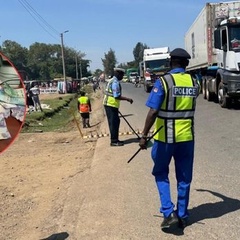
However, fifteen years after the Constitution’s promulgation, the gap between constitutional ideals and policing reality remains a chasm of broken promises and continued abuses. Despite explicit constitutional protections, arbitrary arrests remain commonplace, with officers routinely detaining citizens for offenses as absurd as holding hands in public, wearing torn jeans, or simply being in the “wrong” neighborhood at the “wrong” time. These arrests serve no legitimate law enforcement purpose but function as opportunities for extortion, with release contingent upon payment of informal “fines” that enrich individual officers. The practice has become so normalized that many Kenyans budget for potential police bribes when traveling, particularly at the infamous roadblocks that dot highways across the country. Motorists know that even with proper documentation, they may be forced to negotiate with officers who invent violations or threaten vehicle impoundment. This systematic corruption transforms every police interaction into a potential shakedown, where the uniform signifies not protection but predation, and where constitutional rights exist only for those who can afford to purchase them.
 The descent into criminality extends far beyond petty corruption into areas where police themselves become perpetrators of serious crimes. Reports of police officers running protection rackets for criminal gangs, facilitating smuggling operations, and even directly participating in armed robbery have become disturbingly common. In urban informal settlements and rural areas alike, communities report that local police officers maintain relationships with known criminals, warning them of impending operations in exchange for cuts of illicit proceeds. This collusion renders crime prevention impossible, as the very institution charged with public safety becomes complicit in its erosion. Even more chilling are documented cases where police officers have used their weapons and authority to commit violence against citizens, secure in the knowledge that their colleagues will ensure investigations go nowhere. Extrajudicial killings, euphemistically termed “disappearances” or attributed to “shootouts with criminals,” occur with alarming frequency, disproportionately affecting young men from poor communities who lack the resources or connections to demand accountability. The police have become both law enforcers and lawbreakers, operating in a moral vacuum where their authority is absolute and their accountability virtually nonexistent.
This culture of impunity thrives because the police force remains fundamentally structured to serve political and elite interests rather than the broader public. Despite constitutional provisions for operational independence, the National Police Service continues to function as a political tool, with deployment decisions, promotions, and assignments often determined by political patronage rather than professional merit. During election periods, police partisanship becomes particularly blatant, with officers openly protecting ruling party politicians while harassing opposition figures and their supporters. Peaceful protesters exercising their constitutional rights to assembly and demonstration face teargas, beatings, and mass arrests, while political rallies by government-aligned parties receive police protection and facilitation. Wealthy and politically connected individuals enjoy immunity from arrest regardless of their crimes, while poor citizens face the full force of law enforcement brutality for minor infractions. This two-tiered system of justice, where your treatment by police depends on your bank account or political connections rather than your conduct, fundamentally undermines the rule of law and makes a mockery of constitutional guarantees of equality before the law.
The failure extends equally to the police force’s core mandate of proactive crime prevention, where reactive incompetence has become the norm. Rather than developing intelligence networks, building community relationships, and preventing crimes before they occur, the police wait for incidents to happen and then respond inadequately or not at all. Community policing initiatives, which could bridge the trust gap between officers and citizens, remain underfunded and undermined by officers who view them as diversions from “real” police work. Investigative capacity remains woefully inadequate, with detectives lacking basic resources, training, and forensic support necessary to solve crimes professionally. This incompetence creates a vicious cycle where public confidence in police effectiveness diminishes, victims hesitate to report crimes knowing police will do nothing, and criminals operate with increasing boldness knowing the likelihood of professional investigation and prosecution is minimal. The police have perfected the art of appearing busy while accomplishing little, mounting dramatic operations that generate headlines but fail to address underlying security challenges, while the everyday burglaries, assaults, and thefts that terrorize ordinary citizens receive cursory attention at best.
The cruelty that characterizes much of Kenya’s policing reflects not individual deviance but institutional culture shaped by poor training, inadequate supervision, and complete absence of consequences for misconduct. Police recruits receive training that emphasizes obedience and force while largely ignoring human rights, de-escalation techniques, or community engagement. Once deployed, young officers learn from veterans who teach them that their badge entitles them to demand “respect” through intimidation, that citizens are adversaries to be controlled rather than partners to be served, and that corruption is both acceptable and necessary given poor official salaries. Supervisors, themselves products of the same culture, tolerate or participate in misconduct rather than rooting it out. When citizens attempt to report police abuse through official channels, they encounter bureaucratic obstacles, intimidation, and retaliation rather than justice. The Independent Policing Oversight Authority, while making some progress, remains under-resourced and politically vulnerable, unable to investigate the volume of complaints it receives or ensure that officers found guilty of misconduct actually face meaningful consequences. Internal disciplinary mechanisms within the police force lack credibility, with investigations frequently whitewashing serious abuses or imposing token punishments that fail to deter future misconduct.
The economic dimensions of police corruption deserve particular attention, as they reveal how law enforcement has become an extractive institution that impoverishes rather than protects citizens. For many officers, their official salary represents only a fraction of their income, with the remainder coming from bribes, extortion, and protection money collected from both legitimate businesses and criminal enterprises. Roadblocks function as tollbooths where drivers must pay to pass, with collection quotas enforced through informal hierarchies that ensure senior officers receive their share. Market traders pay weekly “security fees” to avoid harassment and false charges. Nightclub owners negotiate monthly payments to operate without constant raids. Even street vendors, among the poorest entrepreneurs in the country, must surrender portions of their meager earnings to avoid having their goods confiscated. This systematic extraction drains resources from productive economic activity, creates barriers to business formation and growth, and perpetuates poverty in communities that can least afford it. The economic cost of police corruption extends to foreign investment, as international businesses factor endemic corruption into their risk calculations, while domestic entrepreneurs who refuse to participate in corrupt systems find themselves unable to compete against those who pay for preferential treatment.
Reforming Kenya’s police force requires nothing less than a complete transformation rooted in four pillars: accountability, professionalism, community integration, and political independence. Accountability demands strengthening oversight institutions with genuine investigative powers, adequate budgets, and political protection from interference, while reforming internal disciplinary systems to ensure swift, certain, and severe consequences for misconduct. Professionalism requires overhauling recruitment to prioritize integrity and education over political connections, transforming training to emphasize human rights and community service over force and compliance, and creating career advancement systems based on merit rather than patronage. Community integration means investing seriously in community policing, creating formal mechanisms for citizen input into local policing priorities, and rebuilding trust through consistent professional conduct rather than public relations campaigns. Political independence requires insulating senior appointments from political manipulation, ensuring operational decisions are made on professional grounds, and protecting officers who refuse to execute illegal or politically motivated orders. These reforms must be accompanied by improved compensation and working conditions that reduce economic incentives for corruption, while vetting processes remove officers whose records demonstrate unfitness for continued service. The challenge is immense, requiring political will that has been conspicuously absent, but the alternative is the continued decay of an institution whose dysfunction threatens Kenya’s security, prosperity, and democratic future. The 2010 Constitution provided the blueprint for transformative police reform; thirteen years later, it remains largely unimplemented, a testament to political failure rather than practical impossibility. Kenya’s citizens deserve better than a police force that extorts, brutalizes, and fails to protect them. They deserve what the Constitution promised: a professional, accountable, and effective National Police Service that actually serves the nation.
The writer comments on topical issues.
 Mt Kenya Times
  Elizabeth Angira