The Fightback Against Cervical Cancer Is Early Screening, Women Told
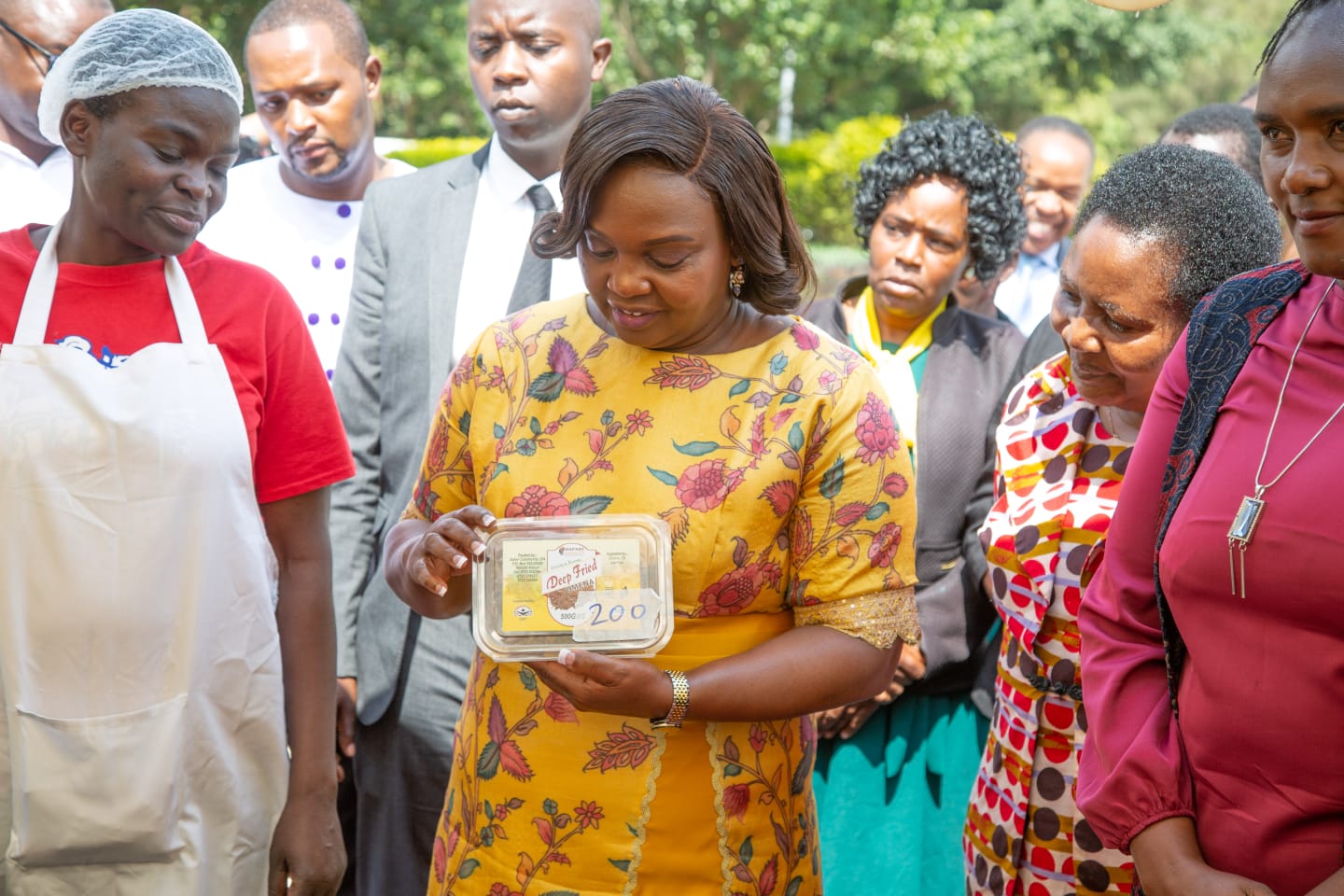
The spouse of the Deputy President Pastor Dorcas Rigathi looks at the packaged deep fried omena by widows from Kibra slum and environs who are part of the Widows and Orphans program she launched more than one year ago. The widows have become empowered and have a tree nursery with more than 125,000 tree seedlings, are repackaging cereals, engaged in small business, and other economic projects. Photo/DPC

By ODP
Women have been urged to go for early cervical cancer screening and prevent late diagnosis that results in complicated treatment, and death.
This was during a medical camp of 500 widows, and more than 200 of their dependents from Kibra slums and environs that was held at a church in Nairobi West.
The families were presented with an opportunity to have their bodies screened for cervical cancer, HIV/AIDs, counselling, eye and dental check-ups, hypertension, and diabetes among other health procedures.
Globally, early diagnosis is said to save thousands from death caused by cervical cancer.
Most of the widows who attended the medical camp suffered eye problems due to old age, and also hypertension and diabetes, worsened by challenges caused by single parenting, and family wrangles that arise from land and property disputes.
The medical camp, which brought together experts from the Karen Hospital Karen Hospital, Lions First Eye Hospital, Nairobi Women’s Hospital, Nairobi County Health Department, Kenya Pharmaceuticals and Poisons Board, Ace Pharmaceuticals, and the James F. Munene College of Health Services, was organised by Pastor Dorcas Rigathi under Widows and Orphans Program.
“Cervical cancer is treatable when detected early. We have partnered with different hospitals to bring health closer to our people, and also encourage early detection and saving of lives,” said Pastor Dorcas during the camp.
Constance Mbone became a widow in 2005, and brought up her three children alone. She appreciated the medical camp as an opportunity for finding out her health status in addition to the knowledge gained in establishing a tree nursery, and detergent making under the Widows and Orphans Program which she has been a member for more than one year.
“When we make these detergents, we shall have an income and support our families,” said Ms Mbone.
Rose Khansemo, 55, said she was a mitumba seller, but her two children were jobless, resulting in one having mental health issues. She, however, appreciated the program for the skills gained for business and entreprenurship.
The widows also showcased different products they have produced following months of training through social economic forums with forest officers, investors, entrepreneurs, and legal experts to help widows and their children navigate barriers associated with widowhood that include loss of land and inheritance, mental anguish, poverty, stigmatisation and discrimination.
The projects widows in Nairobi are undertaking include tree nurseries, detergent making, candle making, production of snacks, knitting, crocheting and mat making, agribusiness, and repackaging cereals.
Pastor Dorcas urged churches, supermarkets and other institutions to purchase products developed by the widows for their welfare, and economic development of the nation.
“Widows will no longer be beggars. We can create a value chain for products made by widows right from the grassroots, and engage in trade through exports,” said Pastor Dorcas.
The widows program has grown to impact thousands of widows in the counties of Nakuru, Kilifi, Laikipia, Bomet, Migori, Nairobi, Kajiado, Bungoma, Nandi, Trans Nzoia, Kakamega, Embu, and Meru who are implementing different projects.
The Director of the Widows Program Esther Waiganjo said that the ultimate vision was to start a widows Sacco that would promote the economic empowerment of thousands of widows in the country.
Similar Posts by The Mt Kenya Times:
- Diaspora Times Global Oct 24 – Oct 30, 2026
- America’s baby bust: U.S. birth rate hits record low as women choose later motherhood
- Literary Outreach Incubation Program Instills The Culture From Book Adaption To Spoken Words
- Why starting school too early is failing our children
- Who defines Africa’s destiny? The western lens, African compliance and the struggle for intellectual sovereignty
About the Author