The life we admire today may be the harvest of yesterday’s sacrifices
 The Mt Kenya Times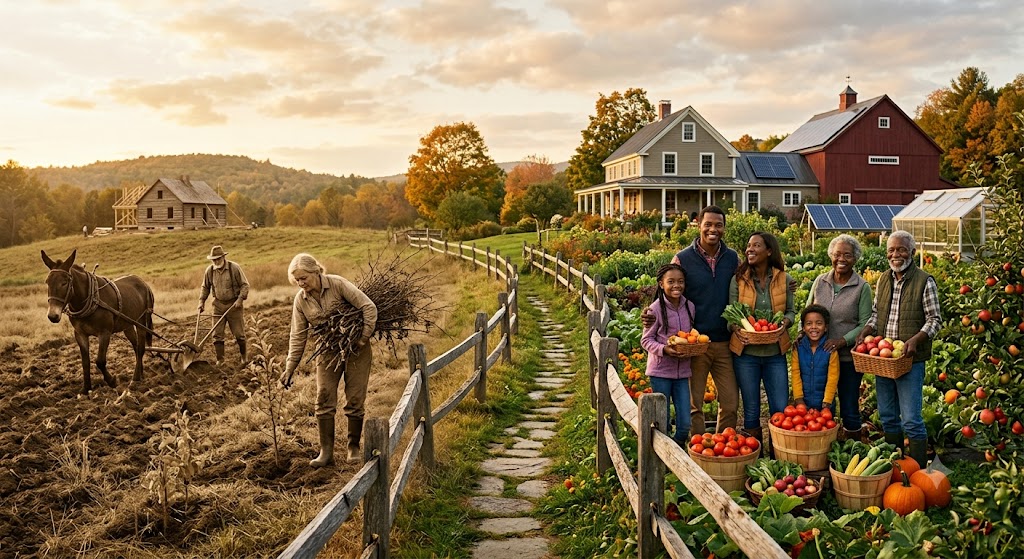
Before you compare your life to someone else’s highlight reel, consider what you cannot see: the years of quiet sacrifice, delayed gratification and difficult decisions that made their life possible.
By Hadassah Karangu
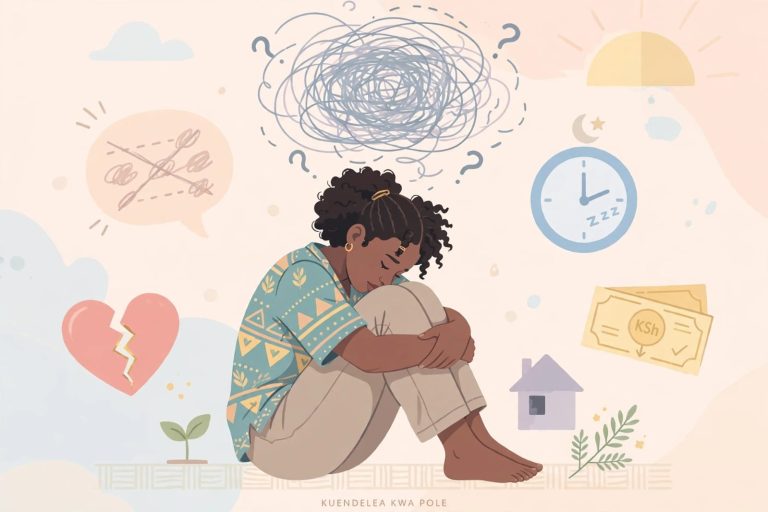
Sometimes, all it takes is a few photographs on social media or a chance encounter with someone we went to school with to make us question everything about our own lives. You see a former classmate travelling, building a business, driving a car you have always wanted or simply living a life that looks exciting and comfortable — and without warning, a quiet voice inside asks: what am I doing with mine?
It is a feeling many young people carry in silence. The sense that everyone around us is moving forward while we are still trying to find our footing. We look at people we grew up with and wonder how they have come so far. We admire what they have built, compare it to where we stand, and sometimes arrive at the uncomfortable conclusion that we have somehow missed the bus. Social media makes this worse. Every curated photograph and every celebratory post can feel like a quiet accusation — a reminder of everything we have not yet done or become.
But perhaps there is another way of seeing it. Perhaps the life we admire today did not simply appear one morning. Perhaps behind it are years of sacrifice, difficult decisions, delayed gratification and parents who worked harder than anyone ever saw to create opportunities for their children. What we are looking at, in many cases, is not luck. It is a harvest — and like all harvests, it was preceded by a planting season we were not there to witness.
When we look at someone who appears to be doing well, we tend to see the results without seeing the process. We see the university degree but not the sacrifices that paid the fees. We see the thriving business but not the failed attempts that came before it. We see the beautiful home but not the years of disciplined saving. We see the young person enjoying life freely, but we rarely stop to ask what their parents endured, what they went without and what they quietly carried so their child could one day stand on solid ground. The full story is almost never visible. What we see is the final chapter, not the difficult ones that made it possible.
This is where we sometimes become unfair — to our own parents, and to ourselves. It is easy to look at another family and conclude that our parents did not do enough. But life is considerably more complicated than that. Our parents were young once, too. They had dreams, fears, responsibilities and limited resources. They made decisions based on what they knew and what they had at the time. Some made excellent financial choices. Others spent years simply trying to survive. Some took risks that paid off. Others took risks that failed. Most were doing their best with imperfect information, under difficult circumstances, at a time when the world offered them far fewer options than it offers us today.
That does not mean they failed us. In some areas, perhaps they missed the goal. But there is an important difference between blaming someone for missing the goal and recognising that we now have an opportunity to aim differently. The older generation made their choices, and those choices eventually became part of the circumstances we inherited. Now, whether we fully appreciate it or not, we are making our own choices. What we do with our time, money, education, talents and opportunities will eventually become the environment in which our own children grow up. That is not a distant consideration. It is already happening, quietly, in every decision we make today.
This is something young people should sit with more often. One day, the things we are doing now — or failing to do — will become somebody else’s starting point. The money we spend carelessly today could have been capital for tomorrow’s business. The skill we keep postponing could have become a career. The small investment we keep dismissing as insignificant could have grown steadily over a decade. The discipline we find inconvenient today could become the reason our future children have opportunities we never had. Every choice carries forward. Nothing disappears without consequence.
We are all planting something, whether consciously or not. Some are planting businesses, education, skills and long-term investments. Others, without realising it, are planting habits that will make life considerably harder later — patterns of avoidance, financial carelessness or fear of discomfort that quietly compound over time. The harvest does not announce itself in advance. It simply arrives — shaped entirely by what was planted during the seasons nobody was watching.
This is why comparison is such a dangerous habit. We tend to compare our present chapter with someone else’s harvest, skipping the part of the story we cannot see. It holds us to a standard we do not fully understand and judges our progress against a timeline we were never part of. Our responsibility is not to reproduce somebody else’s life. It is to make better decisions with what we have, so that whoever comes after us can begin from a stronger place.
Our generation has a genuine opportunity to change the story — with more tools available than any generation before us. We can become more intentional about money, not obsessive but deliberate. We can learn skills rather than waiting for opportunity to find us. We can invest rather than spending every coin we earn on things that bring only temporary satisfaction. We can build enterprises rather than depending entirely on employment that is increasingly uncertain. We can take education seriously while understanding that a qualification alone, without application and consistent effort, is only part of the equation. And perhaps most importantly, we can study our parents’ journeys honestly, recognising both their sacrifices and their blind spots, without allowing their limitations to quietly become our destiny.
We should also learn to honour their sacrifices more generously. While it is easy to focus on what our parents did not provide, we should not lose sight of what many of them endured to give us even the little we started with. They worked jobs they did not love, sometimes for decades. They travelled great distances in difficult conditions. They went without things they genuinely needed. They raised families during economic periods far harsher than anything most of us have experienced. Some sacrificed their own ambitions entirely so their children might have options they were never offered. They did not always get everything right — but many gave everything they had, and that deserves honest acknowledgement.
As we grow older, adulthood stops looking as straightforward as it did in childhood. Sometimes people do their absolute best and still fall short. That realisation should not make us bitter. It should make us wiser, more empathetic and more determined. We should be able to say honestly: my parents did what they knew how to do, with what they had. Now I will learn, improve and do what I can with what I have been given. That is not disrespect. That is growth — real, honest, forward-looking growth that builds rather than blames.
Perhaps the greatest lesson is deceptively simple: stop thinking only about what you want today and start asking what kind of life you are building for tomorrow. Do you want your future children to inherit debt or opportunity, fear or confidence? Do you want them to begin from the same starting point you did, or do you want to move the starting line forward — even slightly — so their race begins in a better place than yours did? These questions matter far more than they appear to in the middle of ordinary life.
The decisions we make today may seem insignificant in isolation. Saving a modest amount monthly seems small. Learning a skill after a long day seems unremarkable. Starting a modest side business seems underwhelming beside the success stories we see online. Choosing discipline over short-term comfort feels almost boring. But years have an extraordinary way of multiplying small, consistent decisions. The person who begins building today may look no different tomorrow. Ten years later, the difference can be transformational — not because of one dramatic moment, but because of thousands of quiet choices made when it would have been far easier to do nothing.
That is how generations change. A family can rewrite its financial story because one person decided to learn about investments. A child can enjoy opportunities their parents only dreamed of because those parents chose to sacrifice today for tomorrow. These are not fairy tales. They are the real mechanics of how lives are quietly transformed.
So the next time you see someone from your past living a life you admire, let yourself be inspired without feeling diminished. Their success is not proof that you have failed. Ask not why you lack what they have, but what you can begin doing today so your future looks different. That shift moves you from comparison to action, from frustration to responsibility, from admiring someone else’s harvest to preparing your own ground.
We cannot rewrite yesterday. But we can learn from it without being imprisoned by it. We can take the lessons, honour the sacrifices, correct inherited mistakes and keep moving forward with greater intentionality than the generation before us.
The life we admire today may be somebody else’s harvest. But ours is still being planted — in every skill acquired, every sacrifice made, every quiet decision taken when nobody is watching.
Years from now, someone may look at what we built and wonder how we got there. They will not see the difficult mornings, the money saved, the failures survived or the countless small choices made in private. They will simply see the harvest.
And that is reason enough to start planting today.
Similar Posts by The Mt Kenya Times:
- Mt Kenya Times ePAPER September 26-27, 2026
- The oath the court would not hear: An elder’s 40-year fight for land and justice
- Court upholds Affordable Housing Act
- Ruto heads to the coast with refinery launch and 200,000 title deeds
- Kalonzo marches into Raila’s heartland: The Nyanza gambit that could define 2027
About the Author