The mirror that refuses to reflect: Kenya’s constitution as a strangled utopia
 The Mt Kenya Times
By Jerameel Kevins Owuor Odhiambo
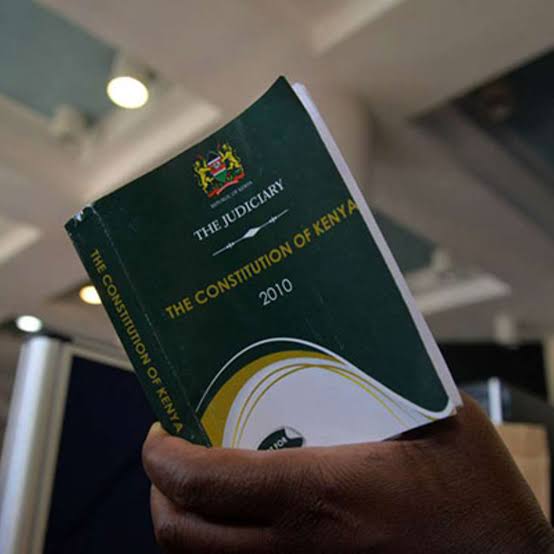
On 27 August 2010, under a sky heavy with the weight of history, Kenya promulgated a new Constitution. The people, through referendum, had chosen a document that declared every person equal before the law, that demanded justice without regard to status, that enshrined human dignity, economic and social rights, and the rule of law as non-negotiable foundations of the Republic. It was not merely a legal text. It was a covenant. Fifteen years and more have passed. The ink has long dried. The promise has not.
Sir Thomas More’s Utopia, published in 1516, offered a vision of a society ordered by reason, common ownership of the means of living, and fidelity to justice rather than to private appetite. In that imagined island, laws were few because virtue was cultivated; magistrates served rather than ruled; equality was not an aspiration whispered at the margins but the very architecture of daily life. More’s Utopia was never meant as a blueprint for immediate construction. It was a mirror held up to a corrupt Europe so that the viewer might see not only what was, but what could be if greed, hierarchy, and arbitrary power were refused. Kenya’s 2010 Constitution performs the same function. It is a mirror. It shows the nation not the scarred face it currently wears, but the face it might wear if the ideals of justice, equality, harmony, prosperity, and fidelity to law were allowed to breathe.
Even so, mirrors are fragile. They crack when thrown against the hard wall of entrenched interest. Kenya’s political class has treated the Constitution not as a living covenant but as a decorative object admired in speeches, quoted in court filings when convenient, and systematically suffocated when it threatens the circulation of power and money. They are not mere neglectful stewards. They are murderers of the ideals. They have taken a document born of blood, negotiation, and popular will and placed a pillow over its face, smiling while they do it.
Consider the evidence that is no longer deniable. Transparency International’s 2025 Corruption Perceptions Index scores Kenya at 30 out of 100, ranking it approximately 130th out of 182 countries. The score has oscillated in a narrow, dismal band for more than a decade. Sub-Saharan Africa as a region averages only 32. The political class does not merely tolerate this; it thrives within it. Public resources are diverted with industrial efficiency. Procurement becomes a theatre of extraction. Oversight institutions are starved, captured, or publicly humiliated when they attempt to bite. The Constitution demands accountability. The political class replies with theatre: commissions of inquiry that inquire into nothing, prosecutions that evaporate before the powerful, and the quiet reappointment of the very faces the public has already rejected.
Inequality offers another unbroken line of evidence. The Gini coefficient, that cold measure of how unevenly income is distributed, has hovered in the high 30s to low 40s in recent years an improvement from earlier peaks, yet still a portrait of a society cleaved in two. More damning still is the concentration of wealth: reports have shown that a few dozen of the richest Kenyans control more assets than tens of millions of their fellow citizens. The Constitution’s preamble speaks of social justice. Article 43 guarantees economic and social rights housing, food, water, healthcare, education. In the lived reality of informal settlements, drought-ravaged counties, and underfunded public hospitals, those rights remain aspirational text rather than material fact. The political class builds private fortunes while the mirror of the Constitution reflects a nation still waiting for the basic dignity the document promised.
The two-thirds gender principle offers a particularly stark illustration of deliberate delay. Article 27(8) requires that the State take legislative and other measures to ensure that not more than two-thirds of the members of elective or appointive bodies are of the same gender. More than fifteen years later, the principle continues to be litigated, delayed, and treated as an inconvenient technicality rather than a binding constitutional command. Courts have spoken. The political class has shrugged. The message is clear: equality is negotiable when it threatens the old networks of patronage.
Police accountability tells the same story in blood. The Constitution sought to transform a force long associated with impunity into a service bound by human rights and civilian oversight. Yet extrajudicial killings, enforced disappearances, and the slow grinding of investigations into nothingness persist. Independent oversight bodies record cases; few reach conviction. Families of the dead and the missing still wait for a justice system that the Constitution declared must serve all without regard to status. The political class finds it useful to keep the instruments of coercion close and the mechanisms of accountability distant.
These are not isolated failures. They form a pattern a deliberate correlation between the strength of constitutional ideals and the intensity of political resistance to them. Where the Constitution seeks to disperse power through devolution, the centre recentralizes through fiscal and political pressure. Where it demands separation of powers, the executive treats Parliament as an extension of its will and the judiciary as an obstacle to be intimidated or bypassed. Where it requires public participation, processes are reduced to ritual. The political class has learned that the Constitution is most dangerous when taken seriously. So they take it seriously only in the abstract, never in the particular case that might constrain them.
The deeper insight is this: a constitution is not self-executing. It is a set of words given force only by the fidelity of those who hold office under it. When that fidelity is absent, the document becomes a beautiful corpse. Kenya’s political class has perfected the art of killing ideals while keeping the language of ideals alive. They speak of the Constitution in the same breath with which they violate it. They invoke the rule of law while treating court orders as optional. They celebrate the Bill of Rights while ensuring that the rights of the poor remain paper rights.
This is not inevitable. Utopias fail not because the vision is impossible, but because the keepers of the vision prefer the comforts of the old order. More’s island existed only in the imagination because the real Europe of his day was ruled by men who found private gain more compelling than common justice. Kenya’s Constitution exists in the real world. It has already delivered genuine gains: a more assertive judiciary at critical moments, a framework for devolution that has shifted some resources and decision-making closer to the people, a language of rights that citizens increasingly claim as their own. These gains prove the document’s power. They also make the betrayal more bitter. The promise is not abstract. It has been glimpsed. Then it has been smothered.
The political class must be called by its true name. They are not merely imperfect implementers. They are active agents in the suffocation of a people’s covenant. Every delayed gender rule, every unprosecuted grand corruption case, every ignored court order, every young life lost to state violence without accountability is an act of violence against the Constitution itself. The mirror still stands. It still shows what Kenya could become a society of genuine equality, of justice administered without regard to wealth or tribe or connection, of prosperity that is not the private property of a few, of harmony rooted in the equal dignity of every citizen. The political class has chosen to look away. The rest of the nation must decide whether to keep looking, and whether to force the keepers of power to face what the mirror reveals.
Fifteen years is long enough for excuses. The Constitution was not given to the political class as a plaything. It was given by the people to themselves and to their children. The murderers of its ideals have had their season. The season of fidelity is overdue.
Similar Posts by The Mt Kenya Times:
- Kingdom Bank charts new path for MSME growth through chamber partnership
- Mt Kenya Times ePAPER September 25, 2026
- Babu Owino’s party predates Linda Mwananchi, clarification shows
- Anglican church tells Kenyans: The country is getting worse and silence is complicity
- Sifuna set for UDP presidential unveiling as Western Kenya bids to field its own candidate
About the Author