How Kenya’s elite wipe their boots on the 2010 constitution while preaching its sanctity
 The Mt Kenya Times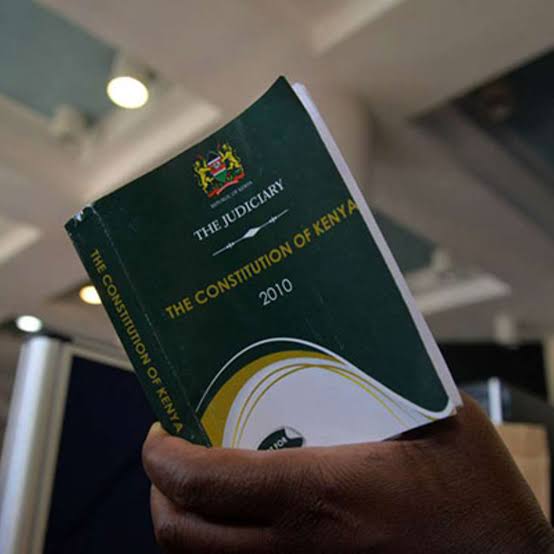
By Jerameel Kevins Owuor Odhiambo
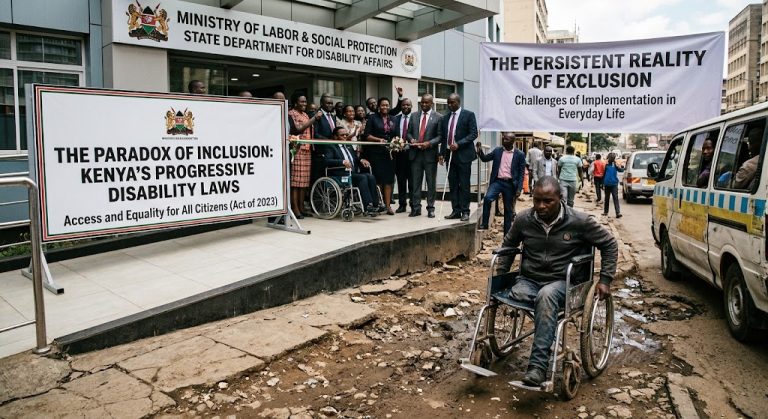
On 27 August 2010, more than two-thirds of Kenyans who voted affirmed a new Constitution born from the ashes of the 2007–2008 post-election violence that killed over a thousand and displaced hundreds of thousands. That document was not a casual political pamphlet. It was a deliberate, hard-won architecture of restraint: devolution of power to forty-seven counties, an expanded Bill of Rights that treated socio-economic claims as justiciable, Chapter Six’s uncompromising standards of leadership and integrity, an independent judiciary shielded from executive whim, and independent commissions meant to police the powerful. Sixteen years later the same document is routinely treated as a doormat useful for wiping muddy political boots before the elite step inside to plunder, then kicked aside when it becomes inconvenient.
The question is not whether Kenya’s constitutional democracy is an experiment in liberal failure. That framing is a convenient alibi. The document itself is not the problem. The failure is one of implementation, of political will, of situational ethics that treat the Constitution as optional furniture rather than binding covenant. Cherry-picking enforcement has become the governing style. The real danger is bequeathing this hard-won charter to people who regard it as an obstacle to be dismantled or a baby to be smothered for personal advancement.
Consider the evidence. Transparency International’s Corruption Perceptions Index gives Kenya a score of 30 out of 100 in 2025 ranking it near 130th among measured countries after years of oscillation in the low thirties. Chapter Six was written precisely to break this cycle. Yet enforcement remains selective, episodic, and politically timed. High-profile cases dissolve into technicalities or quiet withdrawals. County governments, the supposed laboratories of devolution, receive substantial resources yet remain plagued by accountability gaps; the national government retains the ability to starve or manipulate them through budget negotiations. The two-thirds gender principle, a constitutional command reinforced by court orders, still languishes because Parliament repeatedly finds the political will to protect male incumbency more compelling than the text it swore to uphold.
The Building Bridges Initiative offered the purest recent illustration of the elite’s relationship with the Constitution. Framed as a unity project after the 2017 electoral crisis, it sought sweeping amendments that would have expanded the executive, altered the architecture of independent institutions, and, in the view of the courts that struck it down, been driven by presidential initiative rather than genuine popular ownership. The High Court, Court of Appeal, and Supreme Court sequentially dismantled the process, affirming that the Constitution is not a private playground for those temporarily in power. That judicial resistance was a rare moment of institutional spine. It also revealed the underlying contempt: when the text obstructs elite accommodation, the impulse is not to obey but to rewrite.
This is not abstract. Historical pattern supplies the correlation. Independence in 1963 brought a Constitution that was promptly amended into an imperial presidency. The one-party state of 1982 formalised what had already become practice. The 2005 referendum rejected a draft that smelt of elite capture. The 2010 document was the people’s answer an attempt to constrain the very class that had repeatedly treated earlier charters as provisional. Yet the same class largely survived into the new dispensation. Many who now administer the Constitution once opposed its more radical provisions. The result is predictable: institutions are established, then starved or captured; court orders are obeyed when convenient and ignored when costly; integrity standards are invoked against rivals and suspended for allies.
Situational ethics is the operating system. A politician discovers the beauty of devolution when out of national power and the necessity of central control when in it. The same voice that praises judicial independence after a favourable ruling discovers the judiciary’s “overreach” the moment a decision threatens political projects. Police reforms are celebrated in white papers and abandoned in the streets when protesters become inconvenient. The Constitution becomes a prop for legitimacy rather than a limit on power. This is not liberal failure; it is the failure of stewards who never internalized the document’s moral demand.
The danger of bequeathing the Constitution to those who treat it as a doormat is existential. A constitution is not self-executing. It lives or dies by the character of those who interpret, enforce, and live under it. When the powerful regard Chapter Six as decorative, when independent commissions are reduced to ceremonial offices, when the people are told the problem is the “rigid” text rather than the flexible consciences of its guardians, the social contract frays. Young Kenyans who marched against the Finance Bill and other excesses already understand this intuitively: the document’s promises of dignity, participation, and accountability ring hollow when state violence and elite impunity answer their petitions. Cynicism hardens into withdrawal or rage. Both corrode the foundations of constitutional order.
Original insight is required here. The 2010 Constitution functions as a mirror. It does not create virtue; it reveals the absence of it. Those who claim the document is too ambitious or culturally alien are often the ones who profit from the gap between text and practice. The real experiment is not liberal democracy as such, but whether a society long habituated to personalised power can sustain impersonal rules when those rules constrain the powerful. Kenya’s answer so far has been partial, contested, and reversible. Devolution has delivered tangible local presence and some service improvements, yet corruption simply migrated downward. The judiciary has produced landmark rulings that momentarily check executive excess, yet it remains underfunded and under constant political pressure. Civil society and ordinary citizens have repeatedly defended the document most dramatically during the BBI litigation and the rejection of earlier elite drafts but vigilance is exhausting when institutions designed to share the burden instead share the impunity.
The call to action is therefore categorical and multi-layered. Parliament must stop treating the Constitution as a menu from which to select convenient clauses. Leadership and integrity provisions require consistent, non-selective application; the gender principle requires legislation, not endless progressive excuses. The executive must fund independent institutions at levels that allow them to function rather than negotiate their survival annually. The judiciary must continue to insist that no office is above the text, even when the political cost is high. Independent commissions must recover the courage of their founding mandates rather than settle for bureaucratic survival. Citizens cannot outsource eternal vigilance. Electoral choices that reward those who treat the Constitution as optional guarantee its further erosion. Civil society, the academy, and the media must keep naming the gap between oath and action without the polite fiction that both sides are equally sincere.
Irony saturates the present moment. The same political class that once warned Kenyans against “foreign” constitutional ideas now invokes the Constitution’s sanctity whenever it suits them, while working to hollow out its constraints. They speak of national values while practising ethnic arithmetic. They celebrate the people’s sovereignty while engineering processes that exclude genuine popular ownership. The Constitution is praised as sacred until it is needed as a doormat.
Kenya does not suffer from an excess of liberalism. It suffers from a deficit of constitutionalism the lived habit of subordinating power to principle. The 2010 document remains one of the most progressive constitutional texts on the continent. Its failure would not prove that progressive constitutions cannot work in African contexts. It would prove that a determined elite can still defeat a people’s attempt to bind them. That outcome is not inevitable. It is a choice, renewed every time selective enforcement is tolerated, every time integrity is postponed, every time the baby is treated as disposable. The words of the Constitution are clear. The test is whether those who hold power will finally treat them as binding, or continue to wipe their boots and walk on.
The writer is a social commentator.
Similar Posts by The Mt Kenya Times:
- Mt Kenya Times ePAPER October 27, 2026
- Sifuna draws hope from Serbia and Brazil as Kenya’s 2027 race heats up
- Uhuru calls for unity as he marks 65th birthday
- Kenya establishes international crimes division: Justice delayed, but will it be delivered?
- World marathon champion Jepchirchir suspended in fresh blow to Kenya’s clean sport drive
About the Author