Philosopher John Locke

By: Maxmarejabova Muqaddas
Worth Noting:
- David Hume was born in Edinburgh, Scotland, in 1711. Hume was a precious child who entered the University of Edinburgh at the age of 12. He started working as an embassador in the Embassy of Paris.
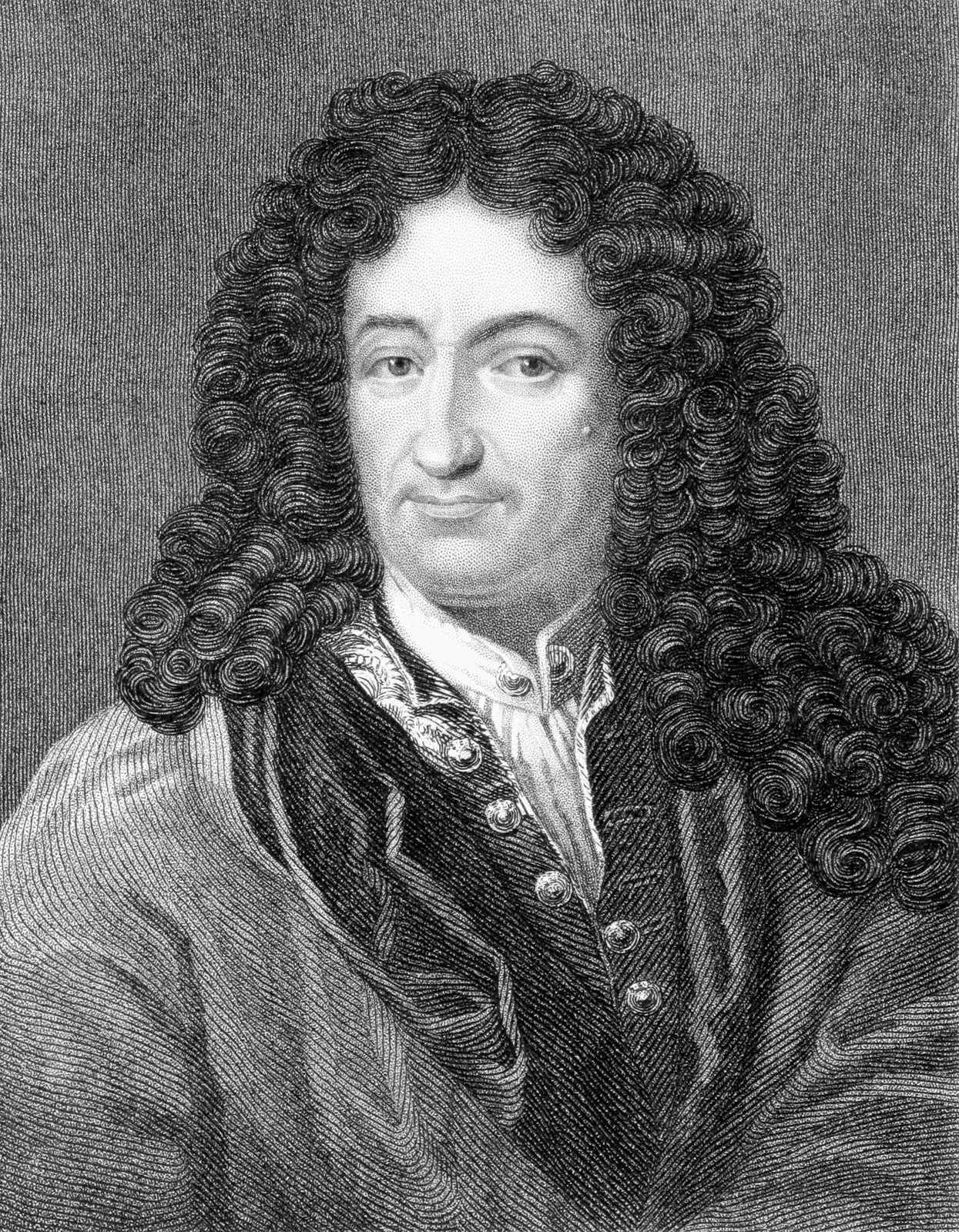
- Gottfried Leibniz was a German philosopher and mathematician. He was born in Leipzig. Leibniz mainly concentrated on political writings.
- George Berkeley emphasized humans’ two different substances, such as mind and body. George Berkeley pointed out the material substance, which he mentioned: there is no such thing as what philosophers call material substance.
In 1690, the philosopher John Locke argued that no ideas were known at birth and that all ideas or knowledge could arise through experience.
The second phenomenon is emotions and ideas. David Hume was born in Edinburgh, Scotland, in 1711. Hume was a precious child who entered the University of Edinburgh at the age of 12. He started working as an embassador in the Embassy of Paris. In the embassy, he befriended the philosopher Rousseau. After that, Hume became a widely known philosopher because of his friend’s advice and knowledge. During this time, he occupied Hume’s final years with a book called Dialogues Concerning Natural Religion. His disciples published his writings after Hume’s death in 1776.
Gottfried Leibniz was a German philosopher and mathematician. He was born in Leipzig. Leibniz mainly concentrated on political writings. He adored traveling to many countries. After traveling for a period of time, he took up the post of librarian at Duke University, and as a consequence, he remained to work here until his death. He did most of his work only on the development of his unique philosophical system. Leibniz was a rationalist because he believed that there were truths in reasoning and truths in fact.
We know hardly anything adequately. For example, a few things are learned a priori and most things through experience. George Berkeley emphasized humans’ two different substances, such as mind and body. George Berkeley pointed out the material substance, which he mentioned: there is no such thing as what philosophers call material substance. All knowledge comes only through perception. We can only perceive ideas.
The world consists of many ideas, but when it comes to George Berkeley’s life, we can emphasize where he was born. More precisely, he was born in Ireland. He was first educated at Kikenny College. After that, he studied at Trinity College. In 1714, he had his philosophical writings written.
During this time, he left Ireland, and as a consequence, he started to travel around Europe. Interestingly, he spent most of his time in London. During this time, he raised funds with his wife to found a seminary college in Bermuda. In the 19th century, German philosophy became one of the best works of Immanuel Kant.
In 1690, the philosopher John Locke argued that no ideas were known at birth and that all ideas or knowledge could arise through experience. We are not born with ideas, concepts, and knowledge already in our brain. On top of that, every idea and theory can be challenged. It is meant to be so difficult to realize many concepts. Doubt is not a pleasant condition, but certainty is ridiculous.
An essay concerning Human Experience consists idea about experience, explaining the knowledge how could be assessed without experience. In fact, the division between John Locke is traditionally included many group of philosophers such as George Berkeley and David Hume.
The empiricists explained the idea about the experience gain directly or indirectly through experience. Other number of thinkers such as Leibniz, Rene Descartes and Spinoza. They only acquire the knowledge through the use of reason.
In fact, the divisions between these two kind groups not a clear cut description but have many assumptions. Locke reached one thing. This thing a process of reasoning later become abduction. Locke emphasized a theory about the experience of corposcular theory about.
He explained every existence of species in the world is made up with submicroscopic particles or small corpuscles. If we will explain these things, it could be so difficult or impossible to elucidate these phenomena. Corposcular theory was becoming famous in the 17th century. In addition, the claim of men impossible to explain with beyond of experience because it causes exaggeration or inappropriatness between ideas and ideological principles. Plato explained with his theory genuine knowledge is essentially, and will came from within us. In my point Plato’s ideas too outrageous in some sides.
For instance, he explained about death a little perception like we die our souls started level of reincarnation. Plato emphasized another important fact that education is not learning new facts but unforgetting these perception. On top of that, educator isn’t our teacher but midwife. All of them Plato’s perceptions about gaining knowledge through reasoning and experience. Interestingly, incredible explanation about geometric structure.
The equilateral triangle is the type of knowledge. Locke explained the idea of gathering information through our experience. He explained the idea that the infants have deficient ideas about any kind of topic. Locke declared that who explain about innate ideas must be false. He explained our mind like white paper when we are born through experience we complete our white paper. These conception so crucial.
Let us know our perception like this the mind to be white paper. But without any kind of ideas or character how we can furnish? said John Locke. He was born in 1632. In addition, his father’s work only to do works like English county lawyer.
He explained ideas like giving thanks to wealthy patrons because he received a high-quality education. Firstly, he graduated from Westminster University in London. Then he received a good education from Oxford University. John Locke is an empiricist, and his ideas are so important. His writings about politics made him so famous.
Locke flew to England twice as a political member. Unfortunately, he returned again in 1688 because of the accession to the throne of William and Mary. Last but not least, he stayed in England in a government position until his death in 1704.
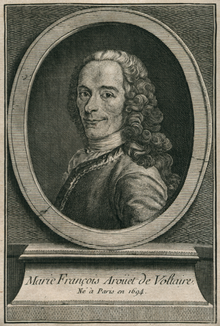
Voltaire was the pseudonym of the French writer and philosopher Marie Arouet. He was born into a middle-class family in Paris. Interistingly, he was the youngest of the three children. On top of that, he studied law at the university.
Unfortunately, he preferred a great literary wit. He spent a little time in England, where he felt the influence of English philosophy and science. After returning to France, he became wealthy, which meant he got into the nobility class.
After a little time, he detriment himself by only writing. He traveled to all the European countries. David Hume was born at a time when European philosophy was dominant. René Descartes thought knowledge would only come through national reflection.
In Britain, John Locke countered with his empiricist idea that knowledge only comes through experience. Hume always argued about the problem of knowledge. He argues against the notion that we are born with innate ideas. He distinguished the content of our minds into two kinds of phenomena: impressions and perceptions.
Jean-Jacques Rousseau was born in Geneva. His mother died after his birth. Unfortunately, his father fled to another country a few years later. As a result, his uncle cared for Rousseau. At 16, he worked as a composer.
He posted philosophical posters when he worked in Venice for approximately two years. In addition, his controversial views led him to write books. As a result, his books were banned in Switzerland and France. He was accepted to live in England via David Hume’s invitation. After a short time, he returned to England with another name, and as a consequence, he was later allowed to enter Paris and another country or cities.
He lived until his death in Paris at the age of 66. He wrote about “the inequality of laws.” Rousseau took the idea in a second essay like “The Discourse on the Origin and Foundations of Inequality among Men. On top of that, his pessimistic analysis of modern society is full of inequalities and injustice. Rousseau opened his book with a challenging declaration, and he wanted to reckon with one perception. This perception is about the declaration, resulting in ideas like “the man is born free, yet everywhere he is in chains.”
This perception totally narrates the truth. This perception was adopted like a slogan and became so popular during the 17th century. His ideas are mainly based on political philosophy, which means all of them are writings. His rudimentary position reckoned with democracy. He prescribes laws according to liberty and utility. Most of Rousseau’s political writings are banned in France. Nevertheless, after a long time, especially after his death, his writings about political philosophy felt very strongly and became popular during the period of revolution.
Many disappointed people will cry, “It’s not my fault, the fault is related to society”. The meaning of “Society ” is not entirely clear. It has changed over time. During the 18th century, the Irish Philosopher and statesman Edmund Burke wrote about politics. Europe was becoming increasingly commercialized.
The idea is that there is a mutual agreement between members and the commercial company. Burke attempts to enrich human lives through science. Human beings have material, scientific, and artistic needs. They cannot achieve all these needs without their efforts, which means they need to try hard and work themselves.
Most importantly, their efforts will help them achieve their needs and become what they want to be. People should help each other, which is the best way to meet their mutual needs. Burke elucidated that “society” means more than just people living now and also includes their descendants and ancestors.
Burke’s view has the doctrine of sin, meaning that we are born sinful. He dismisses the idea of John Locke. We can be perfected through education. Also, we are born innocent. Burke believed that political organizations should naturally develop over time. Rousseau’s book, The Social Contract, discussed the fact that the contract between citizen and state may be broken at any time. The Anglo-Irish politician Edmund Burke was born in Dublin.
He studied there. He knew and was convinced that philosophy was the key to useful training in politics. In 1750, he wrote notable essays. These essays are typically about aesthetics and the origins of society. He worked as an English MP from 1766 to 1794. Burke was sympathetic to American independence.
Similar Posts by The Mt Kenya Times:
- Mt Kenya Times ePAPER October 12, 2026
- Gachagua’s party storms Kikuyu from afar as 2027 countdown begins
- Counties caught: The KSh100B payroll scandal Kenya can no longer hide
- CS Ogamba: tree planting could generate carbon credit millions to fund education
- Farouk Kibet calls for unity and development as leaders rally behind Ruto’s 2027 re-election bid
About the Author