Yaya Touré
The former Ivory Coast midfielder says his landmark achievement signals a new era for African coaches in European football
By Pascal Okoth
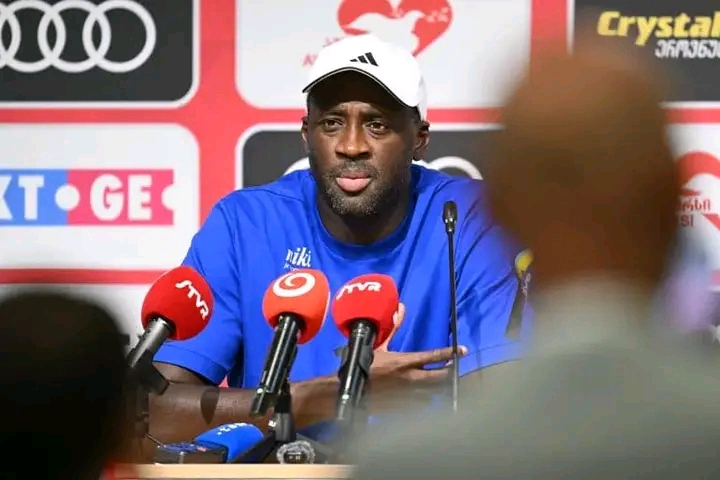
Yaya Touré has described his historic achievement of becoming the first African to coach a team in the UEFA Champions League as the beginning of a new era for the game on the continent.
The former Ivory Coast international has made the transition from an outstanding playing career to management, reaching one of the biggest stages in European football. His achievement represents a significant moment — not only for Touré personally, but for every African coach who has long sought greater opportunity at the elite level.
Reflecting on the milestone, Touré acknowledged the surreal nature of it while making clear just how much it means to him.
“It is true that it feels a bit strange. But on a personal level it is really nice. This is an important new era,” he said.
Touré spent years competing at the highest level as a midfielder, establishing himself as one of the most influential African players of his generation. His playing career included celebrated spells in European football, most notably at Manchester City, where he became a central figure in the club’s rise to domestic dominance. Now, with his focus firmly on coaching, reaching the Champions League marks another defining chapter.
He believes his presence in the competition is evidence that the landscape is beginning to shift. For years, African coaches have struggled to secure positions at the top of European football, despite the continent producing generations of talented players and technically astute tacticians. His breakthrough may well carry significance far beyond his own career.
“We can say that things are now changing and moving forward,” he added.
Those words carry real weight. The Champions League is widely regarded as the pinnacle of European club football, and coaching at that level demands tactical sophistication, leadership under pressure and the ability to prepare a squad to compete against the continent’s very best. For Touré, it represents an entirely different challenge from his playing days. As a midfielder, he controlled games from the engine room, scored crucial goals and led by example on the pitch. As a coach, he must now shape matches from the technical area, build tactical plans and guide players towards results — a test of a very different kind.
His rise also carries the weight of expectation from African football supporters across the continent. Success at this level could encourage clubs in Europe to look beyond traditional coaching markets when appointing managers, and to give more serious consideration to coaches from Africa.
The broader picture reinforces just how overdue that shift is. African players have long been central to the Champions League — many from the continent have lifted the trophy — yet representation among coaches at the highest level has remained remarkably thin. Touré’s arrival on the Champions League touchline could help challenge that imbalance.
His journey is also a reminder of the importance of former players investing seriously in coaching education and preparing methodically for life after retirement. Touré has continued developing his understanding of the game since hanging up his boots, building experience steadily before taking on greater responsibilities.
Ultimately, success will not be measured simply by his presence in the competition, but by the performances of his team and his ability to compete against some of Europe’s most experienced coaches. Nevertheless, reaching the tournament itself is no small thing.
For young African coaches watching his journey closely, the message is clear: the possibilities are expanding. Touré’s historic appearance could become a reference point for future generations who dream of coaching at the elite level in Europe. If more African coaches follow the same path, this moment may eventually be remembered not as an isolated milestone but as the start of something much larger.
Touré himself seems determined to see it that way. Rather than simply celebrating a personal accomplishment, he views the moment as evidence that football is genuinely moving forward.
He has already secured a lasting legacy as one of Africa’s greatest footballers. Through coaching, he now has the opportunity to build another — one that could shape the future of African representation in the European game for years to come.
Similar Posts by The Mt Kenya Times:
- Kenya’s deadly roads: At least 22 die in Nairobi–Mombasa Highway crash near Mtito Andei
- Can I live the life my mother could not?
- Julius Ogamba’s task force: The answer to Kenya’s school unrest crisis?
- Diaspora Times Global Oct 24 – Oct 30, 2026
- America’s baby bust: U.S. birth rate hits record low as women choose later motherhood
About the Author