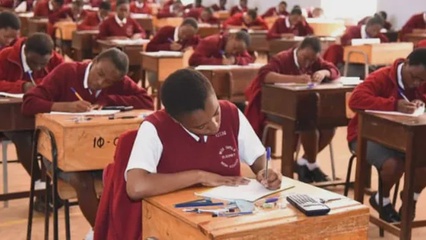
As over a million candidates sit Kenya’s high-stakes national examination, the call for integrity, preparation and institutional responsibility has never been louder.
By Ashford Kimani
The Kenya Certificate of Secondary Education examination is more than a test of academic knowledge. For the thousands of young Kenyans who sit it each year, the KCSE represents years of sacrifice, early mornings, late nights, parental investment and personal determination. As the 2026 examinations get under way, that weight is felt in classrooms and homes across the country — and it demands to be honoured with the seriousness it deserves.
This year, 1,048,355 candidates are expected to sit the examination, according to the Kenya National Examinations Council. The stakes are particularly high because the 2027 sitting will mark the final KCSE under the outgoing 8-4-4 education system, making the current examination a genuinely historic moment in Kenya’s education journey. For candidates sitting their papers today and in the days ahead, that context should sharpen focus rather than add to anxiety.
The single greatest threat to that focus — and to the credibility of the entire process — is examination malpractice. It is tempting, in moments of self-doubt or panic, to seek a shortcut. Leaked papers, unauthorised materials, whispered answers: these things exist, and candidates know it. But the consequences of being caught are severe and lasting. Results are cancelled. Academic futures are derailed. Reputations are damaged in ways that follow a young person far beyond the examination room.
More fundamentally, cheating does not work in the way its proponents imagine. A certificate obtained through dishonest means does not grant the confidence, competence or credibility that employers, universities and life itself will eventually demand. The knowledge gaps that examination malpractice conceals do not disappear — they resurface, often at the worst possible moments. Candidates who invest in genuine preparation carry something far more durable into their futures than a grade: they carry the knowledge itself.
Every candidate should therefore resist, firmly and without hesitation, any pressure to engage in examination irregularities. The examination room is not a place for shortcuts. It is a place to demonstrate what you know, what you have worked for and what you are capable of achieving on your own terms.
Schools and their administrators carry an equally serious responsibility. No candidate should miss a single examination paper because of avoidable administrative failures — disputes over school fees, poor timetable communication, inadequate supervision arrangements or institutional disorganisation. These failures, when they occur, are not merely inconvenient. They are unjust. Every registered candidate has a right to sit every paper, and school management must ensure that right is protected without exception.
Administrators should also ensure that candidates are properly briefed on examination regulations, reporting times, required materials and expected conduct well in advance. Clear communication prevents confusion. Good supervision builds confidence. Schools that take these responsibilities seriously give their learners the best possible foundation from which to perform.
KNEC, for its part, must uphold the credibility and consistency of the process from start to finish. Its role extends well beyond the printing and distribution of examination papers. Suspected irregularities must be investigated professionally, transparently and fairly. Supervision must be strict but conducted with dignity. The rules must apply equally to every candidate, in every county, in every school. Public confidence in the KCSE certificate rests on exactly that assurance — that the conditions under which it was earned were fair, consistent and beyond reproach.
Parents and teachers are not bystanders in this process. The examination period is genuinely demanding for young people, and the emotional environment at home and at school matters more than many adults realise. Parents should provide calm, supportive conditions at home — good meals, adequate sleep, space to prepare and, above all, encouragement that is not conditional on specific grades. Teachers should continue motivating candidates without adding pressure, and schools should resist the urge to rank or compare learners publicly during an already stressful period. Every candidate has individual strengths, and every candidate deserves the space to demonstrate them.
Candidates themselves should manage their time carefully, follow all official instructions, remain composed under pressure and trust in the work they have put in. Examination nerves are normal and manageable. What matters is showing up, sitting every paper and giving each one your honest best.
The transition from the 8-4-4 system to Kenya’s new education framework marks a genuine turning point in the country’s academic history. The candidates sitting the 2026 KCSE are part of that story. Their results will not define the entirety of who they are or what they will become — education offers many pathways, and different learners will follow different routes to meaningful lives and careers. But how they approach this examination — with integrity, discipline and personal responsibility — will say a great deal about the kind of people they are choosing to become.
Work hard. Stay honest. Finish strong. Your future is too valuable to gamble with.
Ashford Kimani is a teacher of English and Literature and writes on education and social affairs.
Similar Posts by The Mt Kenya Times:
- Mt Kenya Times ePAPER November 3, 2026
- Kang’ata: ‘I turned down the Deputy President’s job — it was a trap’
- World Bank’s KSh26B project to restore Kenya’s degraded landscapes and transform 750,000 lives
- Wiper sets final deadline for 2027 aspirants as Kenya’s electoral race begins in earnest
- Kalonzo draws his line in the sand
About the Author