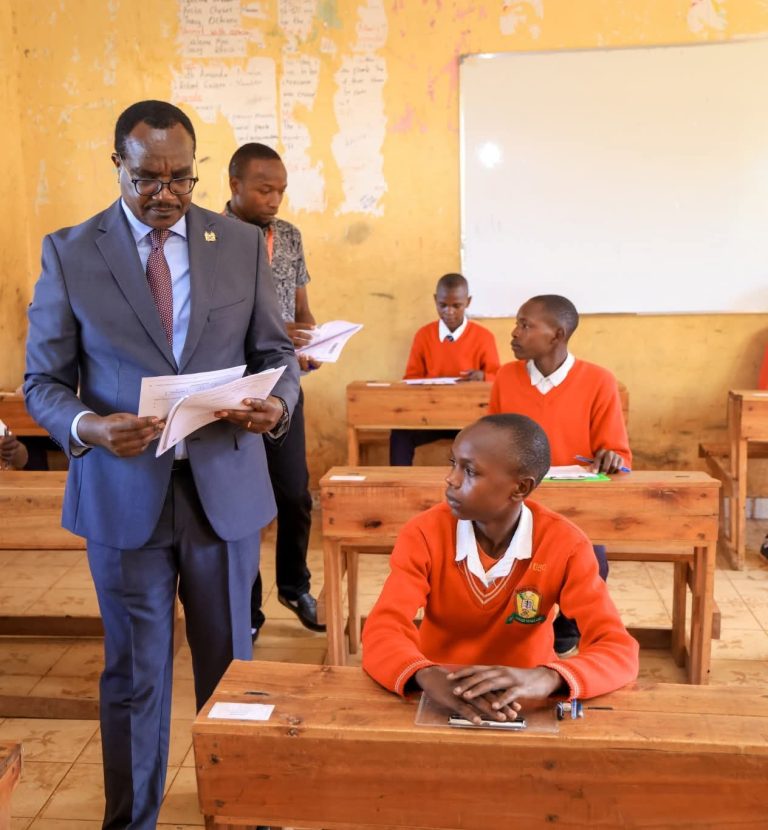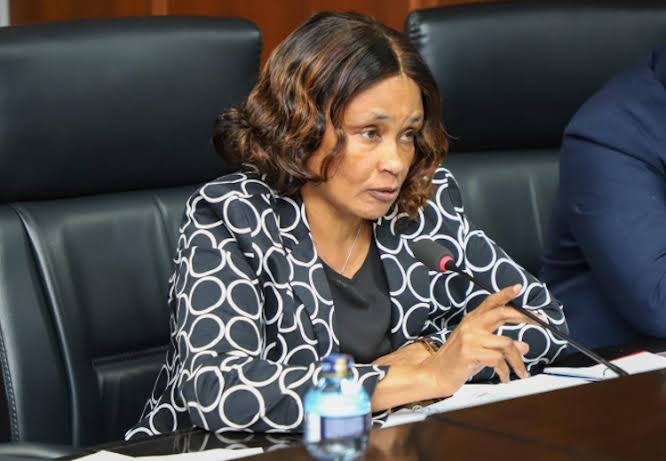
As the 2026 Kenya Certificate of Secondary Education examinations continue, the integrity of every result depends on the honesty of every candidate, school and official involved.
By Ashford Kimani
There is something fundamentally wrong with a society that invests years educating its children, only for some of them to approach the most important national examination as an opportunity to cheat. Even more disturbing is the possibility that adults entrusted with protecting the integrity of education may become part of the very problem they are supposed to eliminate.
As the 2026 Kenya Certificate of Secondary Education examinations continue, candidates must confront an uncomfortable truth: nobody owes you an examination certificate. You must earn it. Your future cannot be built on leaked papers, examination-room whispers, unauthorised assistance or the dangerous illusion that someone can manufacture academic success on your behalf.
The Kenya National Examinations Council’s message — “Don’t Gamble with Your KCSE Future” — deserves more than casual attention. It should provoke a serious national conversation about examination integrity, institutional responsibility and the value we attach to genuine education. Let us stop pretending that examination malpractice is a harmless response to academic pressure. It is dishonesty, plain and simple, and it undermines the very purpose of schooling.
A candidate who cheats is not simply breaking examination regulations. They are compromising the credibility of their own achievement. What is the value of a grade that cannot be defended through personal knowledge and ability? A certificate should represent competence, effort and hard-won achievement. It should not be a reward for connections, purchased assistance or the ability to manipulate a system that millions of honest Kenyans have trusted with their futures.
Candidates must also understand that the consequences of examination irregularities extend far beyond the examination period itself. Cancelled results, disciplinary proceedings and permanently damaged academic prospects are prices no learner should be willing to pay. The tragedy is that some candidates who have spent years preparing for KCSE throw away that investment in a few moments of desperation. No whispered answer, no smuggled note and no promised paper is worth that.
While candidates must take personal responsibility, schools cannot escape scrutiny either. It is entirely unacceptable for a registered candidate to be denied the opportunity to sit an examination because of avoidable administrative failures, unresolved school-fee disputes or institutional negligence. A candidate’s examination opportunity should never become a bargaining chip in disputes between school management and parents. School administrators must remember that their primary responsibility is to protect learners’ educational interests. Financial difficulties are real and institutional challenges are understandable, but neither can be an excuse for compromising a child’s future. Where a school has failed to prepare properly, communicate effectively or organise its examination arrangements, accountability must follow without exception.
We cannot celebrate academic excellence while ignoring the institutional failures that shut learners out of the examination room before they have written a single word.
The Kenya National Examinations Council carries an enormous national responsibility, and its credibility is inseparable from the credibility of every certificate it awards. But examination integrity cannot be achieved through threats and dramatic enforcement announcements alone. It requires consistent supervision, professional administration, transparent investigations and equal application of the rules. There must be no sacred cows. Candidates, invigilators, centre managers and any other individuals found complicit in irregularities must be treated in full accordance with established procedures. Nobody should be shielded because of position, influence or institutional connections. Equally, innocent candidates must never become casualties of collective punishment or administrative incompetence.
There is also a question that parents must honestly answer: what exactly are we teaching our children when we demand excellent grades at all costs? Many learners sit examinations under enormous pressure to produce impressive results regardless of their actual preparation. They fear disappointing their parents more than they fear compromising their integrity, and that is a damning indictment of the values some households project. A parent who celebrates an artificially obtained grade while condemning honest academic struggle is sending a deeply dangerous message to the next generation. We must teach our children that integrity is more valuable than any transcript obtained through dishonesty.
The transition from the 8-4-4 system to the Competency-Based Education framework makes this particular KCSE cycle especially significant. For the 2026 cohort, this is not the time for panic, rumours or desperate shortcuts. Attend every paper. Follow every instruction. Respect examination regulations. Carry no unauthorised materials. Entertain no individual promising leaked papers or guaranteed grades. And above all, do not allow fear to drive decisions that could define your life in ways you are not prepared for.
You may not obtain the grade you have always dreamed of, but an honestly earned result gives you something no shortcut can ever guarantee: the confidence that you stood by your principles when it mattered most.
The KCSE debate ultimately extends beyond candidates and examination officials. It concerns the kind of society Kenya is building. If we tolerate cheating in examinations, what moral authority do we retain to condemn dishonesty in universities, workplaces, public institutions and national leadership? A country cannot build a credible workforce on fraudulent academic credentials. Employers need competent people. Universities need prepared students. Society needs citizens who understand that responsibility cannot be outsourced and that character cannot be faked indefinitely.
The 2026 KCSE examinations should be a national test of integrity, not merely an academic contest. Candidates must be honest. Parents must be responsible. Schools must be accountable. KNEC must be impartial and professional. The message is simple, uncompromising and urgent.
Kenya does not need examination champions manufactured through shortcuts. It needs competent, honest and principled graduates — young men and women who can look their employers, their communities and themselves in the eye and say, with complete conviction, that they earned everything they have.
Your future is too valuable to gamble. Your integrity is too important to sell. And your education is far too precious to waste.
Ashford Kimani is a teacher of English and Literature who writes on education and social affairs.
Similar Posts by The Mt Kenya Times:
- Nyahururu cannot afford to remain in the dark
- University students want class, not another countdown to crisis
- Staying steady in a first-world rush
- Surveyors must guard Kenya’s land, not sell it
- Kenya’s public finance crisis: Taxpayers are paying more, but who is accounting for the money?
About the Author