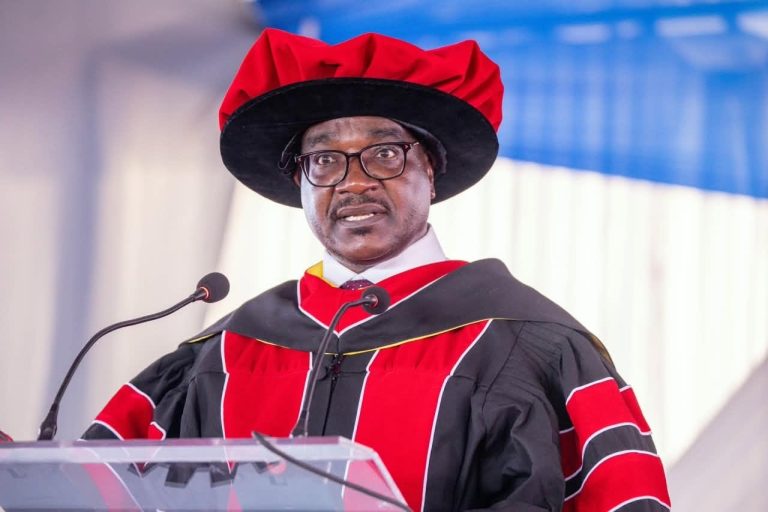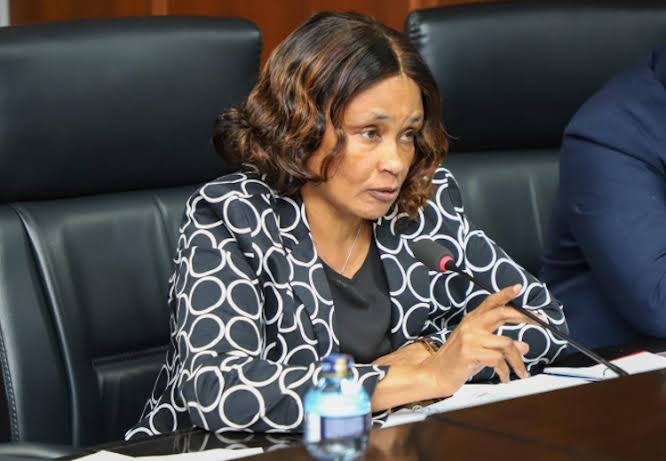
Eveleen Mitei CEO TSC
Fourteen months into her acting role, Teachers Service Commission CEO Eveleen Mitei has kept a restless profession engaged — but the harder test lies ahead
By Ashford Kimani
Five days from today, Eveleen Mitei will mark 14 months as acting Chief Executive Officer of the Teachers Service Commission. That so few people remember she is still in an acting capacity is itself a measure of the relative calm she has brought to an institution that has historically been a flashpoint for teacher grievances.
When Dr Mitei assumed the role in June 2025, she inherited a commission carrying enormous expectations. Teachers wanted answers on career stagnation, promotions, medical cover, staffing shortages and the implementation of education reforms. The commission simultaneously needed to maintain stability while responding to a sector undergoing significant change. More than a year later, there are developments worth examining.
One of the defining features of Mitei’s tenure has been the emphasis on engagement. The relationship between teachers and their employer is regularly tested by disputes over remuneration, promotions and professional welfare. An effective commission must do more than issue circulars and enforce regulations — it must listen, consult and create genuine space for teachers to raise concerns. Dialogue has emerged as a central feature of her approach.
A particularly significant moment came on 13 September 2025, when more than 10,000 teachers gathered at State House, Nairobi, for the Walimu na Rais forum. Led by representatives of KNUT, KUPPET, KUSNET, KEPSHA and KESSHA, the teachers met President William Ruto in a direct engagement that placed professional concerns before the country’s top leadership. Issues surrounding career advancement, remuneration, housing and welfare received national attention in a setting that went beyond the formal correspondence and industrial action that has historically defined the profession’s relationship with government.
The challenge, of course, is translating dialogue into results. A gathering, however historic, cannot by itself resolve career stagnation or improve working conditions. Its lasting value depends entirely on whether commitments are honoured and whether teachers experience tangible change. Mitei’s stewardship will be judged in large part by how effectively the commission follows through on matters within its mandate and works with relevant government agencies on those that require broader intervention.
A further milestone was the national World Teachers’ Day celebration held at Kasarani Gymnasium on 5 October 2026, attended by President Ruto. The event marked 60 years since the adoption of the 1966 ILO/UNESCO Recommendation concerning the Status of Teachers, held under the theme: “Standing with teachers: 60 years of protecting the profession, advancing its status and shaping our futures.” The occasion celebrated educators not merely as public servants but as professionals whose work shapes Kenya’s social and economic trajectory.
The commission’s decision to honour outstanding teachers through a formal Roll of Honour was particularly noteworthy. The recognition programme highlighted educators who had gone beyond routine classroom responsibilities — excelling in school leadership, inclusive education, learner protection, mentorship, innovation and talent development. Nominations went through eligibility checks and assessment of supporting evidence, giving visibility to professionals whose dedication might otherwise pass unnoticed outside their immediate school communities.
For an institution managing hundreds of thousands of educators, recognition matters. Teachers spend years preparing learners for examinations, mentoring young people and supporting families, much of it away from any public spotlight. A system that celebrates outstanding performance sends a clear message that commitment deserves appreciation. The Kasarani event, with the President in attendance, elevated that message to the national stage.
During the celebrations, Mitei acknowledged government and parliamentary support for teacher recruitment and promotion funding. President Ruto announced plans to increase the number of promotions in the 2026/2027 financial year from 34,016 advertised opportunities to 50,000, with additional funding committed to the exercise. The announcement addressed one of the profession’s most persistent concerns: the slow pace of career progression.
Teacher welfare has also remained central to the commission’s agenda. The transition to the Mwalimu Comprehensive Medical Cover under the Social Health Authority has required careful coordination among government, TSC and healthcare providers. Its effectiveness will ultimately be measured by teachers’ actual experiences — access to facilities, reliability of services and resolution of outstanding administrative difficulties.
Steadying the ship at TSC is about more than surviving difficult moments. It requires building trust, strengthening communication, recognising professional excellence and ensuring policies produce measurable benefits for teachers and learners alike. The State House forum and the Kasarani celebration stand out as occasions that brought teachers into meaningful national engagement.
Mitei’s tenure should be assessed against both the progress made and the work that remains. Teachers need fair promotions, reliable medical services, adequate staffing and responsive administration throughout the year — not only on World Teachers’ Day. Recognition and dialogue provide a foundation. Consistent implementation is what will determine whether the ship has truly been steadied.
Similar Posts by The Mt Kenya Times:
- Mt Kenya Times ePAPER October 29, 2026
- Ruto courts Moscow as Africa’s big powers rewrite the rules of engagement
- The running-mate puzzle: Who blinks first?
- Jubilee’s coalition gambit: The opposition clock is ticking towards 2027
- From Moscow with ambition: Ruto bets on Russia to rewrite Kenya’s economic story before 2027
About the Author