
Violence at a cultural celebration attended by President Ruto has laid bare the bitter rivalries and political tensions fracturing the Maasai heartland with elections less than a year away.
By David Kimani
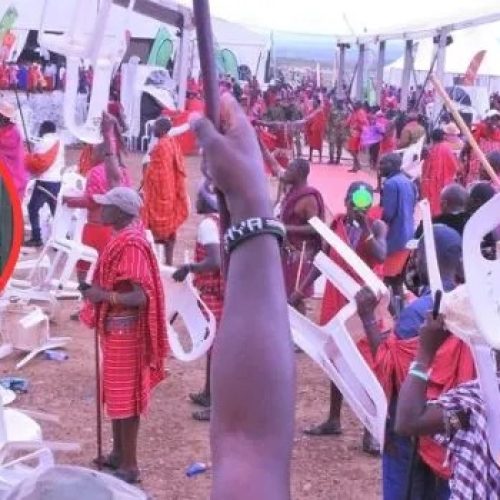
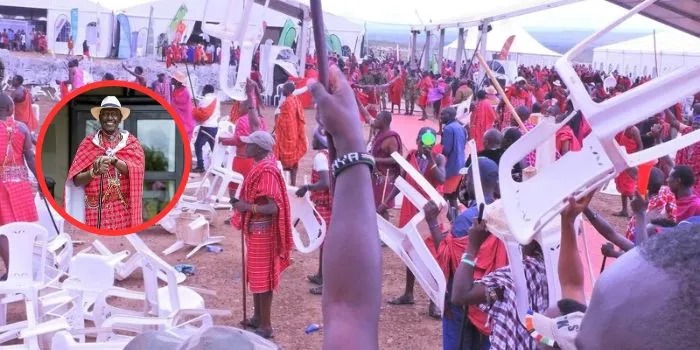
The Maa Cultural and Tourism Festival in Narok County descended into violence on Saturday when clashes between rival political factions erupted at Sekenani Gate, injuring at least ten people, scattering chairs across the dais and forcing security forces to form a protective cordon around President William Ruto as chaos swept through what was meant to be a celebration of Maasai heritage and cultural pride.
The incident lasted only minutes before order was restored, but its significance will outlast the broken chairs and scattered tents by a considerable margin. What unfolded at Sekenani was not a random eruption of crowd disorder. It was a glimpse into the state of Narok County’s politics — fractured, increasingly personal and dangerously volatile — at a moment when Kenya’s broader electoral competition is beginning to reach its most combustible temperature ahead of the August 2027 General Election.
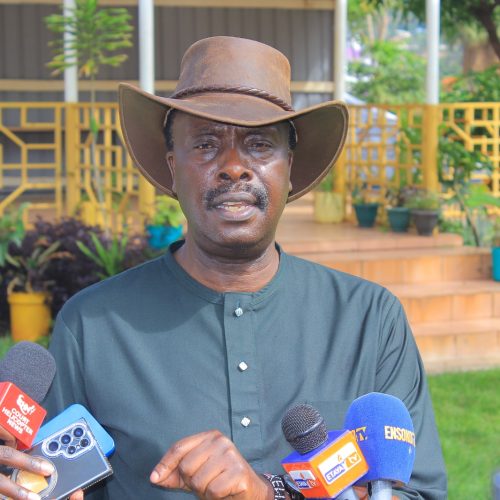
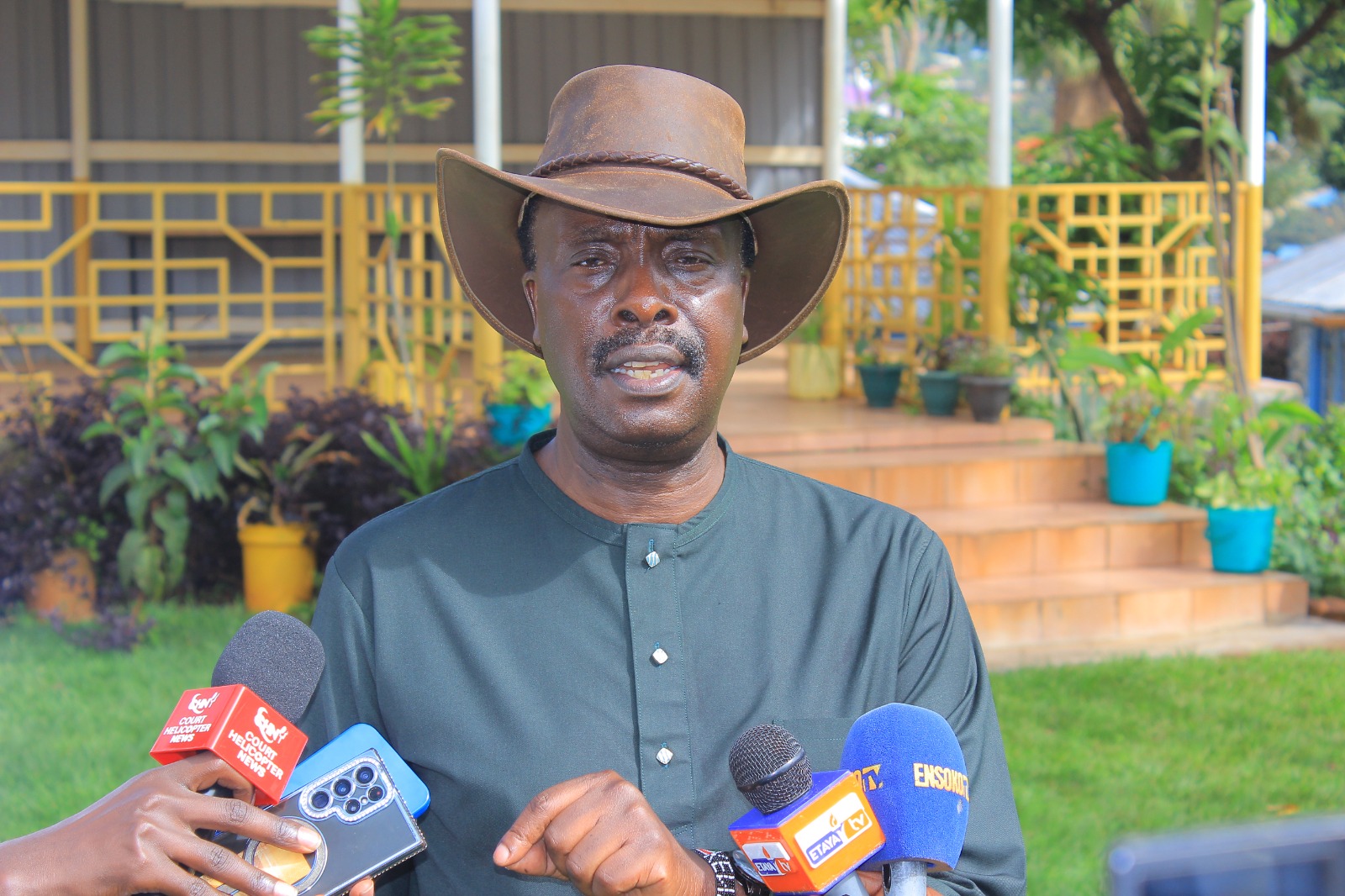
The immediate trigger was a confrontation between supporters allied to Narok West MP Gabriel Tongoyo and those of Governor Patrick Ole Ntutu, two figures whose rivalry has been building for months and whose competing ambitions for dominance in one of Kenya’s most politically and economically significant counties have created precisely the kind of pressure that explodes in crowded public spaces. Videos reviewed by The Mt Kenya Times showed groups of people running through the venue, chairs hurled near the main dais, tents damaged and journalists scrambling to protect their equipment as light showers swept across the vast Mara landscape and the atmosphere shifted from celebration to confrontation in a matter of moments.
The Presidential Escort Unit and General Service Unit responded swiftly, forming an all-round cordon around Ruto with officers fixing their gaze on the crowd, hands on rifles, expressions locked in professional seriousness. It was a scene that would have been difficult to imagine at a cultural festival a decade ago — and one that recalled an uncomfortably similar moment in May 2026, when a man breached the President’s security during a public address in Ganze, Kilifi County, reaching the presidential dais before officers intervened. That incident prompted an immediate restructuring of the Presidential Escort Unit: commandant Noah Kirwa Maiyo was transferred and replaced by William Sawe from the Recce Sub-Unit, with further changes made to the unit’s deputy commandant and officers serving in specialised formations. The National Police Service had not issued a statement on the Sekenani incident by the time of publishing.
Governor Ole Ntutu and Narok Senator Ledama Ole Kina appealed for calm from the podium, persuading the rival groups to return to their seats and allowing the festival to resume. But the resumption of a cultural programme cannot paper over what the violence revealed about the depth of Narok’s political tensions or the degree to which electoral ambition has begun to corrode institutions and occasions that once stood apart from partisan rivalry.
Inside the venue, a separate confrontation had already ignited before the chairs began flying. Nominated Senator Hezena Lemaletian had spoken about divisions within the Orange Democratic Movement, prompting Ole Kina to challenge her aggressively from the floor — an exchange that set portions of the crowd chanting “Wantam,” a pointed expression of discontent directed at the Ruto administration. The chant, which has become something of a shorthand for anti-government sentiment in parts of the country, landing at a cultural festival attended by the President himself, carried an unmistakable political charge. Ole Kina later placed blame for the broader tensions on former Cabinet Secretary Joseph Ole Lenku, adding a further layer of complexity to a feud that is as much about personal history and accumulated grievance as it is about ideological difference or electoral strategy.
Ruto condemned the violence the following day at a church service, calling on communities to embrace issue-based politics and move away from personal rivalries that, in his words, served neither the people nor the county’s development. It was the correct message to deliver, and the setting — a Sunday church service, the morning after the chaos — gave it a degree of moral weight. Whether it lands with any durability in Narok’s political environment is a genuinely open question.
The deeper story here is about what Narok represents in the architecture of Kenyan electoral politics as the country moves towards its next defining democratic moment. The county sits at the intersection of Maasai cultural identity, significant tourism revenue from the Maasai Mara — one of Africa’s most visited wildlife destinations — land politics of extraordinary complexity and a 2027 electoral contest that is shaping up to be fiercely fought at every level, from the governor’s seat to Parliament to the presidential race itself. When a cultural festival becomes a battleground, it is a signal that the boundary between community life and electoral competition has effectively collapsed — and that the consequences of that collapse are being felt not by politicians, who leave in motorcades, but by ordinary Kenyans who came to celebrate their heritage and found themselves running from thrown chairs.
This pattern is not unique to Narok. Across Kenya, the political class is already operating in full campaign mode with elections less than a year away, using every available platform — church services, funerals, harambees, cultural gatherings — as proxies for electoral positioning and mobilisation. The result is an accelerating colonisation of community life by political rivalry, in which the occasions that once provided neutral ground for people to come together are increasingly weaponised. The burden of that dynamic falls on communities, not on the politicians whose ambitions drive it.
For the Maasai community specifically, the Maa Cultural and Tourism Festival carries a significance that extends well beyond any electoral cycle. It is an annual affirmation of identity, tradition and the enduring vitality of a culture that has attracted global attention and whose pastoral land remains at the centre of some of Kenya’s most consequential conservation, land rights and community benefit debates. The festival draws visitors, generates economic activity, showcases traditional music, dance, beadwork and livestock culture, and provides a platform for the community to present itself to the world on its own terms. To have that occasion disrupted — and to have it disrupted in front of cameras, with the President present — is an injury to the community’s dignity that no post-incident statement from a podium can fully repair.
It also hands critics of the government a ready-made narrative: that Kenya under Ruto cannot guarantee order even at a presidential function, that security arrangements around the Head of State remain insufficiently robust despite the Kilifi lessons, and that political rivalries are being allowed to fester to the point of physical violence at public events. Whether that narrative is fair is a matter of debate. That it will be deployed in the months ahead is not.
The festival resumed. The speeches were delivered. The President departed. But the questions Saturday raised — about the safety of public gatherings, the security of the Head of State, the depth of Narok’s political fractures and the willingness of Kenya’s political class to subordinate community occasions to personal ambition — are not questions that resolve themselves with the end of a cultural programme.
Narok has delivered an early, vivid and uncomfortable warning about the kind of election season Kenya is heading into. August 2027 is closer than it looks, and the temperature is already rising.