The Fight against Female Genital Mutilation Kicks off with a Target of Achieving Zero Cuts
 The Mt Kenya Times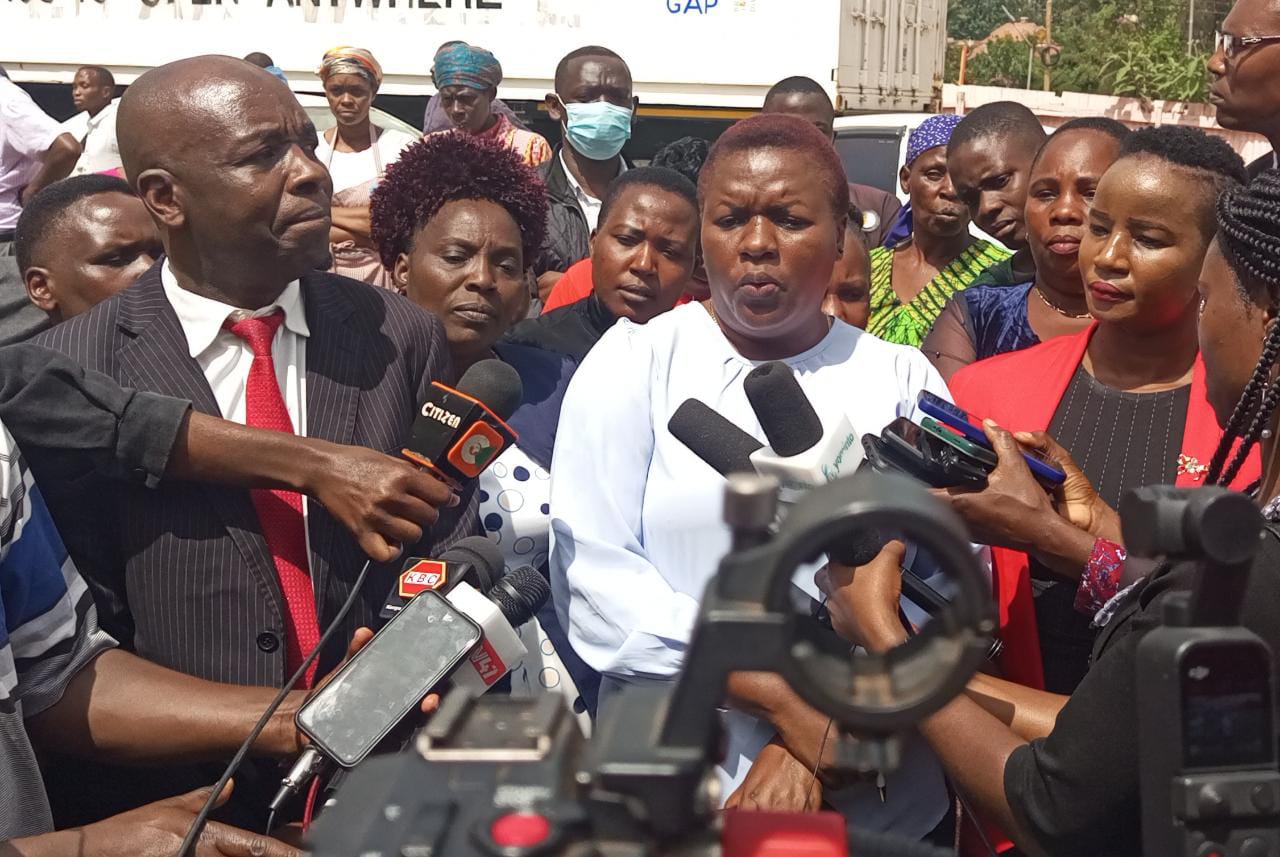
Dorice Donya Aburi ,Kisii County Member of the National Assembly together with James Maganda Manager KCB Bank Kisii Branch during the flagging off anti FGM campaign in Kisii photo /Elizabeth Angira
By Elizabeth Angira
Worth Noting:
- According to a 2014 demographic and health survey, girls and women from Somali, Samburu, Kisii and Maasai communities are at higher risk of FGM despite a decline nationally.
- The prevalence among the Somali was the highest (94 per cent), Samburu (86 per cent), Kisii (84 per cent) and Masaai (78 per cent). Other unsafe counties include Embu and Meru (32 per cent), Kalenjin (28 per cent) and Taita Taveta (22 per cent).
- According to Donya the rights of the girl-child should be protected and upheld to promote equity and equal access to education.
- She cited that they will continue to support grassroots organizations to promote girls’ education and engage the county and national government officials to eradicate these harmful practices.

The fight against Female Genital Mutilation (FGM) campaign has kicked off at Kisii County with a target of achieving zero cuts in December.
Speaking during the flagging off 150 girls who will be undergoing Alternative Rite of Passage training for one week, Dorice Donya Aburi, Kisii County Member of the National Assembly, said that it’s a collective responsibility of everybody in the fight against the menace.
According to World Health Organization (WHO) More than 200 million girls and women alive today have undergone FGM in 30 countries in Africa, the Middle East and Asia where FGM is practiced.
It also states that FGM is mostly carried out on young girls between infancy and age 15, FGM is a violation of the human rights of girls and women.
Donya said that they are mentoring girls in primary school who will become ambassadors of hope in the fight against the vice at the grass root level.
Donya said that empowering the girl child is the best initiative to know her rights is the perfect tool in ending FGM.
“This fight can only be won if our school children can be enlightened to know their rights at the primary school level,” she said.
She stressed that nurturing art through talent will help the girls to focus more on their education and talents rather than thinking about FGM.
According to a 2014 demographic and health survey, girls and women from Somali, Samburu, Kisii and Maasai communities are at higher risk of FGM despite a decline nationally.
The prevalence among the Somali was the highest (94 per cent), Samburu (86 per cent), Kisii (84 per cent) and Masaai (78 per cent). Other unsafe counties include Embu and Meru (32 per cent), Kalenjin (28 per cent) and Taita Taveta (22 per cent).
According to Donya the rights of the girl-child should be protected and upheld to promote equity and equal access to education.
She cited that they will continue to support grassroots organizations to promote girls’ education and engage the county and national government officials to eradicate these harmful practices.
Challenges
Despite the major strides made, some remaining challenges include medicalization of FGM, coercion of adult women to under the cut, and cross-border FGM where girls are taken to neighboring countries with no laws on FGM.
It is noted that some health workers, especially nurses and midwives, have been carrying out FGM at health facilities or at home.
According to Donya high preference number of teen pregnancies in the county is majorly being contributed by FGM.
“You find that when the girls are initiated they are being told they have moved childhood stage to adulthood hence start to engage in sex,” she said.
She cited that, since teen mothers do not have any source of income, they will opt to go for commercial sex work as an alternative source of generating money for upkeep.
On her side Betty Obiri , former Member of Kisii County Assembly, said that FGM violates a woman’s rights to health, security and physically integrity, she becomes emotionally, mentally and physically scarred.
Obiri said that despite efforts to curb FGM, this type of violence against women and girls is so normalized in some communities. Girls are socialized into believing they must undergo the procedure.
“During the holidays the girls are being sent to visit the relatives where they are subjected to FGM” she said.
She said that it is stifling their ability to participate in society as once they undergo FGM, their schooling is impacted and many never complete their education and progress in life.
Ednah Kwamboka, nominated Member of Kisii county Assembly, said that girls missed school to recover after the procedure and suffered medical complications and trauma which impacted their class attendance and performance, said the report.
On his part James Maganda, Manager KCB Kisii branch, said that they have chipped in to support them.
Maganda said that the vice is majorly being carried out during holidays, they are ready to support the initiative to end FGM in Gusii region.
Donya appealed to the Non-governmental organizations, local administration and parents have been challenged to intensify the fight against Female Genital Mutilation (FGM) in efforts to eradicate the practice.
According to United Nations (UN) data one five women and girls aged between 15 and 49 in Kenya have undergone FGM.
Similar Posts by The Mt Kenya Times:
- International Unitarian Funding Program Gave A Grant To Mulher Forte GBV Project In Botswana
- End of an era: Liverpool begin again without Salah, Mané and Firmino
- The goon’s paycheque: When political intolerance turns Kenya’s streets into killing fields
- KEMSA chief tells Ruto medicine order fill rate has more than doubled in four years
- IEBC commissioner urges shared responsibility for credible 2027 poll
About the Author