Effect of smart Phones on Mental Health


By: Jeremy Mugo
Worth Noting:
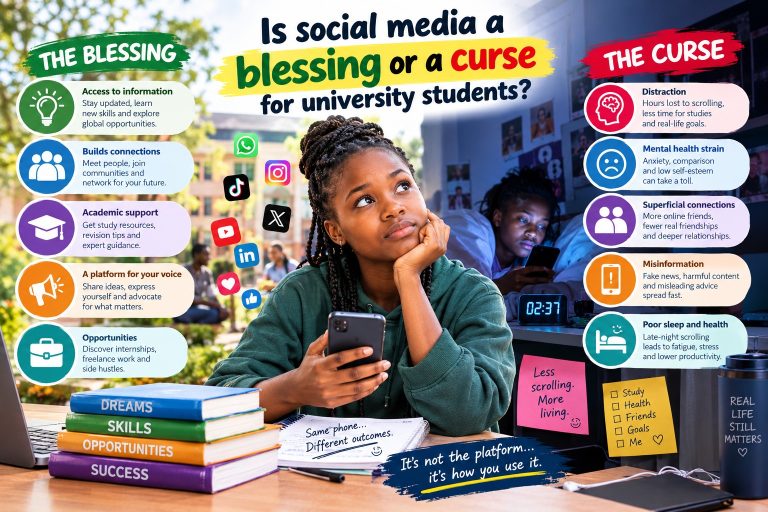
- To him, smartphones have become a substitute for “can’t do without” and they are incessantly impairing the ability of so many students to interact effectively in the real world to the detriment of their relationships with their lectures and pursuit of their academic excellence.
- I know you will never admit it, but when you are unable to find your smartphone for even thirty seconds, it causes an anxiety attack. How I know this is because it happens to people every single day. Clinically there is a name for this disease; Nomophobia which means NO MObile PHOne phoBIA which is the fear of not being able to use your smartphone or have access to it.
As we continue being more digitally endowed, it is worth recounting how far we’ve come from the analogue to the digital era. As well as concede where we’ve stumbled. In the world today, nothing is in more jeopardy than our digital lifestyle.

Various surveys have confirmed that many people are willing to give up food, sleep and sex than lose their internet connection. One of the famous studies reveals that half of us would rather have a broken leg than a broken smartphone.
How many times do you have to go online? I guess twenty times a day and cringe at the thought. Imagine, it isn’t even close to reality. Research conducted by Tecmark, reveals that we check our devices about two hundred and twenty-one times per day or about four minutes of the time we don’t sleep.
Additionally, according to Mr Suleiman Mohamed a clinical medicine student at Gatundu KMTC he uncovers that despite the strictness of a lecture in a class, most students will often find it easier to operate on their smartphones while the lecture is in class. He points out that about 80% of the class population is always responsive to notifications they get from what’s up, Facebook, Instagram, tweeter etc.
To him, smartphones have become a substitute for “can’t do without” and they are incessantly impairing the ability of so many students to interact effectively in the real world to the detriment of their relationships with their lectures and pursuit of their academic excellence.
I know you will never admit it, but when you are unable to find your smartphone for even thirty seconds, it causes an anxiety attack. How I know this is because it happens to people every single day. Clinically there is a name for this disease; Nomophobia which means NO MObile PHOne phoBIA which is the fear of not being able to use your smartphone or have access to it.
Nomophobia is real, however, the medical community is not able to detect the overuse of smartphones as a clinical addiction. Shockingly, research from the University of Michigan states that tucking your chin and slinging your head to look at the smartphone is causing an exponential rise in narcissism among individuals.
Additionally, teenagers who spend three hours or more on electronic devices are 35℅, and those who spend five hours are 70% more likely to have a risk factor for suicide than those who spent less than one hour with their electronic devices.
A US psychologist, David Greenfield, symbolizes the Internet as a slot machine. He says “you will never know what you will find inside”. One of the reasons why social media is now addictive to a large population is that it triggers the release of a neurochemical Dopamine into our brains.
This bestows us the feeling that we are on top of the world thus making us develop a need to repeat the experience. Dopamine is part of your reward system.
This system is designed from an evolutionary standpoint, to reward you when you are doing things you need to survive which includes eating, drinking and reproduction. As humans, our brains are hardwired to seek out behaviours that release dopamine into our reward system. When you are doing something pleasurable, your brain releases a large amount of dopamine into your reward system.
These pleasurable things include chatting on social media platforms, watching adult sites, eating certain types of delicacies, abuse of drugs and video games. Continued release of dopamine creates events which consequently become an addiction.
A study was done on a group of college students which involved comparing their performances at college and when they were in high school. It was noted that there was a profound dissimilarity in terms of their performance in high school and college.
The reason behind this discrepancy in performance is that in high school students have curtailed exposure to smartphones as opposed to when they enroll in colleges and universities. Students are more addicted to social media platforms thusly leading to poor performance in institutions of higher learning.
Recently, the world health organization announced that video game addiction will be classified as an official mental health condition in the 11th revision of the international classification of disease. According to WHO gaming disorder is “characterized by a pattern of persistent or recurrent gaming behaviour”.
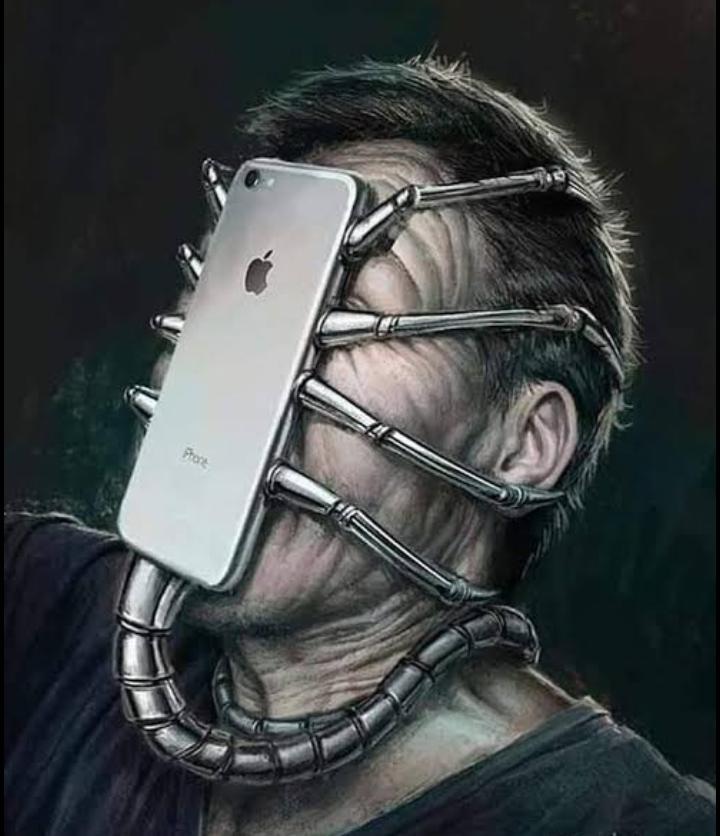
Whether it is playing video games, watching adult sites, checking your whatsApp and Facebook notifications here is the truth, spending too much time with your smartphone will slowly and severely harm your mind. Moreover, excessive use of cell phones causes headaches, impaired concentration and fatigue.
If you are constantly using your mobile phone to surf the Internet it will affect your brain’s frontal lobe and brain stem thus decreasing the ability to speak reason and comprehend social cues. Addiction to smartphone use can lead to an imbalance in brain chemistry that triggers depression and anxiety. Frequent slouching to look at your device can make you depressed thus imperiling your mental health.
A parting shot, we should all strive to ameliorate the overuse of smartphones by campaigning strongly as it is key to mental health degradation. All healthcare givers, counsel patients and the community that the source of anxiety, stress and even depression could be a result of social media addiction.
©Article by: Jeremy Mugo.
Clinical med student Gatundu kmtc.
Gmail: jeremymugo7@gmail.com
@www.mtkenyatimes.com
Similar Posts by The Mt Kenya Times:
- Mt Kenya Times ePAPER October 21, 2026
- Kenya confirms ninth Ebola case as outbreak remains contained within single cluster
- Musk pledges SpaceX share for every American child in 2027
- Abiy calls for deeper Kenya-Ethiopia trade partnership at Eldoret ceremony
- Kenya’s oil moment: Promise, responsibility and the long road from Turkana to market
About the Author