Kenya’s oil moment: Promise, responsibility and the long road from Turkana to market
 The Mt Kenya Times
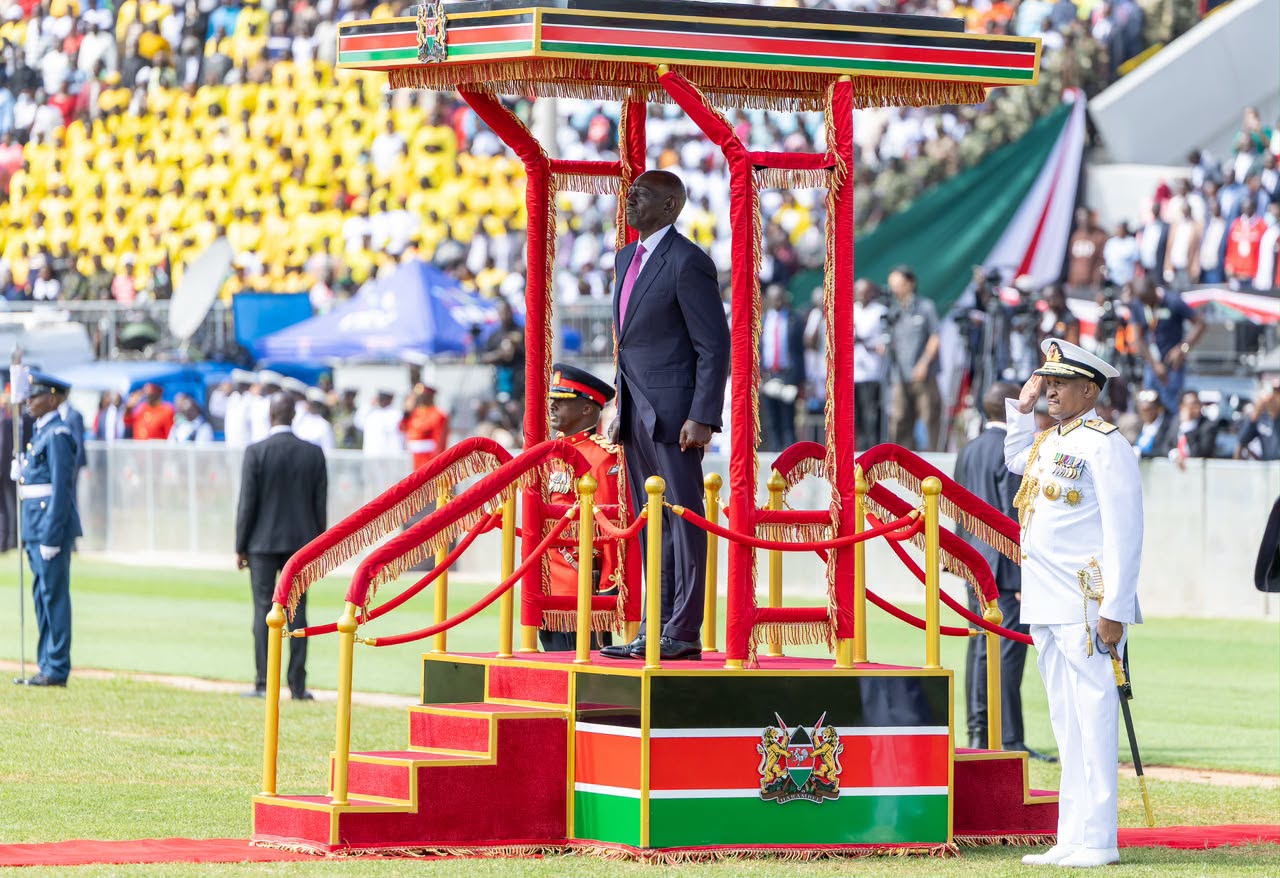
President William Ruto during Mashujaa Day celebration

The December export target marks a milestone decades in the making — but the harder work of managing the windfall wisely has only just begun
By James Kilonzo Bwire
President William Ruto announced yesterday that Kenya is targeting its first crude oil exports from the Lake Turkana Basin in December, marking what could become the most significant energy development in the country’s history since oil was discovered in the South Lokichar Basin in Turkana County in 2012.
The announcement, made during the Mashujaa Day celebrations in Eldoret, confirmed that work in the basin is progressing rapidly. The arrival of drilling equipment at the Port of Mombasa for transportation to South Lokichar signals that years of exploration, financing negotiations and infrastructure planning may finally be converging into commercial reality. Kenya has waited fourteen years for this moment. The question now is not whether the oil will flow, but whether the country has built the institutions, frameworks and political discipline to ensure that it flows to the benefit of all Kenyans rather than a privileged few.
That question is not a cynical one. It is the central lesson of African oil history, from Nigeria to South Sudan, from Angola to Chad. Countries that discovered oil and celebrated the discovery without building the governance infrastructure to manage the revenue have, in too many cases, ended up poorer, more unequal and more unstable than they were before the first barrel was extracted. Kenya must study that history with honesty and govern this moment accordingly.
Transparency is the first and most urgent obligation. Kenyans are entitled to clear, accessible information about the terms of production agreements, the ownership structure of the project, the taxes and royalties due to the state, and the institutions responsible for oversight. They should know precisely how revenue will be divided between the national government, county governments and the communities of Turkana. Without that information, citizens cannot participate meaningfully in decisions about their own national resources — and without participation, accountability becomes impossible.
Transparency carries particular weight in Turkana County, a region that has experienced decades of marginalisation and uneven development despite hosting some of the country’s most significant natural resources. The people of Turkana are not bystanders in this story. They are its primary stakeholders. They must be informed, genuinely consulted and given real, structured opportunities to benefit from employment, skills training, local procurement and community development. Their land, water sources, culture and livelihoods must be respected at every stage of the production process. A project that extracts wealth from Turkana while leaving its communities materially unchanged would represent a profound failure of national purpose.
Environmental protection is the second non-negotiable responsibility. The Lake Turkana Basin is an ecologically sensitive region of global significance. Oil production and transportation carry real risks to land, water, air quality and wildlife, and those risks must be managed through genuinely independent monitoring, comprehensive environmental impact assessments and reliable community reporting mechanisms. Where damage occurs, affected communities must receive timely, fair compensation and affected environments must be properly restored. Environmental standards are not an obstacle to development. They are the condition under which responsible development is possible. Kenya cannot afford to trade long-term ecological damage for short-term export revenue.
Infrastructure readiness is the third dimension of this challenge. Oil extracted from South Lokichar must be transported safely, stored securely and delivered to international buyers through a logistics chain that is prepared for the demands of commercial export. Roads, storage facilities, transport systems, port handling capacity and export arrangements must all be functional and verified before the first shipment departs. The government should provide the public with a clear, specific account of what preparations have been completed, what remains outstanding and which institutions are responsible for each stage. If December is a realistic target, Kenyans deserve to know why. If delays occur, they deserve the truth promptly.
Financial discipline underpins everything else. Oil contracts must be competitive, transparent and properly reviewed. Revenue collection must be efficient. Public institutions must resist agreements that expose taxpayers to hidden risk, and Kenya must prepare its fiscal planning for the volatility that characterises international oil markets. Prices rise and fall on forces entirely beyond Nairobi’s control, and a country that builds its budget on optimistic oil revenue projections can find itself in serious difficulty when markets turn.
More fundamentally, oil revenue must complement Kenya’s broader development strategy rather than substitute for it. Agriculture, manufacturing, education, healthcare, infrastructure and tax administration remain the foundations of a resilient economy. Oil can strengthen those foundations considerably. It cannot replace them. Kenya’s economic future depends on the depth and diversification of its productive base, not on the price of crude oil on any given morning.
Ruto’s announcement that private investors have acquired a 25 per cent stake in Kenya Pipeline Company from public entities adds a further dimension to this national conversation. The President described the transaction as a demonstration of investor confidence and a mechanism for mobilising private capital for strategic infrastructure. That framing may well be accurate. But Kenya Pipeline Company is a strategic national asset that moves petroleum products across the country and underpins regional fuel supply. Any change in its ownership structure carries implications for consumers, transporters, government revenue and energy security. Citizens are entitled to know who the buyers are, how the shares were valued, what safeguards protect the public interest and how the transaction affects the company’s mandate. Investor confidence and public confidence are not competing goals. Both are necessary, and both depend on the same thing: openness.
The oil export target and the pipeline transaction are connected by a single theme — Kenya’s management of its strategic energy assets at a moment of genuine economic opportunity. That management will require clear rules, honest public communication, active parliamentary oversight, engaged civil society scrutiny and a sustained commitment to the welfare of the communities most directly affected.
Turkana County should be fully and continuously involved in planning, monitoring and benefit-sharing. The national government, county leadership, regulators, investors and community representatives should operate within a transparent coordination framework that prevents conflict, addresses concerns early and ensures that local voices are heard before decisions are made rather than after consequences are felt. Education and skills development must be treated as integral components of the project, with deliberate pathways for young people from Turkana and other marginalised regions into technical, environmental, logistical and administrative roles that the industry genuinely needs.
Kenya has waited a long time for this. That patience now demands its dividend — not in the form of a ceremonial first shipment, but in the form of stronger institutions, protected environments, fairer opportunities and measurably improved lives for the citizens of Turkana and the country beyond.
The first barrel is the easy part. Everything that follows is the test.
Similar Posts by The Mt Kenya Times:
- Kenya confirms ninth Ebola case as outbreak remains contained within single cluster
- Musk pledges SpaceX share for every American child in 2027
- Abiy calls for deeper Kenya-Ethiopia trade partnership at Eldoret ceremony
- Wamunyoro talks: Gachagua and Sifuna open Kenya’s 2027 opposition chapter
- The opposition’s 2027 gameplan: Gachagua, Sifuna and Kalonzo begin the long game
About the Author