Kenya confirms ninth Ebola case as outbreak remains contained within single cluster
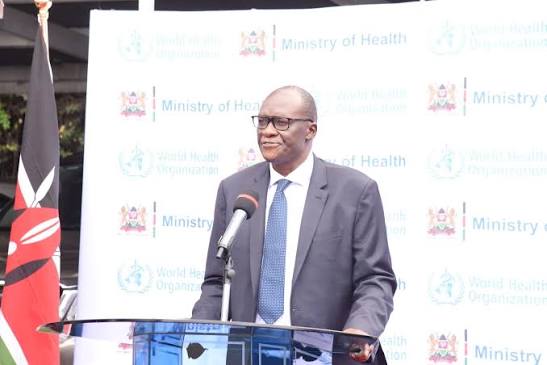
Director General for Health Dr Patrick Amoth
With 99 per cent of contacts traced and all eight patients stable, health authorities say the response is holding — but the US travel advisory signals growing international concern
By Grace Wanja
Kenya confirmed a ninth Ebola case yesterday, a 24-year-old man and close relative of the outbreak’s first victim, who tested positive on October 19 after developing symptoms while already in quarantine.
Director General for Health Patrick Amoth said the patient was immediately isolated and placed on treatment following the positive test. All eight surviving patients are responding well and remain stable under close observation. The first victim, who arrived in Kenya from the Democratic Republic of Congo via Uganda approximately two weeks ago, has died. Three of the nine confirmed cases are healthcare workers; the remainder are relatives of the index case. Amoth confirmed that all nine cases belong to a single transmission cluster and that there is currently no evidence of spread beyond that group.
Contact tracing has reached 134 of the 135 people identified as contacts — a coverage rate of 99.3 per cent — with all traced individuals placed in quarantine. Kenya has received 500 doses of medicines to support treatment of confirmed patients, and a dedicated laboratory has been established at the Kenyatta National Hospital Infectious Disease Unit to process Ebola samples without disrupting routine services for other patients. Medical supplies including protective gowns, gloves, face shields, boots, diagnostic kits and thermometers have been distributed to 12 very high-risk and 16 high-risk counties nationwide.
The response, by the Ministry of Health’s own account, is functioning as designed. Transmission within quarantine facilities has not occurred, and healthcare workers treating patients are operating under full protective protocols. No restrictions have been imposed on travel, trade or public gatherings, and authorities have been deliberate in communicating that message to avoid the economic disruption that accompanies poorly managed public health emergencies.
The international dimension is more complicated. The United States State Department raised its travel advisory for Kenya to Level 3, urging American citizens to reconsider travel to the country citing the Ebola outbreak among several concerns. The advisory is a reputational and economic pressure point that the Kenyan government will need to manage carefully. Tourism, trade and investor confidence do not wait for outbreaks to be formally declared over before reacting to elevated risk warnings from major economies.
The Ministry has appealed to communities to receive returning contacts without stigma. Those who entered quarantine on October 6 and remain symptom-free are due to complete their 21-day monitoring period and begin returning home from October 25. Amoth was unambiguous: anyone who completes the full 21-day period without developing symptoms poses no risk of infection. Public cooperation with that message is as important to containing the outbreak as any clinical intervention.
Anyone experiencing fever, unusual fatigue, muscle or joint pain, sore throat, vomiting, diarrhoea or unexplained bleeding is urged to seek medical attention immediately or call the toll-free line 719.
Kenya’s response has been swift and largely effective. Sustaining it — and persuading the world that it is working — is now the challenge.
Similar Posts by The Mt Kenya Times:
- Mt Kenya Times ePAPER October 21, 2026
- Musk pledges SpaceX share for every American child in 2027
- Abiy calls for deeper Kenya-Ethiopia trade partnership at Eldoret ceremony
- Kenya’s oil moment: Promise, responsibility and the long road from Turkana to market
- Wamunyoro talks: Gachagua and Sifuna open Kenya’s 2027 opposition chapter
About the Author