The Mt Kenya Times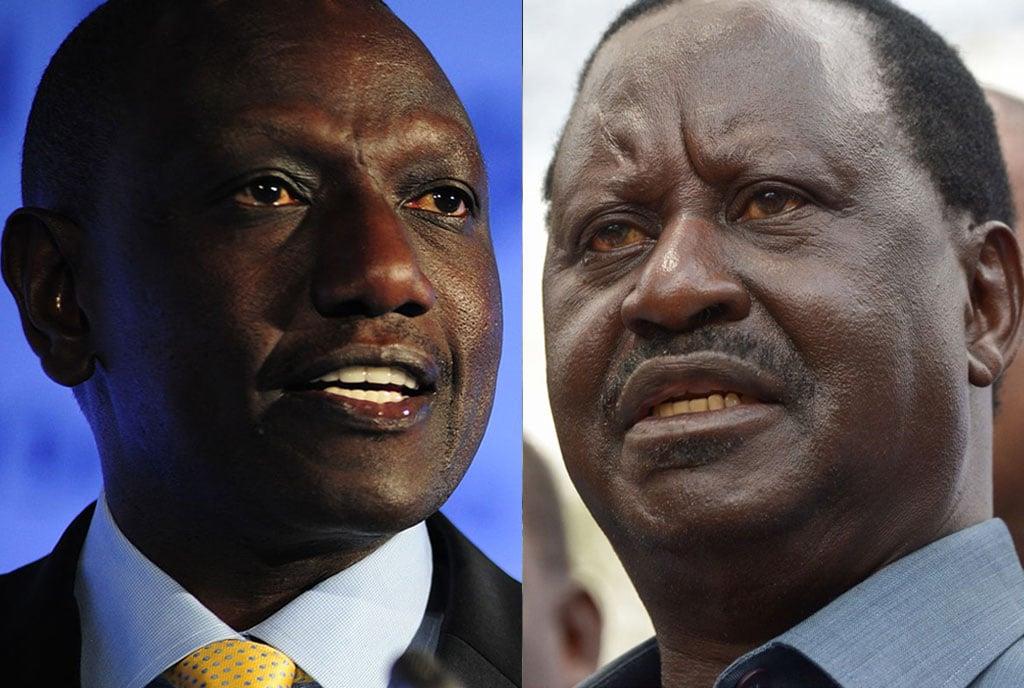
President William Ruto and Azimio La Umoja One Kenya leader Raila Odinga
By: Joseph Mutua Ndonga
Worth Noting:
- President Ruto won last year’s General Election. He was declared the winner by the chairman of a legally constituted IEBC commission and his victory was upheld by the Supreme Court of Kenya.
- The observers from European Union (EU) and Africa Union (AU) also gave the poll results a clean bill of health. The outcome reflected the popular will of Kenyan people.
- Notably, in the absence of democracy, dictatorship and autocratic rule thrives. Dissenting voices are suppressed and in a worst case scenerio the ruling class takes the law unto their own hands.
- Kenya’s history attests to this. The draconian rule becomes the hallmark of leadership of founding President Jomo Kenyatta and his successor Daniel Arap Moi.
As the pressure mounts on President William Ruto and opposition leader Raila Odinga to cede hardline stances, the question lingering in my mind is. Are those pushing the narrative of the formation of Grand Coalition government in the right course?
In my considered view, they are not. Allow me to explain why?
The political pluralism that is anchored on the national values and aspirations is the cornerstone of healthy democracy.
This means that the nation must always be run by two distinct political outfits-government and opposition.
In Kenyan context as stipulated in the constitution, we normally hold a General Election after every five years.
This always becomes a defining moment for our nation. The outcomes of the polls would give birth to the outfits.
President Ruto won last year’s General Election. He was declared the winner by the chairman of a legally constituted IEBC commission and his victory was upheld by the Supreme Court of Kenya.
The observers from European Union (EU) and Africa Union (AU) also gave the poll results a clean bill of health. The outcome reflected the popular will of Kenyan people.
Notably, in the absence of democracy, dictatorship and autocratic rule thrives. Dissenting voices are suppressed and in a worst case scenerio the ruling class takes the law unto their own hands.
Kenya’s history attests to this. The draconian rule becomes the hallmark of leadership of founding President Jomo Kenyatta and his successor Daniel Arap Moi.
Kenyans had no space to air their views and excessive force was always used to deal with those who talked ills of the government.
The root cause of this. The country was governed by the old constitution and was a under one-party state.
This constitution had created a monolithic system of one-man show and an imperial presidency. The word of the president was the law and final.
This is what triggered the agitation for democratic and constitutional reforms that would put Kenyans at the center of charting the destiny of thier nation.
In early 90s, then President Daniel Moi caved in to pressure and allowed the repeal of Section 2A of the constitution to usher in multi-party democracy.
The first general election under this system was held in December 1992.
Thereafter, the civil society under the banner of NCEC/NCA pressed for more reforms that culminated to the birth of the new constitution.
In all these struggles, the Azimio La Umoja-One Kenya Coalition leader Raila Odinga was one of the key players.
During the 2010 referendum campaign, he campaigned vigorously for the draft constitution. He always described it as most progressive likening it to the constitutions of America and South Africa, respectively.
One of its key features stood out as political pluralism.
Today, Raila seems to shift the goal posts.
He is pushing for the expanded mediation talks akin to the talks that herald to the creation of the Grand Coalition government, popularly known as a ‘nusu mkate’ government.
His Plan B seems to be less other than a handshake.
As we know, the two systems never furthered the course of democracy.
After Raila joined the government, he become contented with the way the President and his administration was running the show.
At no time he would blew the whistle on ills associated with the government as he used to do.
He would also forget his footsoldiers who had made great sacrifices in pushing his herthito anti-President agenda.
With due respect to Raila, I want to remind him.
This time, we have a new constitution. So, if you are truly an advocate of political pluralism, I would expect you to support President Ruto’s proposal to create an Office of Leader of the Opposition.
If this position is created, you will automatically take it.
As an alternative government, this will enhance your role of putting the government in checks both inside and outside parliament.
However, the law will compel you to engage in structured and constructive dialogue.
I don’t see anything wrong with this. Kenya is not a banana republic. It is a country governed by the rule of law and constitution.
Joseph Mutua Ndonga is a writer and political commentator based in Nairobi
Similar Posts by The Mt Kenya Times:
- Mt Kenya Times ePAPER October 21, 2026
- Kenya confirms ninth Ebola case as outbreak remains contained within single cluster
- Musk pledges SpaceX share for every American child in 2027
- Abiy calls for deeper Kenya-Ethiopia trade partnership at Eldoret ceremony
- Kenya’s oil moment: Promise, responsibility and the long road from Turkana to market
About the Author