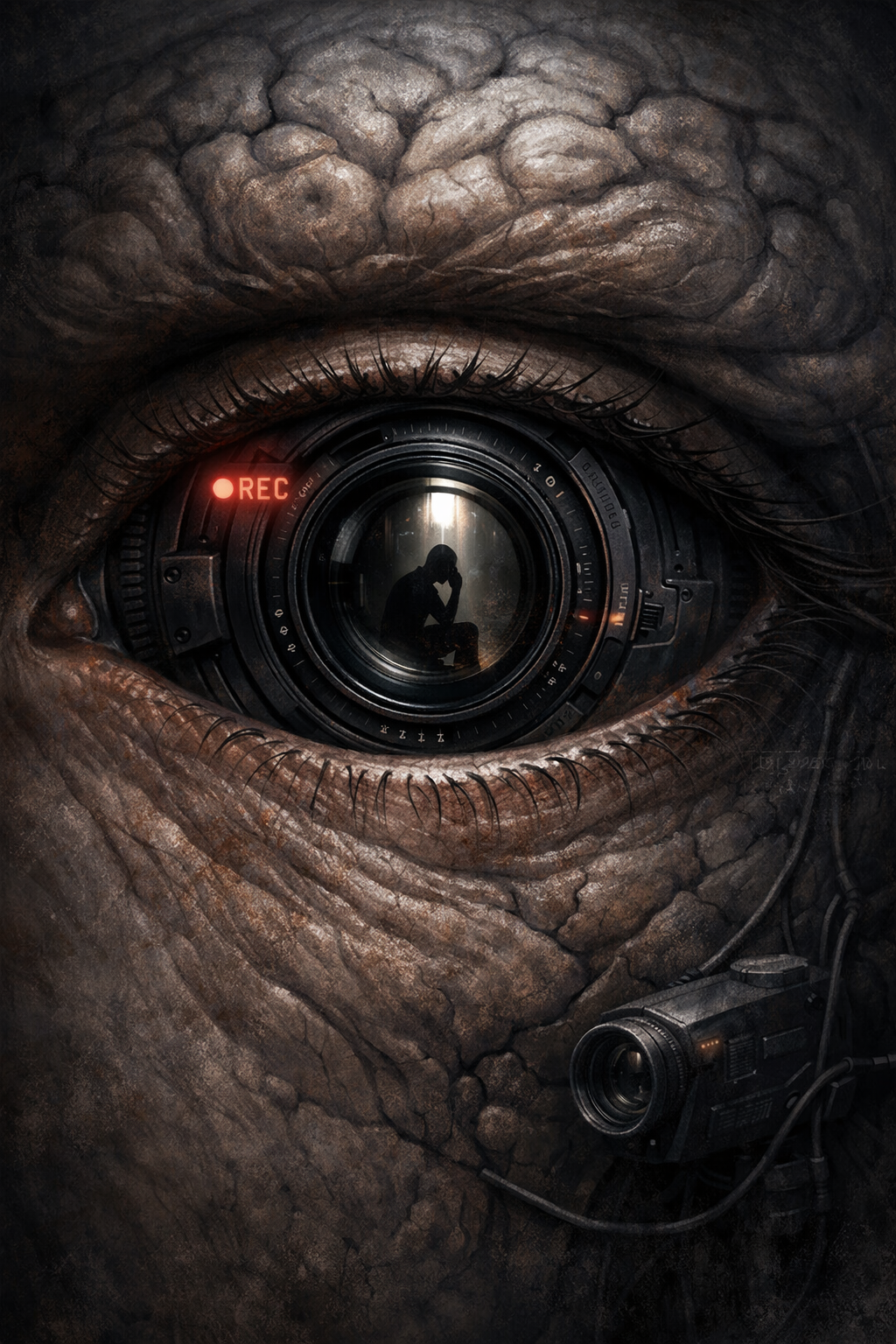
The camera you fear most is not the one outside your door — it is the one inside your conscience.
By Hadassah Karangu
Imagine waking up tomorrow to find a camera crew outside your door. Not for a day or a week — for the rest of your life. Every conversation, every decision, every act of kindness, every mistake, every quiet triumph and every humiliating failure: recorded, preserved, and available for the world to see.
Would you live differently?
It sounds like a simple question. But sit with it for a moment, and it starts to reveal uncomfortable things. Most of us would immediately think about the habits we would drop, the words we would swallow, the corners we would stop cutting. Others would begin performing — working harder, speaking more carefully, curating a version of themselves fit for public consumption.
But the more honest question is not what we would change. It is what our current lives already say about us.
We are already documenting ourselves, of course. Social media gives us the edited highlights: the graduations, the milestones, the carefully lit photographs. We choose what the world sees. What we rarely show is the larger, messier story behind the frame — the sleepless nights, the financial anxiety, the relationships held together with hope and stubbornness, the private doubts of people who look, from the outside, completely fine.
If our lives were fully documented, people would not just see our achievements. They would see our journey. The days we nearly gave up but did not. The mistakes that cost us something and taught us something. The sacrifices made in silence, with no applause and no audience.
A documentary about a perfect person would be unwatchable. We connect with stories because they contain struggle. We admire people not because they never fall, but because they get up — and because getting up costs them something real.
This matters especially now, in an era when image has become a currency. Many people invest enormous energy in building the appearance of success while quietly neglecting the character that makes success worth having. Likes and followers can manufacture the illusion of significance. But a person’s true character does not reveal itself when everyone is watching. It reveals itself when nobody is.
If cameras followed us everywhere, would we still treat people with respect when there was nothing to gain from it? Would we remain honest when dishonesty was easier and less likely to be noticed? Would we keep working when there was no recognition coming?
Those questions are the ones that define us.
The thought experiment opens outwards, too. What would happen to public life if every act of corruption were automatically exposed? If every promise made by a leader could be replayed verbatim years later? Would accountability sharpen? Would trust — real trust, earned rather than performed — begin to return?
And for ordinary people: how much of our time is genuinely spent pursuing the things we say matter to us? How much is lost to distraction, delay, and the comfortable fiction that we will start tomorrow?
For young people building the early chapters of their lives, this reflection carries particular weight. Success is not assembled in a single dramatic moment. It is built from daily choices that feel, at the time, almost too small to matter — an hour of practice, a skill developed quietly, a setback absorbed and learned from. Years later, those small moments turn out to have been the whole story.
Here is the thing: our lives are already being documented. Not on film, but in the memories of everyone we have ever encountered. People forget our words far more readily than they forget how we made them feel. Communities remember those who served. Families carry the weight of sacrifices made in love. Friends do not forget loyalty shown in difficult seasons.
Long after the photographs fade and the social media posts are buried under a decade of new content, character remains. It is the only thing that does.
Each of us is the author of our own story. Every day adds a chapter. Every choice contributes a line.
So the question is not really whether a camera is watching. The question is whether you are living a life you would be proud to watch yourself.
If a documentary of your life were released one year from today, what would it show? Courage or avoidance? Discipline or excuses? Genuine kindness or the performance of it? Growth, or the same conversation about growth you were having five years ago?
The answer is not determined by tomorrow’s choices. It is being determined right now.
The story of your life is being written every single day — camera or no camera.
Similar Posts by The Mt Kenya Times:
- Mt Kenya Times ePAPER October 26, 2026
- Sakaja challenges Kamukunji police over Eastleigh suspect bail
- Muturi demands binding livestreaming rules for 2027 polls to prevent repeat of 2022 chaos
- NTSA calls for road safety to be declared a national disaster after 24 die in Mtito Andei crash
- Ruku turns on Waiguru over deputy president ambitions: ‘That seat is not being contested for’
About the Author