Unlawful – UK Court rules; Tories out to ‘score cheap political points’ says the public
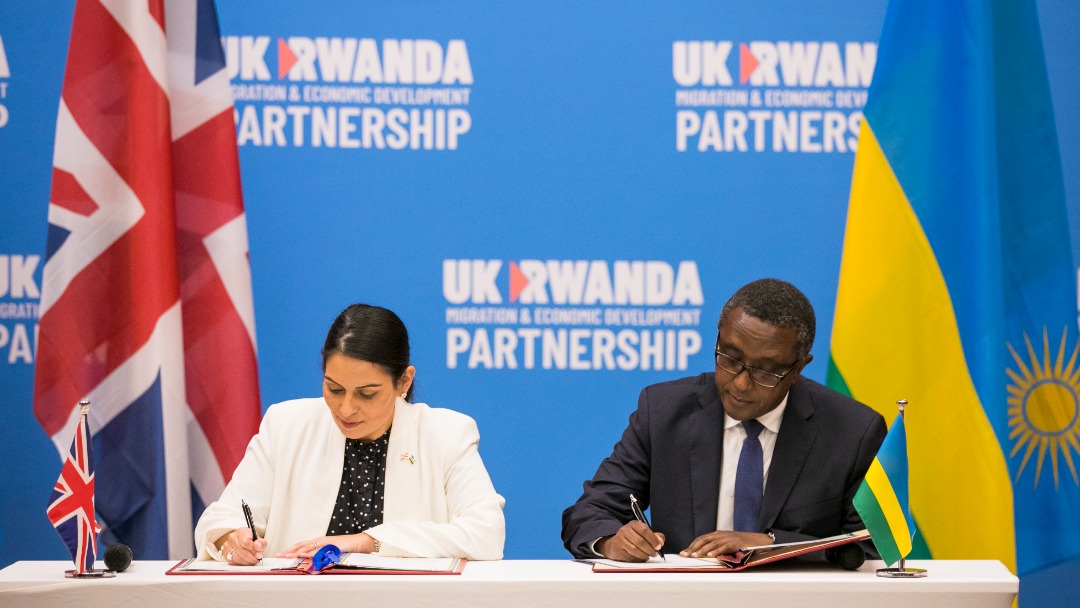
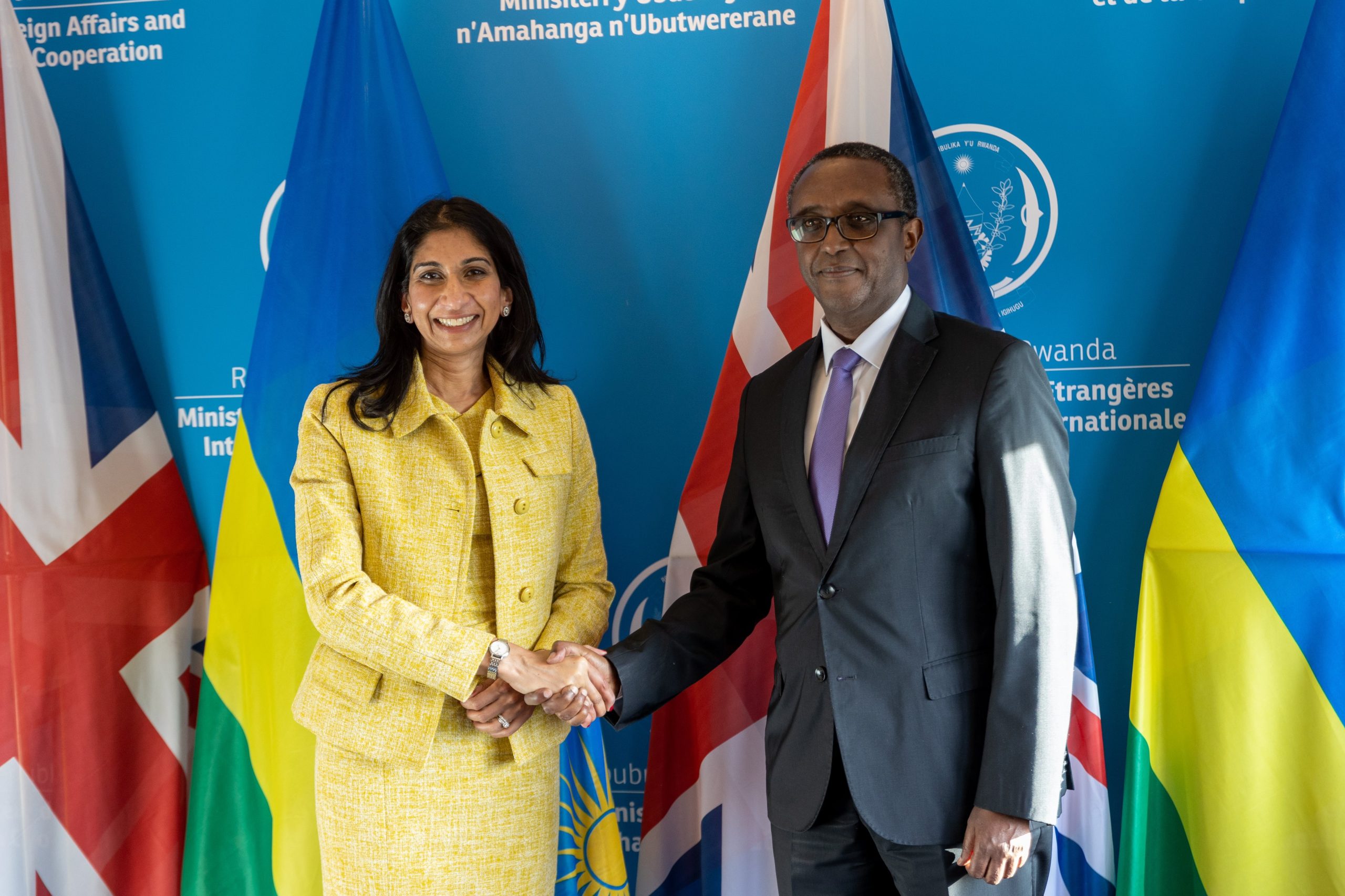
The contentious Rwanda asylum programme agreement signed on April 14, 2022 between former Home Secretart Priti Patel and Rwanda Minister Vincent Biruta, Photo Courtesy,
BIG BLOW TO DEFIANT SUNAK AND SUELLA AS BRITAIN’S BRUTAL RWANDA REFUGEE DEPORTATION POLICY BACKFIRES
By SHAMLAL PURI in London
Associate Publisher & Senior Editor – UK
shamlalpuri4@gmail.com
Worth Noting:
- The Rwanda plan, which humanitarian bodies have slammed as inhuman, has derailed British Prime Minister Rishi Sunak’s plans to control immigration, hitting the buffers for now.
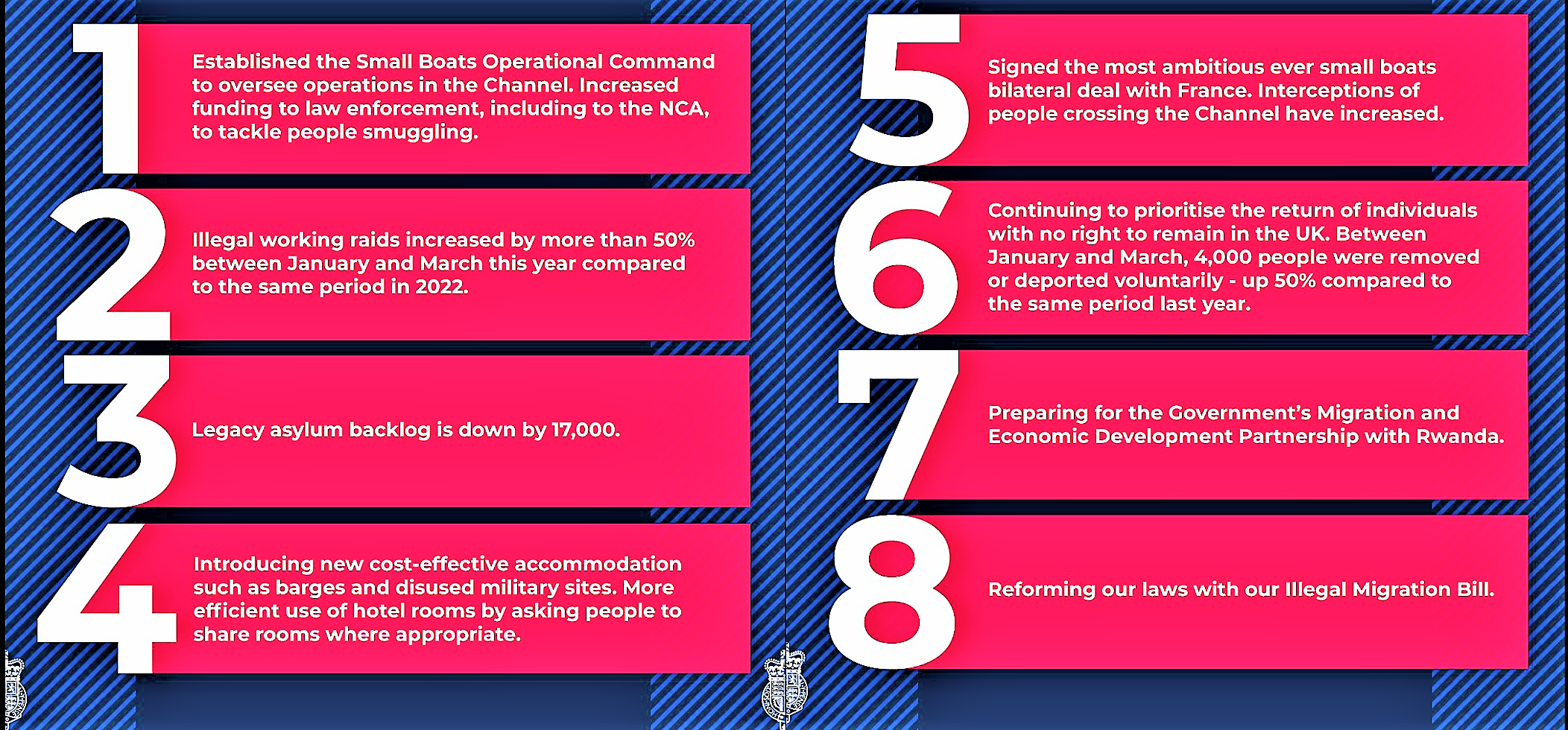
- This policy is based on his five priority pledges made at the beginning of the year, including stopping illegals entering the country in small boats used by people traffickers.
- The three Appeal Court judges overturned a high court decision that previously ruled that Rwanda could be considered a safe third country to send ‘unwanted’ refugees. At the same time, the UK’s Home Office decided the fate of other possible cases – to admit or deport them.
- Though the decision last week is a massive blow to the political integrity of Prime Minister Sunak and his Home Secretary, the controversial Suella Braverman’s latest judgement left them a small ray of hope – an appeal.
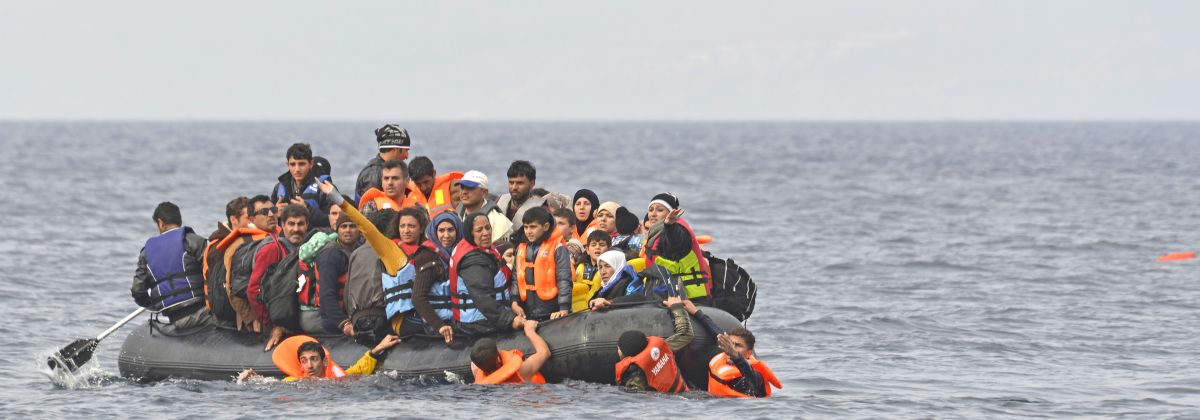
The United Kingdom’s controversial plans to deport some asylum seekers to the landlocked Central Eastern African country Rwanda were dealt a big blow last week, 29 June, when the three judges at the Court of Appeal in London ruled the move unlawful.
They reversed the High Court’s decision on 19 December 2022 that the plan was lawful and the UK could send unwanted asylum seekers to Rwanda.
This week’s decision will likely be appealed, but no asylum seekers can be sent to Rwanda. It can apply to anyone who came to the UK without a visa or other permission to enter the country from 1 January 2022.
This judgement is a major blow to the UK ministers’ controversial immigration policies that even humanitarian bodies have roundly condemned, saying the Government wants to score cheap political points by throttling people’s freedom and rights.
The plan has already cost at least £120 million and would cost a further £169,000 per person deported (compared with the £106,000 per person it costs to house an asylum seeker in the UK). With legal costs now stacking up, the Rwanda plan is quickly becoming very expensive, hitting the UK taxpayers already struggling for survival.
The escalating cost is a testimony to the Government’s stubbornness in pursuing this plan despite the obvious cost implications when better options are available in the UK. The final analysis will not augur well for the ruling Conservative Party, which gives somewhat cynical priority to Sunak’s wish horse.
A considerable section of the indigenous Britons committed Christians, who believe in compassion, oppose the Government’s ‘inhuman’ approach to resolving the country’s immigration problems. They could vote with their feet and reject the Conservatives at the next General Election.
The Government’s refugee policy suits radical right-wingers and White racist supremacists who secretly wish to remove all non-white people. The country’s race relations laws stop them from coming out in the open. They know the UK will stop functioning if these former migrants, now in cushy lifeline jobs, withdraw their labour only for a month.

A Labour Party supporter said while it is the UK’s right to scrutinise migrant applications, it beggars belief when they refuse to consider better economic measures are available in the country.
These funds could, for example, be used to fund ailing services such as the National Health Service, which is begging for the budget to keep it functioning or help with the cost of living crisis.
The Rwanda plan, which humanitarian bodies have slammed as inhuman, has derailed British Prime Minister Rishi Sunak’s plans to control immigration, hitting the buffers for now.
This policy is based on his five priority pledges made at the beginning of the year, including stopping illegals entering the country in small boats used by people traffickers.
The three Appeal Court judges overturned a high court decision that previously ruled that Rwanda could be considered a safe third country to send ‘unwanted’ refugees. At the same time, the UK’s Home Office decided the fate of other possible cases – to admit or deport them.
Though the decision last week is a massive blow to the political integrity of Prime Minister Sunak and his Home Secretary, the controversial Suella Braverman’s latest judgement left them a small ray of hope – an appeal.
“By a majority, this Court allows the appeal on the issue of whether Rwanda is a safe third country. It unanimously dismisses the other grounds,” the ruling states.
Undoubtedly, the Appeal Court judgement shocked the Sunak Government, shaking it to the core. However, still smarting from the blow, a defiant Rishi Sunak retorted, albeit diplomatically, that he “fundamentally disagrees” with the legal ruling on their Rwandan deportation scheme and that the Government would take its case to the Supreme Court seeking to overturn the Appeal Court decision.
The Appeal Court Judges noted that sending asylum seekers to Rwanda would breach the European Convention on Human Rights (ECHR), of which the UK is still a signatory, even though it has parted from the European Union,
The European Convention on Human Rights is an international treaty that the Member States of the Council of Europe have signed, including the UK, even after Brexit.
Brexit has no automatic impact on the Human Rights Act 1998 (HRA 1998) or the incorporation of the European Convention on Human Rights (ECHR) provided for by the HRA 1998. It is an entirely separate body from the Council of Europe
Many unfamiliar with UK politics will ask: What exactly is the Rwanda policy?
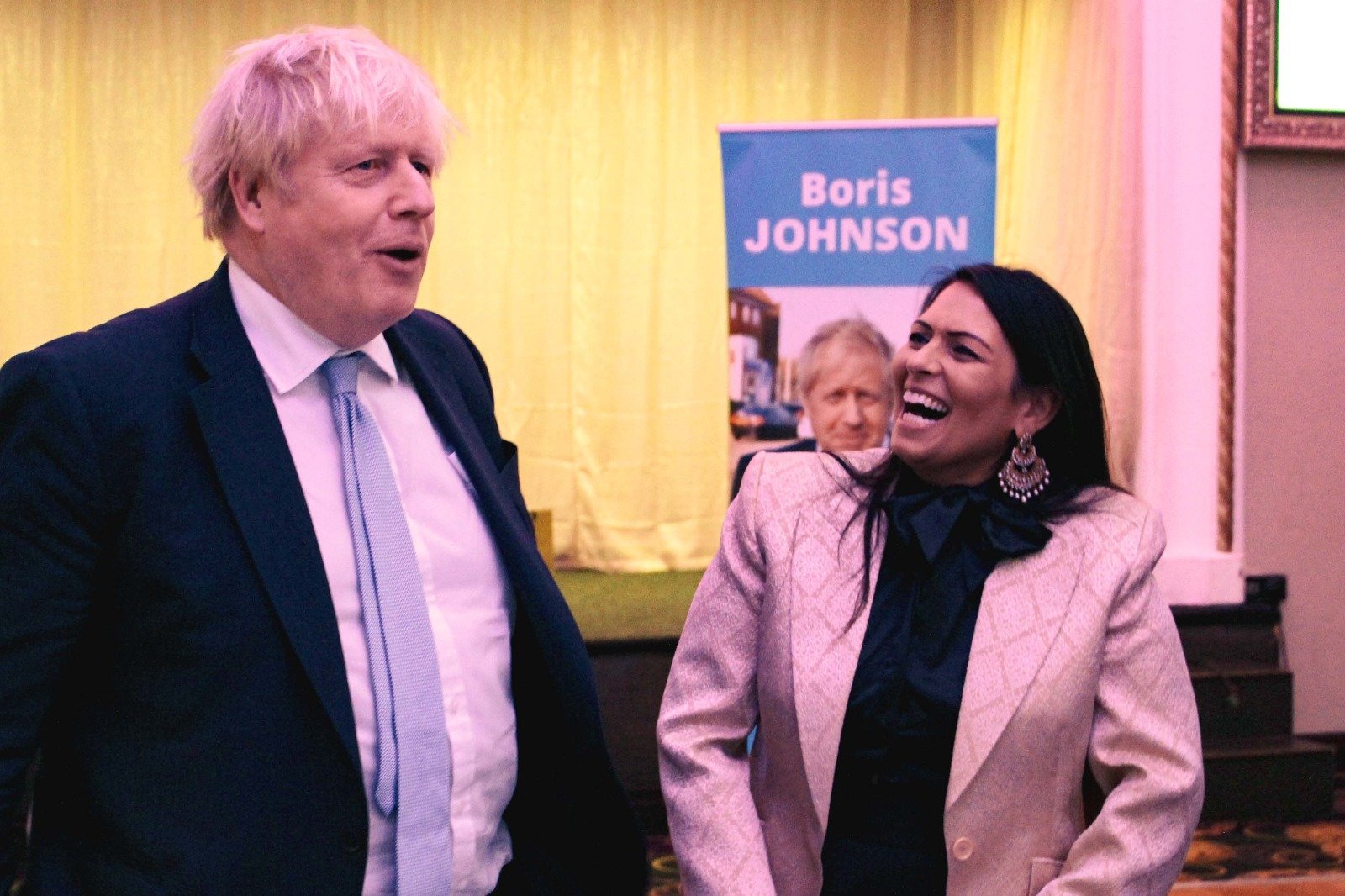
The Government of then Prime Minister Boris Johnson announced a new migration plan on 14 April 2022. To be overseen by the then Home Secretary Priti Patel, whose family migrated to the UK from Uganda after fleeing to the UK from the despotic military leader Idi Amin’s regime.
The plan could see some people who entered the UK without a visa or other permission being sent to Rwanda with no right to return to British shores.
Sending asylum seekers to Rwanda is a policy devised by the UK Government as a new plan for immigration management. It seeks to reduce the number of people seeking asylum in the UK.

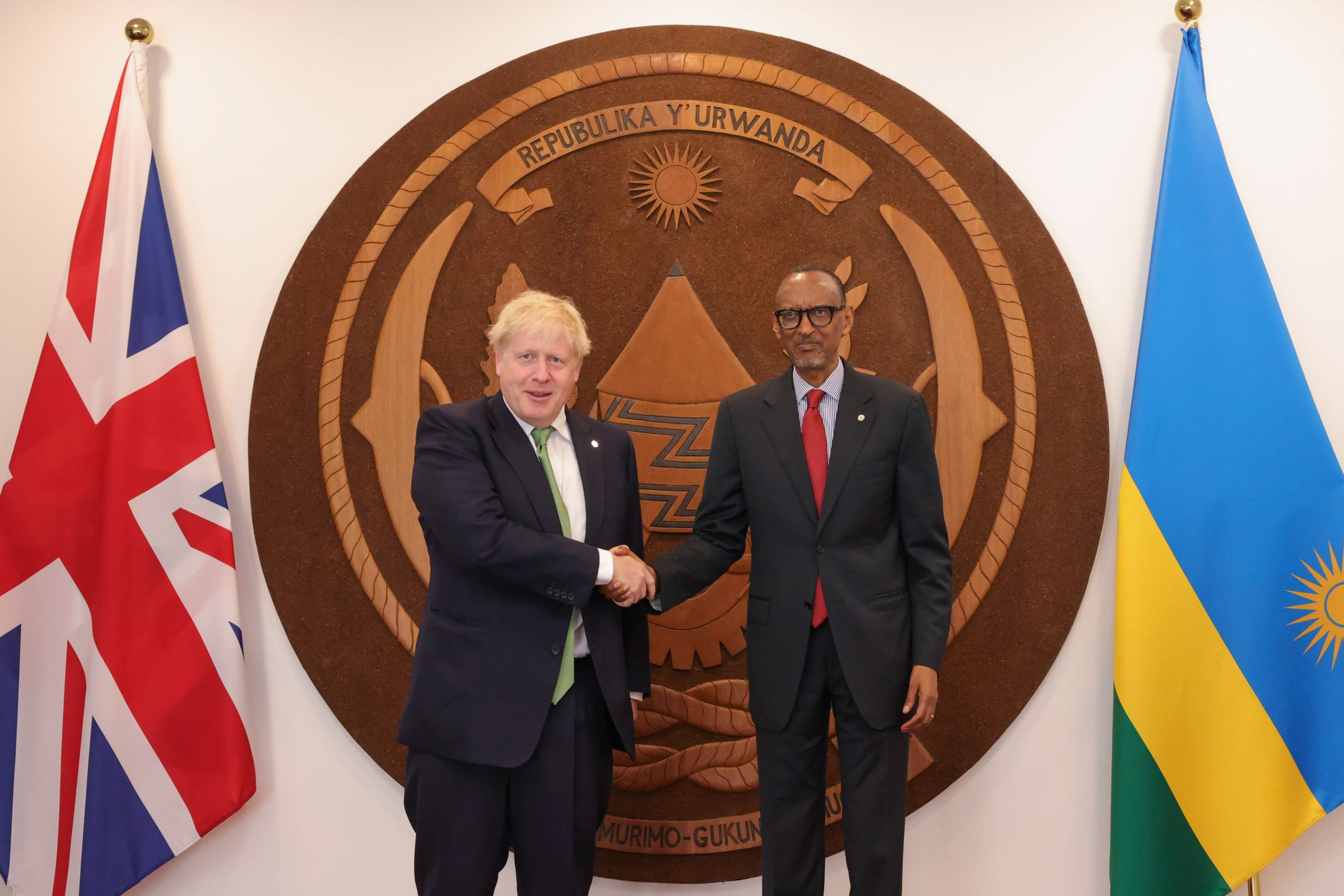
Boris was forced to resign during the Partygate sleaze. Priti Patel, his ardent supporter, also lost her job. Rishi Sunak inherited the Rwanda policy, giving the charge to his Home Secretary Suella Braverman, fast gaining a reputation for her rottweiler type of politics.
Sunak and Suella have doggedly fought to keep the plan alive despite legal setbacks making removing boat people part of his pledges to control immigration.
Mike Adamson, British Red Cross chief executive, said the Rwanda plan had caused distress and anxiety to people and their families indirectly affected,
“Outsourcing our asylum obligations should play no part in the UK’s refugee system. We are hearing directly from many people about the distress and anxiety recent announcements have provoked. Even though they may not directly impact them, this policy has greatly impacted the men, women, and children seeking safety here.
“It also comes at a huge cost to the taxpayer and will do little to prevent people from risking their lives to flee from war, violence, and persecution. Again and again, we hear from people that they have no prior knowledge of the UK’s asylum system, so making it harsher will do nothing to stop them from seeking safety on our shores.
“People come here for reasons we can all understand, like wanting to be reunited with loved ones or because they speak the language. Some have no choice at all, as smugglers choose their destination for them.
“We want to work with the Government to create a fairer, more compassionate, and effective system. As a nation, we should provide alternatives to dangerous journeys, improve decision-making to reduce the backlog of applications and ensure that people are treated with dignity and respect throughout the process.”
Questions are being asked: If someone is sent to Rwanda, who will assess their asylum claim?
The Red Cross says, “People seeking asylum sent to Rwanda will have their asylum claims assessed by the Rwandan Government. People would not be going through the UK’s asylum process in another country and would not be able to return to the UK. Instead, they would be permitted to live in Rwanda.”
Human rights bodies such as the London-based Liberty have slammed the 2023 Immigration Bill, known as the Refugee Ban Bill, calling it an assault on human rights that will put people’s lives at risk and allow the Government to abuse rights with impunity. The Rwanda policy is a plank of this Bill.
“This Bill will violate the human rights of people needing safety and protection. Give the Home Secretary of the day unprecedented powers to make laws and life-changing decisions, evading Parliamentary scrutiny and giving the Government a free pass to commit human rights abuses, removing vital methods for people to challenge them and seek justice.” It said in a statement in London.
Liberty warned that the public should be worried about the consequences of this law.
“The Bill deliberately breaches international and domestic law, from the UN Refugee Convention to the European Convention on Human Rights (ECHR). It will put lives at risk of extreme harm by removing fundamental human rights from refugees, migrants and victims of slavery and human trafficking.
“It will severely limit the ability for people to challenge detention and to appeal deportation decisions. It will grant the Home Secretary the power to detain people anywhere and whenever they consider appropriate.
A spokesperson said, “It will give the Home Secretary the power to overrule ‘interim measures’ by the European Court of Human Rights (ECtHR) – a tool which is only used by the Court in extreme cases to place a temporary stop on an action likely to produce a significant breach of human rights to allow time for a full judgment to take place. It will also give the Home Secretary the sole power to decide whether a threshold for ‘serious and irreversible harm’ has been met when deporting/detaining people, a term intentionally not defined in the Bill.”
“This Bill breaks multiple domestic and international laws and gives free rein to the Government to commit widespread human rights abuses. It is a clear power grab from the Government to do what it wants without being held accountable by the people, the courts or Parliament.
“This is a cruel, reckless and desperate move from a government willing to rip up everyone’s rights and freedoms for cheap political points.
“In creating a Bill, it knows will break the law, the Government is knowingly putting thousands of lives at extreme risk. The Bill will remove vital protections for refugees and victims of human trafficking. It will tear families and communities apart, and it’ll lead to more children and vulnerable people being kept in detention.
It warned that The Government is deliberately setting itself up to clash with the European Court of Human Rights (ECHR or ECtHR).
Observers are questioning Rwanda’s credentials in receiving these refugees from the UK.
None.
I agree with that assertion.
For someone who has covered Rwanda intensely over a long period and witnessed that tiny country’s troubled and bloody history from close quarters, Rwanda is unsafe for those fleeing violence from their homelands only to end up in a place where peace is constantly threatened.
This 10,169 sq mile landlocked country lies in the Great Rift Valley of central Africa, bordering Tanzania, Uganda, Burundi, and the Democratic Republic of Congo. Its capital is Kigali.
All the countries except Tanzania have had a brutal history of civil war and bloodshed.
Of particular importance to us is the bloody history of Rwanda. Democracy is a rare commodity in that country. Today it has an authoritarian government under the guise of a Unitary Presidential Republic.
It ranks among the lowest in the international measurement of official transparency.
It had a blood-curdling ethnic war involving the controlling tribes of Banyarwanda, the main ethnic group, Hutu, the minority Tutsi and the tiny population of Twa or Pygmies.
Without delving into its long colonial history with German and Belgian rule, the UK has never ruled Rwanda, though it has been a Commonwealth country since 2009; the relevant part is the bloody tribal civil war in which more than half a million Rwandan Tutsis were massacred.
Scars of the 1990 Rwandan Civil War are still fresh in the minds of the present generation,
Rwandan Patriotic Front (RPF), a Tutsi tribe rebel group, invaded north Rwanda from Uganda, condemning the Hutu-dominated Government in Kigali for its authoritarian rule and mistreatment of the Tutsis.
There was a brief lull after a three-year war when a peace agreement was signed between the insurgents and the Government on 4 August 1993, brokered jointly by the Organisation of African Unity, the continental grouping of African nations and the United Nations.
That peace was short-lived when, on 6 April 1994, the Presidential plane carrying the Rwandan President Juvenal Habyarimana and his neighbouring Burundi counterpart President Cyprien Ntaryamira, was shot down as it flew towards Kigali’s main airport, killing both leaders.
Hutus blamed the Rwandan Patriotic Front insurgents for this assassination, although this claim was contentious.
The Hutus and Tutsi have a historical enmity going back to colonial days, manifesting into hatred leading to bloody skirmishes and battles. There was a civil war in the 1980s also.
The political assassinations were a catalyst for the Rwandan genocide in which Tutsis were primarily targeted, and moderate Hutus also were killed.
The 100-day mass murder of these communities is estimated to have taken the lives of 491,000 to 800,000 innocent men, women and children, but scholars say there were 500,000 and 662,000 Tutsi deaths.
Those behind this mass murder were members of the Hutu-ruled Government led by the fiery Theonuste Bagasora on the one side, and the Intrahamwe factions led by Robert Kajuga, the Impuzamugambu by Jean-Bosco Barayagwiza and Hassan Ngeze.
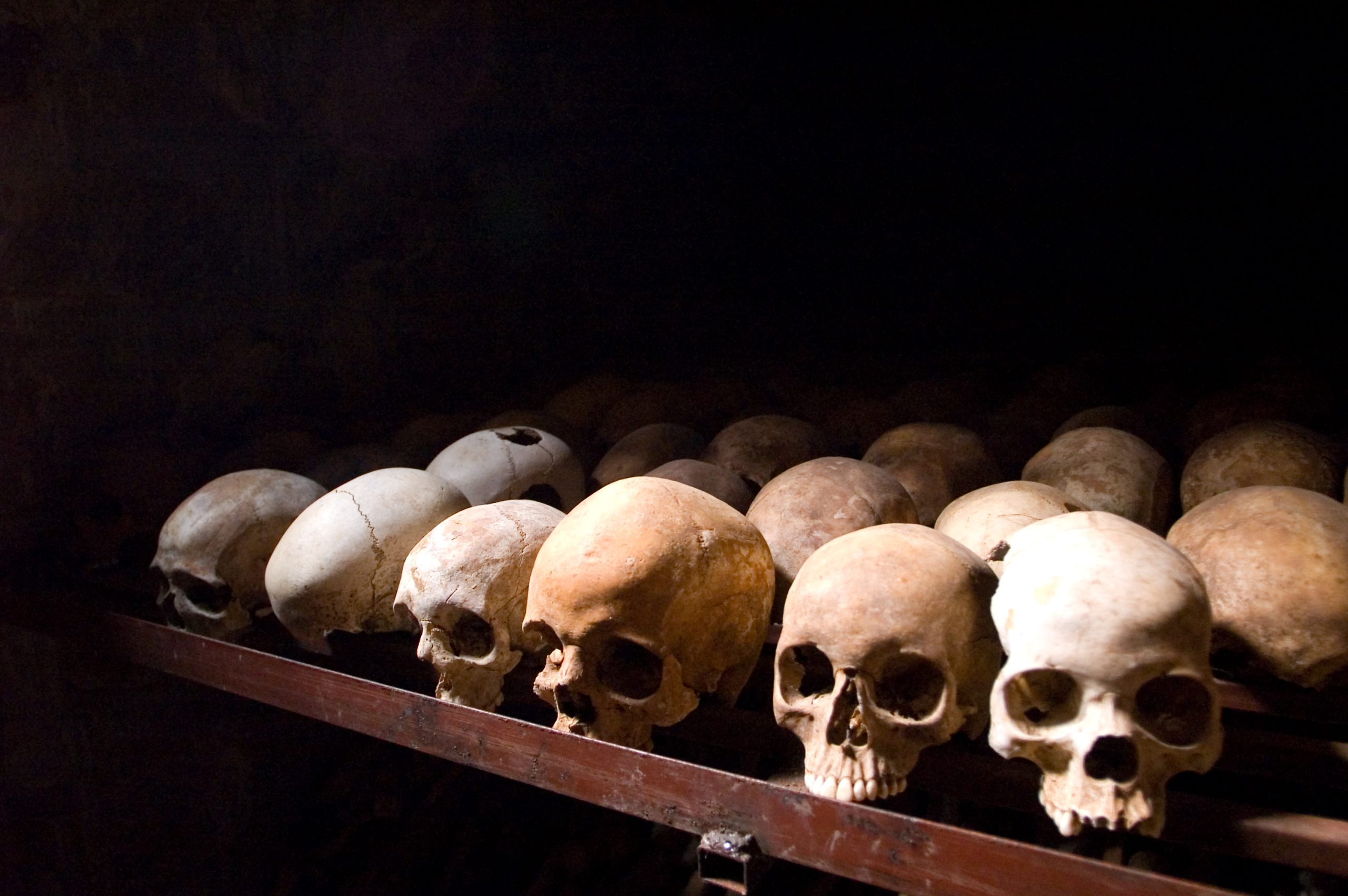
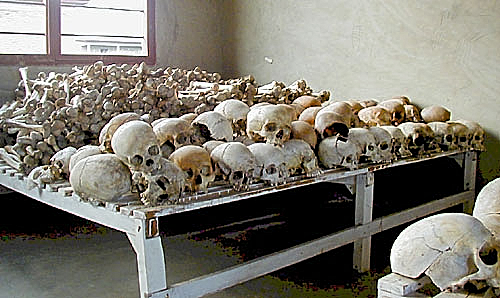
There is a monument to the 1994 genocide at the Nyamata Genocide Memorial Church, some 30 km from Kigali, where the remains of 50,000 victims of the war are buried. Their skulls are displayed for the public to see. It is a stark reminder of Rwanda’s bloody past.
Why the United Kingdom chose Rwanda to house the deported asylum seekers raises many questions. There is no guarantee that peace will remain in Rwanda for long despite the present praises being heaped on that landlocked country.
Why has Rwanda agreed to accept these refugees booted out by the UK? It’s big business and big money. It costs the UK something like £169,000 per refugee bulk of money which goes to Kigali. This converts to a whopping 250,036,604.75 Rwanda Francs in local money per refugee – big money.
For Rwanda receiving these refugees is nothing short of a business deal. It is devoid of any guarantees for the safety of the people that the UK hands over to that Eastern African country.
Did the Boris administration, and by default, the Sunak administration, not consider the possibility of the mortal danger of these people fleeing violence in their countries or study the consequences of Rwanda’s violent past and the future severe case of wars again? Or was the UK Government ready to use these refugees as sacrificial lambs to get them off their backs and get their immigration problems resolved?
Did they not think it was their responsibility to offer safe refuge to the people running away from violence and danger?
There is no guarantee that UK officials, keen to meet targets of deportations, may fail in their duty to assess relatively justified applications for asylum; who may have qualified for asylum? Is it difficult to think they could escape the net and be sent to Rwanda?
These UK officials may fail to understand their plight due to language difficulties or a justified applicant being unable to explain himself.
The UK is a signatory to the Geneva Convention and must consider asylum applications in their land and not hand them to a foreign power. Perhaps, the present UK government is devoid of conscience.
According to observers, Sunak’s confrontations with the judiciary may cost his party the next election. Sunak may or may not win the Supreme Court Appeal.
The UK judiciary is different from other autocratic countries masquerading as democracies, where the ruling party hijacks the judiciary, and judges are poodles of the manipulator leadership while pretending to be impartial. In those countries, the leadership has only to wag their finger for judges to favour the Government or risk losing their plum posts.
The UK judiciary is a world apart from those leaderships. They mean business when delivering justice on the merits of the case.
Lots of questions on the Rwanda policy remain unanswered.
Similar Posts by Shamlal Puri:
- KENYAN HOCKEY LEGENDS HONOURED IN LONDON
- Tourism bonanza for the Middle East: FOUR DAYS WHEN THE WORLD CAME UNDER ONE ROOF IN DUBAI
- LONDON PACKAGING WEEK WITH TOP GLOBAL BRANDS ATTRACTS THOUSANDS OF VISITORS
- UK’S NATIONAL HEALTH SERVICE IN BIZARRE COLOUR BAR CRISIS
- UK’S NATIONAL HEALTH SERVICE IN BIZARRE COLOUR BAR CRISIS:
About the Author