NOSTALGIC SHINYANGA VETERANS MEET IN LONDON, SHARE MEMORIES OF THE GOOD OLD DAYS IN TANZANIA
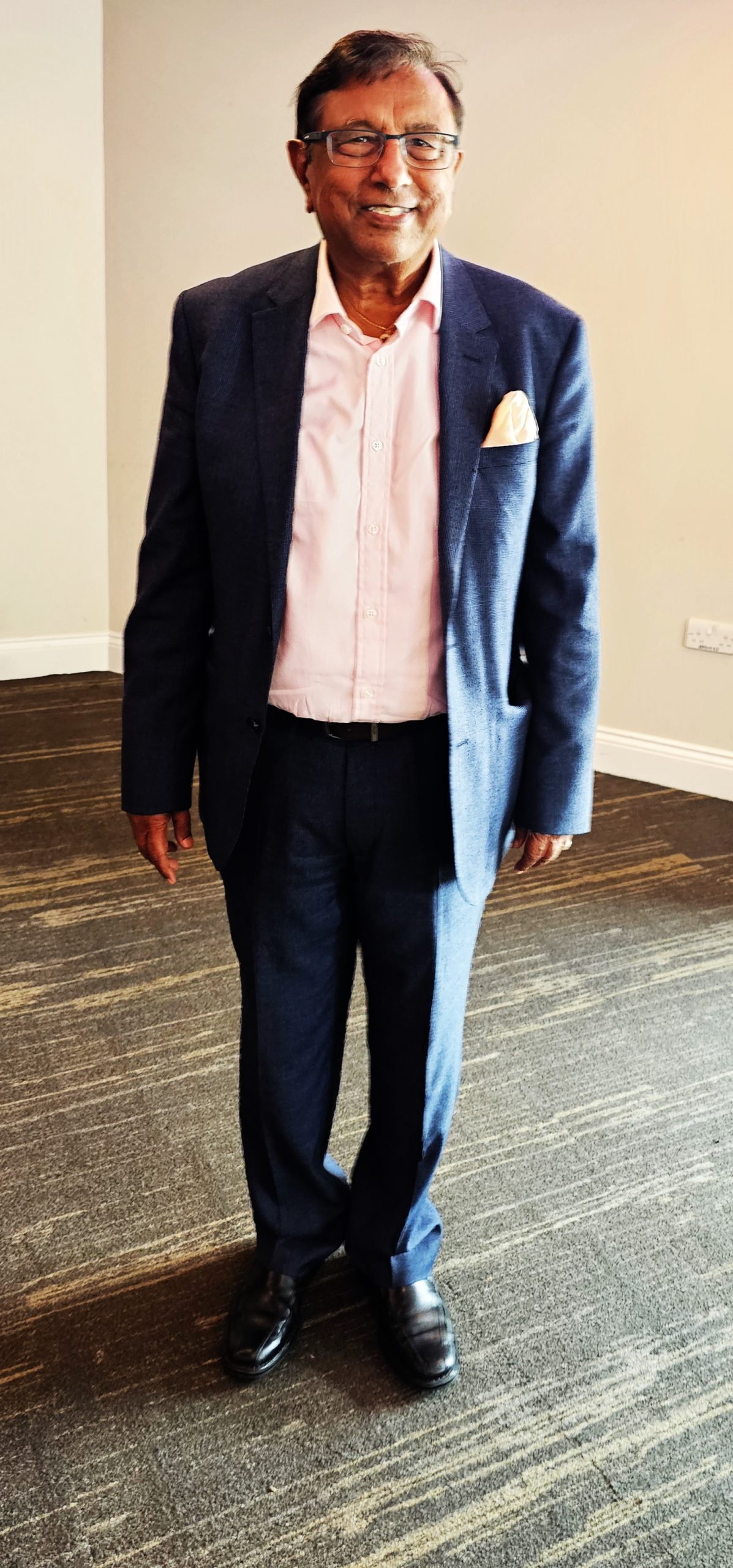
Subhash Mithia organised a highly successful reunion in London.Photo SHAMLAL PURI.
By SHAMLAL PURI in London
Senior Editor – UK and Associate Publisher

There were miles-long smiles and many stories of yesteryears to share when former residents of the Tanzanian diamond mining city of Shinyanga met in London last week – 4,274 miles away from the British capital.
Some members met after half a Century, adding more excitement to the day.
“It’s not often that we meet old friends in such warm surroundings of a reunion,” said one of the guests, holding back his emotions, “This is a truly rare event when most people are busy in their lives but have spared the time to meet and greet each other.”
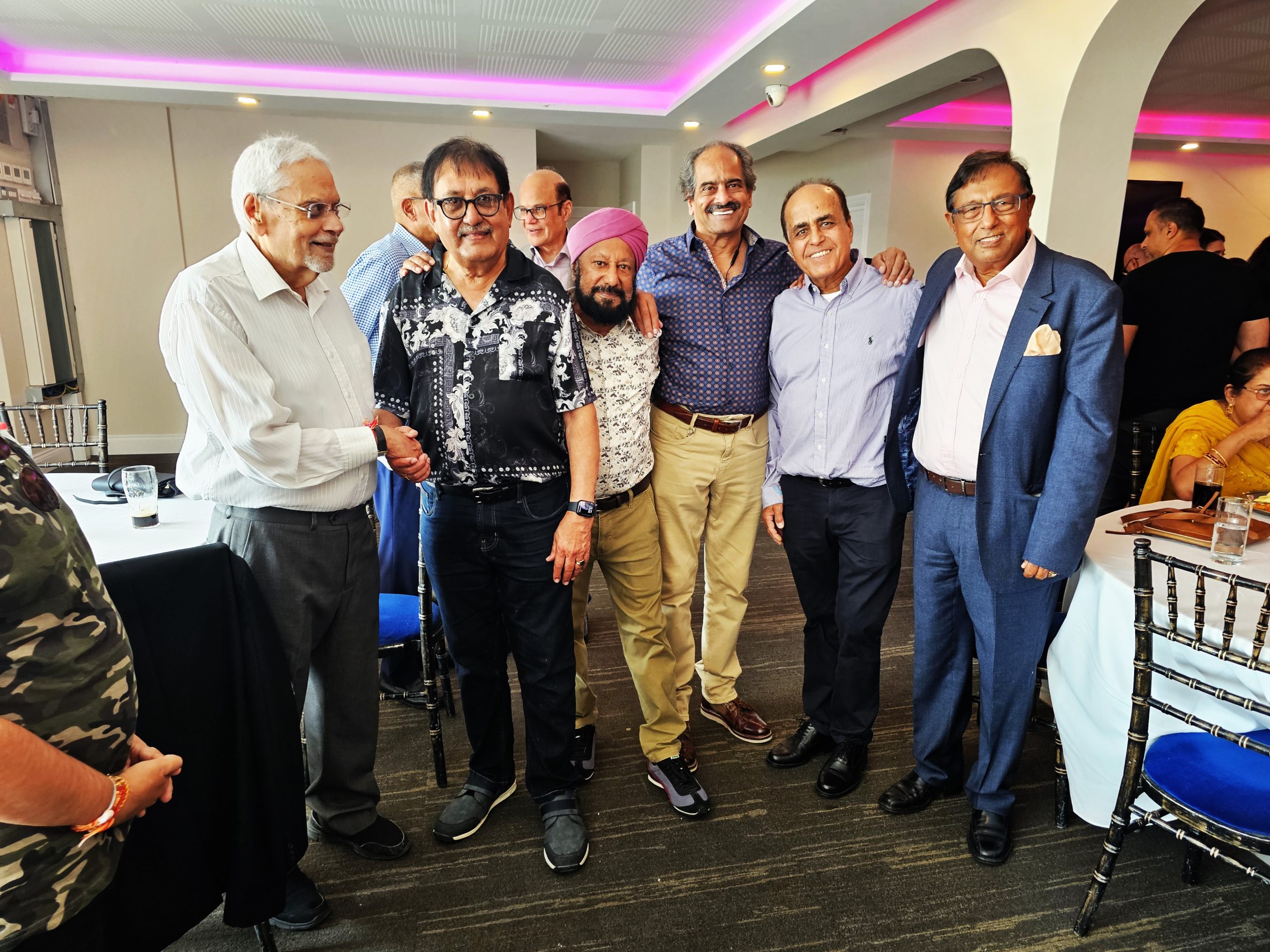
More than 100 former residents of Shinyanga gathered at the Blue Room Sports Venue in Harrow, West London, on September 1, in a unique reunion that rekindled uncountable childhood memories of the close-knit Asian diaspora community in that East African country.
They exchanged their unique stories of how life had treated them after leaving Tanzania to settle abroad.
Some came to the United Kingdom to further their studies and stayed on. Others emigrated to Britain, the United States, Canada and Australia to start a new life.
In contrast, others returned to India and Pakistan to be closer to the land of their forefathers and extended families.
Guests came from all over Britain. Former Shinyanga resident Balwant Singh Badwal, fondly known as Ballu, and his wife Parminder Kaur flew from the United States to attend the reunion.
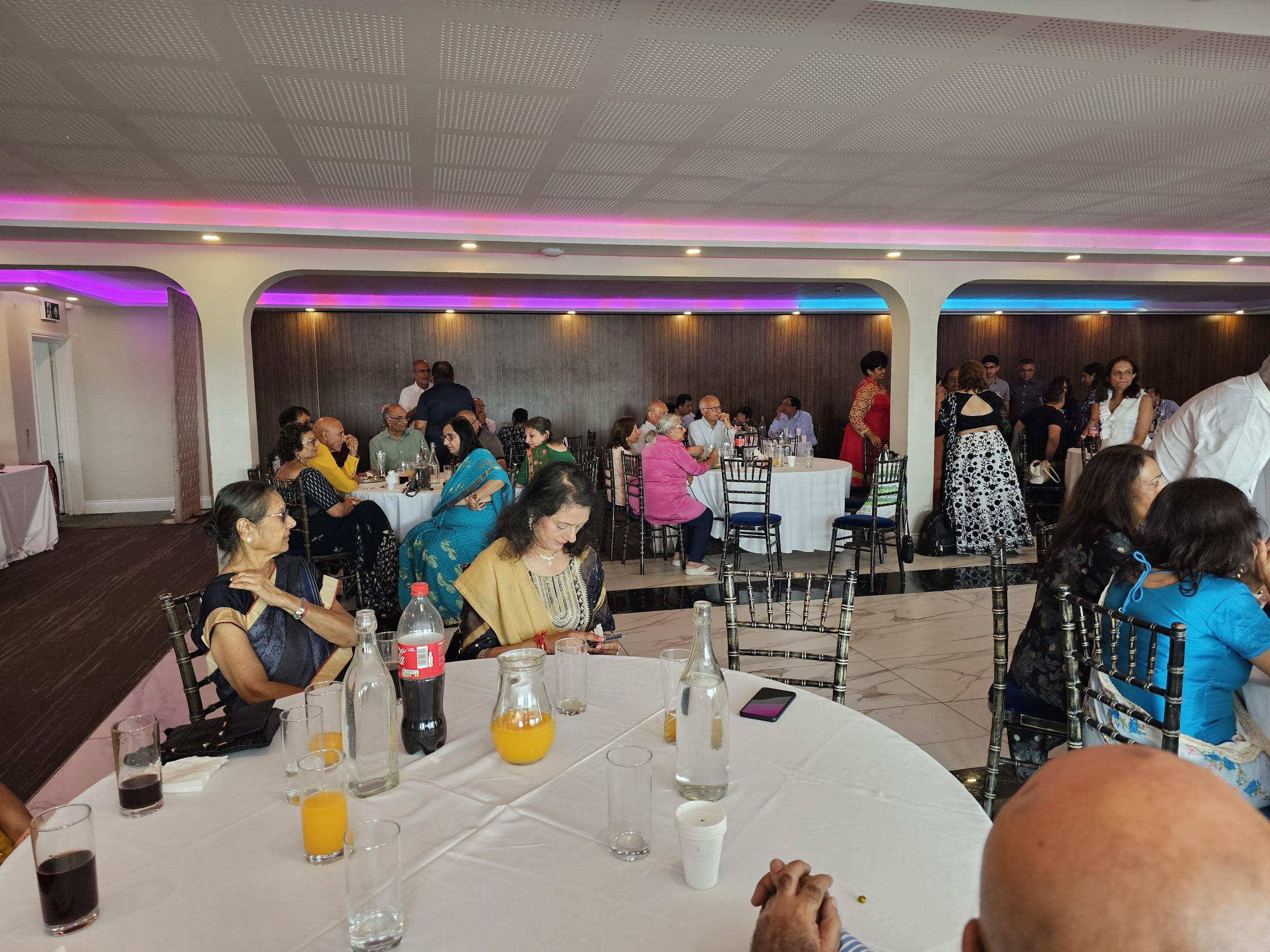
He was excited to meet his childhood friends 50 years on and remembers the events and faces from that era.
Many old friends looked surprised when he remembered their names and faces.
It was like he had stored these memories in a special section of his mind as if they had occurred a few days ago.
“The warmth of the people of Shinyanga still shines like the diamonds of Mwadui,” says Ballu, “We have many unforgettable memories of our friendship of school days in the town.”
One of the guests said, “We left the beautiful town of Shinyanga still with black hair, and we meet again in a different part of the world with grey hair! See, how fast time flies.”

Event organiser Subhash Mithia, a prominent community leader and Shinyanga resident now living in London, said the reunion was “a great success.”
“I am delighted to inform you there were 102 Shinyangans at the reunion,” Mr Mithia said.
“I also appreciated that Dinesh Pau and Arun Vadher from Canada, Balwant Singh Badwal, his wife Parminder Kaur and Jatin Rajani, who came from the USA to attend the reunion”, giving this event its rightful recognition as an international gathering.
Mr Mithia says the event would not have been successful without the participation of the Shinyanga community.
“I appreciate that without the attendance of so many Shinyangans, the event would not have been successful.”
He thanked everyone who supported the reunion.

The meeting was also an opportunity to share the sad news of some of the town’s members who sadly had passed away.
Mr Mithia paid tribute to the families of some of the former residents of Shinyanga following bereavements.
“We missed Manibhai Bhanjibhai and his family due to the death of a loved one in India the day before the event.”
He also paid tributes to the families of Rupa and Sona over their grief “due to the passing away of their mother, Sarojben.”
Mr Mithia also offered the community’s commiserations over the passing away of Shinyangan Amubhai Sudra, who lived in Leicester, just a week before the reunion.
Guests were treated to a sumptuous Gujarati meal prepared by Blue Room.
Musicians entertained the guests. Singers

Reema and Anil, whose melodious voices reawakened memories of old Bollywood songs, rendered some of the favourite yesteryear hits.
Some guests took the dance floor when Reema and Anil rendered romantic numbers, which were converted into Western dances.
|Later, the guests danced to Garba and Dandia Gujarati folk dances, which not only brought back the zest and energy to those on the dance floor but added zest to the culture of many of the East African diaspora who hail from the vibrant culture-rich Indian State of Gujarat.
The reunion marked some milestones in the community. Dinesh Pau, Ramnik Vadher, and Narendra (Nanu) Vithlani marked their 80th birthdays.

“Our best wishes to all of them,” said Mr Mithia, adding, “We hope they remain healthy and make it to 100 years.”
Two happy members, Aruna and Yasu, donated £51 towards the event to celebrate the 47 years of their wedding.
Mr Mithia congratulated them and offered them the community’s best wishes.
There was a poignant moment when Milan Shantubhai presented to all the guests a box of Indian sweets in memory of his late father, Shantubhai Karsandasbhai Lakhani and his mother, Taraben Lakhani.
Mr Mithia thanked his able team members Harish Bagia, Bharti Pau, and Bhavna Rajani for their support in organising the 2024 Shinyanga reunion.
For those unfamiliar with this part of Tanzania, Shinyanga is a bustling city, a two-hour drive, 147 km from Mwanza, a city on the shores of Lake Victoria.
It is 986 km from the Indian Ocean port city of Dar es Salaam, the commercial capital.
Shinyanga Region has a population of more than 200,000.
There are many businesses in the town, many of which were run by entrepreneurs from the Asian diaspora.
A few are still there, but others have settled abroad.
The locals of Shinyanga, the Sukuma, welcomed the Asian diaspora to the town, where they set up businesses.
The Sukuma people are very kind and welcoming. They are farming folk who own livestock. Interestingly, their household income boomed, benefitting the Asian business community, which thrived with their shops catering to the needs of the locals.
The Shinyangan diasporans are already planning the next annual reunion in 2025.
Those unfamiliar with Shinyanga would be interested in knowing that Once upon a time, this was a small town with barely anything of interest.
Its fortunes rose after the colonial Government realised the area’s rich natural resources – diamonds and gold.
It was founded during the gold and diamond mining era post-World War II.
Diamonds are still mined at Mwadui, approximately 40 kilometres from Shinyanga city.
The town’s fortunes rose when the world took note of its diamonds and gold wealth, putting Shinyanga on the world map of mineral-rich parts of Africa.
John Thoburn Williamson, affectionately known as Doc, a brilliant geologist from Canada’s McGill University, discovered, built and operated the highly successful Williamson diamond mine. He named it Mwadui in honour of a local chief in the area.
Willamson’s Diamond Mines was established on March 19 1942. The company was a partnership between John Williamson, his brother Percy and John’s lawyer partner Iqbal Chand Chopra KC, who arrived in Dar es Salaam in the late 1920s from Gujranwala, British India, to seek his fortune in East Africa.
He was taken under the wing of another Dar es Salaam-based Asian lawyer, Gulam Rasul, who trained the young Indian lawyer, Iqbal Chand, who was destined for much greater success.
Iqbal Chand Chopra was the first Indian in Africa to take silk as King’s Counsel.
His career was catapulted into high-level politics, spanning the Legislative and Executive Councils of what was then called Tanganyika ((today’s Tanzania).
He established his practice in Mwanza, a town that had no lawyers, as many Indian settlers avoided going into the interior, which they saw as a serious risk.
A fascinating story about how Chopra’s path crossed with Williamson’s. is told by pioneers.
In 1936, Mr Chopra had a business meeting with Dr Williamson, and the two men met in Mwanza with the Canadian geologist looking for someone to handle his legal matters and advise him.
In the 1940s, Dr Williamson discovered that Shinyanga was endowed with rich diamond deposits waiting to be mined, and he decided to venture into the area.
He approached Mr Chopra, and their partnership developed. The two men joined hands – one a geologist and the other a lawyer, who would guide Dr Williamson through the legal minefield of financing an enterprise.
Mr Chopra’s involvement in the Mwadui diamond mine and the global diamond industry shows the historical success of the Indians in Shinyanga and Tanzania,
His presence in the Williamson Diamond Mines kept the business alive.
Dr Williamson Diamond Grave (Kishapu) is a must-visit place for many tourists.
The baobab tree, which Dr Williamson is said to have camped around and later “discovered” diamonds in the Shinyanga Region, still stands.
Nearby, the baobab tree, a sculpture, was erected by his family in 1958 to mark the presence of the world’s richest man who once walked in Shinyanga.
Similar Posts by Shamlal Puri:
- BRITAIN PLEDGES ‘ROCK SOLID’ SUPPORT TO UKRAINE
- KENYAN HOCKEY LEGENDS HONOURED IN LONDON
- Tourism bonanza for the Middle East: FOUR DAYS WHEN THE WORLD CAME UNDER ONE ROOF IN DUBAI
- LONDON PACKAGING WEEK WITH TOP GLOBAL BRANDS ATTRACTS THOUSANDS OF VISITORS
- UK’S NATIONAL HEALTH SERVICE IN BIZARRE COLOUR BAR CRISIS
About the Author