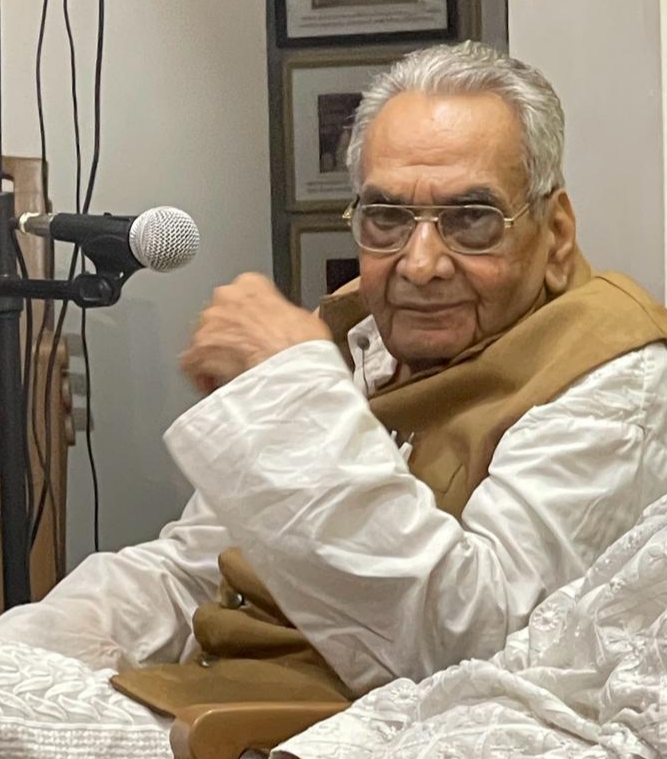
Late Vijay 'Arun' Puri, an accomplished poet and author in Nairobi and later in Mumbai, who passed away at the age of 90 in Mumbai, India. Photo Courtesy.
By Shamlal Puri, Senior Editor- UK and Associate Publisher, London
Vijay ‘Arun’ Puri, the well-known Nairobi-based Asian diaspora poet and writer, fondly known as Vijay Arun, passed away in Mumbai, India, on May 21. He was 90. He was the light of many poetry sessions when he lived in Kenya and was much loved by those who had the fortune to hear his poems.
His name was Vijay (victory), so he never admitted defeat. Always smiling, he went on to succeed in many different areas — from a professional in the Nairobi City Council to a poet, from a memory trainer to a stage and later film actor, from a yoga practitioner to a master of ceremonies, from managing a children’s home to a marketing executive… he wore many hats with aplomb.
He was born in Hoshiarpur, Punjab, on November 9 1935 and attended Punjab University in Chandigarh.
Former Nairobi veteran journalist Kul Bhushan, now living in retirement in New Delhi, paid a glowing tribute to a friend of six decades.
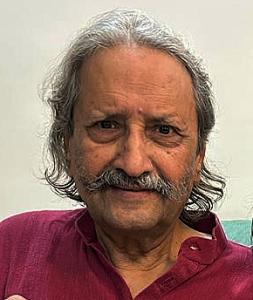
“Having known him for over sixty years while living in Nairobi and later in India, I have lost a sincere friend — indeed, a family member,” he said.
“On learning of his illness, I did not want to call him and waited until he had stabilised. We connected on social media. He sent me a rousing patriotic Hindi poem after Operation Sindoor, which I appreciated.”
“The next day, he wrote a single word in Hindi — “Thanks.” Happy that he was doing well, I was dumbfounded and stunned when I received a post that he had left his body. The sudden and unexpected news blast was still shaking me when I shared it with my family, who had all known him so well.”
Kul recalled, “It was in the mid-sixties that I came to know him after I joined a major newspaper in Nairobi. He invited me to a function of the Punjabi Kavi Sabha at a five-star hotel. Intrigued, I attended the event to find that a local African-origin leader — who did not know a word of Punjabi — was the guest of honour, and a group of local poets, mostly Sikhs, recited their poems. Arun was the master of ceremonies, and the event continued after the local leader excused himself.”
“This marked the launch of many such events, and as I came to know him better, I requested that he compose a poem for my son’s birthday in 1968. Gladly, he obliged, and it was the highlight of the party. Forty years later, when he came to visit me in Delhi, he recalled that poem perfectly. Memory Master!” Kul said/
It was amazing to discover that he was an expert memory trainer who claimed to memorise an entire telephone directory! Although this was never challenged, his instant recall of phone numbers and poems proved him right. He trained many people to improve their memories.
“Later, he invited me to a Punjabi play in which he was acting. After I wrote a review, it attracted more footfall. His love of acting became his passion, as he worked in dozens of plays, notably Loona by Batalvi. With the tide of Africanising civil service jobs after Kenya’s independence, he quit his job. He launched himself as a theatre producer, investing his savings in a significant production, Adrak Ke Panjje. The theme of this play, family planning — not palatable to local audiences — was a factor in its poor box office performance.”
True to his name, he never gave up and tried other pursuits. From managing a children’s home to advertising marketing, he made his mark.
He married Sneh, a classical music professor from Amritsar, Punjab. A delightful person with an endearing and loving attitude, her voice reminded listeners of the immortal singer Begum Akhtar.
After his return from India with his wife, the couple never looked back. They performed at concerts, organised musical events, and even sponsored artists from other countries — including the famous Sufi singer Reshma, who even stayed with them.
Later, he left for a tour of Britain with Sneh and a tabla (percussion) artist. They stayed with a famous former Kenyan broadcaster and poet, the late Chaman Lal Chaman, formerly of the Voice of Kenya, London Broadcasting Company (LBC) and BBC Asian TV, and held the audience spellbound with Sneh’s singing. At the same time, Arun conducted the event with a poetic dimension. Similarly, a short tour of Mauritius was also a great success.
Sneh set up her music school at a prestigious venue in Nairobi and held regular concerts to public applause.
After the birth of their son, Manu, they moved back to Bombay, where Arun could act in films and Sneh could sing and teach music. With his contacts — including Bhajan Samrat Anup Jalota and others — Arun made his debut in movies and also in TV serials.
At the same time, Sneh became popular as a singer and music teacher. After many challenges, they had settled well in their own home in suburban Mumbai.
His wife Sneh predeceased him, and Arun bore this humongous loss with fortitude. As a devout Arya Samaji and a committed yoga practitioner, he went on with life — writing poems, attending poetic symposiums, and persisting with his poetry until he published and launched his book of poems, which became his resounding achievement.
Vijay Arun Puri is survived by his son, Manu, his daughter-in-law, Jalpa, and grandson, Aarya, who doted on him. He recently travelled with them to his roots in Punjab to rekindle his past.
He promised me to celebrate his century but left a few months short of ninety years, which would be this November.
“Arun demands an emotional, poetic farewell, which, alas, is not the forte of a newspaper editor. And yet, he lives strong in our happy memories and deep in our loving hearts. Adieu, Arun, you are eternal,” said Kul.
Similar Posts by Shamlal Puri:
- LONDON PACKAGING WEEK WITH TOP GLOBAL BRANDS ATTRACTS THOUSANDS OF VISITORS
- UK’S NATIONAL HEALTH SERVICE IN BIZARRE COLOUR BAR CRISIS
- UK’S NATIONAL HEALTH SERVICE IN BIZARRE COLOUR BAR CRISIS:
- British PM Andy Burnham’s slams dodgy deals – ending rip-off discounts and subscription traps
- Hundreds Die In Brutal 2026 Summer: Scorching Sun Strikes Britain, Causing Water Shortages And Drought
About the Author


 The Mt Kenya Times