
Agroecology; Not Just About Food Security but Also Food and Environment Safety for the African Continent
 The Mt Kenya Times
Delegates follow proceedings during the final day of Africa Climate Summit in Nairobi
By Jackson Okata

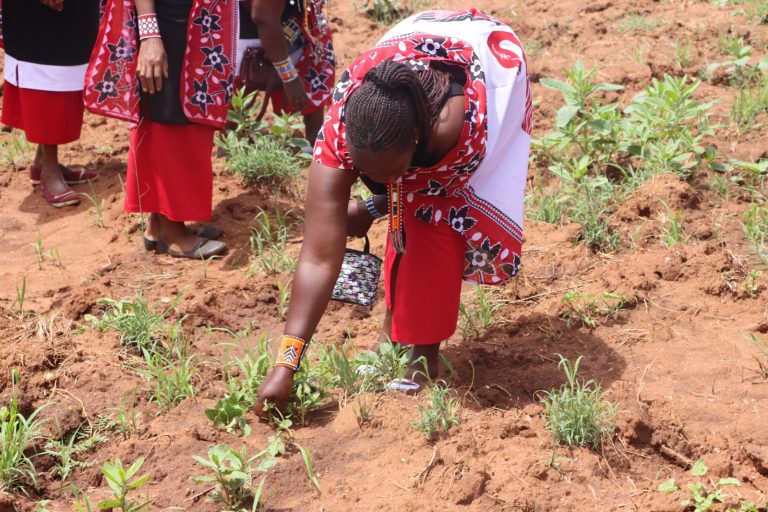
Regina Njeri, 46, has been practicing organic agriculture on her 2-acre piece of land for the past three year. The mother of three says organic farming is safe and cost effective compared to conventional farming techniques.
“My yields have been encouraging and the cost burden of farm inputs is no longer a bother because I generate my own manure on the farm’’ she said on the sidelines of the final day of the African Climate Summit in Nairobi.
Njeri says the shift to organic farming helped her reduce almost 90% of crop pests and diseases on her farm.
“Pesticides were a common feature on my farm when I used to farm conventionally and this was both costly, time and labour consuming but now my crops take care of the soil and the pests. With minimal pests and diseases, it means that I harvest more,” she said.
Kenya Organic Agriculture Network programs officer Martin Kimani opines that with unpredictable rain patterns, small holder farmers have the best option in organic farming techniques like ago-ecology.
“In agro-ecology we are not o0nly talking about food security but also food safety. Use of synthetic inputs not only exposes our soils to acidity but it also exposes both humans and animals to a host of health risks’’ Kimani noted.
Kimani notes that securing food safety calls for adoption of environment friendly farm practices.
“African nations need to enhance the formulation, adoption and integration of agro-ecological friendly farming policies even as we strive and work towards making the continent’s food sustainable’’ advised Kimani.
Jactone Kweya, an organic farmer from Vihiga County in Western Kenya says county governments can leverage on sustainable farming practices like agro-ecology as a mean of economic empowerment of small holder farmers and their families
“Organically produced food attracts better market prices and since organic farming is less costly, it then means that my profits will be at the maximum,’’ Kweya said.
Kinyanjui Koimburi, a climate expert and a green ambassador observes that through the practice of agroecology, African nations can be able to kill three birds with one stone.
“Food safety, food security and biodiversity conservation are a package that we can attain once through safe farming methods like agroecology’’ Koimburi explained.
According to Dr. Martin Oulu an agroecology expert based at the University of Nairobi conventional farming only complicates matters for a biodiversity status that is heavily suffering the effects of climate change.
“Continued and excessive use of toxic farm inputs is a sure path to killing our biodiversity. We need incentives that will pull our small-holder farmers into practicing environment friendly farming methods like agroecology’’ Oulu said.
The Kenya Organic Agriculture Network (KOAN) estimates that some 173,000 hectares of land in Kenya is currently under organic farming in Kenya an average 2.9% of the 5.8million hectares of the country’s arable land.
Dr. Oulu however says that organic farming practices including agro-ecology are slowly gaining popularity as the demand for healthy and safe produced foods increases.
African leaders meeting in Nairobi for the inaugural Africa Climate Summit have committed rebuilding the continents efforts to boost agricultural yields through sustainable practices aimed at enhancing food security while at the same time minimizing environmental impacts of climate change.
Contained in a document Dubbed the Nairobi Declaration, the commitment further seeks to push for the finalization and implementation of the draft African Union Biodiversity Strategy and Action plan with the view of realizing the 2050 vision of living in harmony with nature.
At the same time, the leaders have committed to support smallholder farmers, indigenous peoples and local communities in the green economic transition.
Dr. Oulu observes that if implemented, the Africa Climate Summit Commitments, especially those on sustainable agriculture will drive the continent towards a sure path of food security and sustainability.
Similar Posts by The Mt Kenya Times:
- Mt Kenya Times ePAPER September 24, 2026
- The kingmaker’s last move: Uhuru’s 2027 gambit
- Kalonzo warns IEBC over 2027 poll
- Kenya leads Africa’s clean cooking push with $600M investment drive
- Kenya takes its case to the world: Ruto at the UN
About the Author


 Brenda Holo