One On One With The Very Young Stars In Nigeria By The Name Of Ayodeji Ajagbe
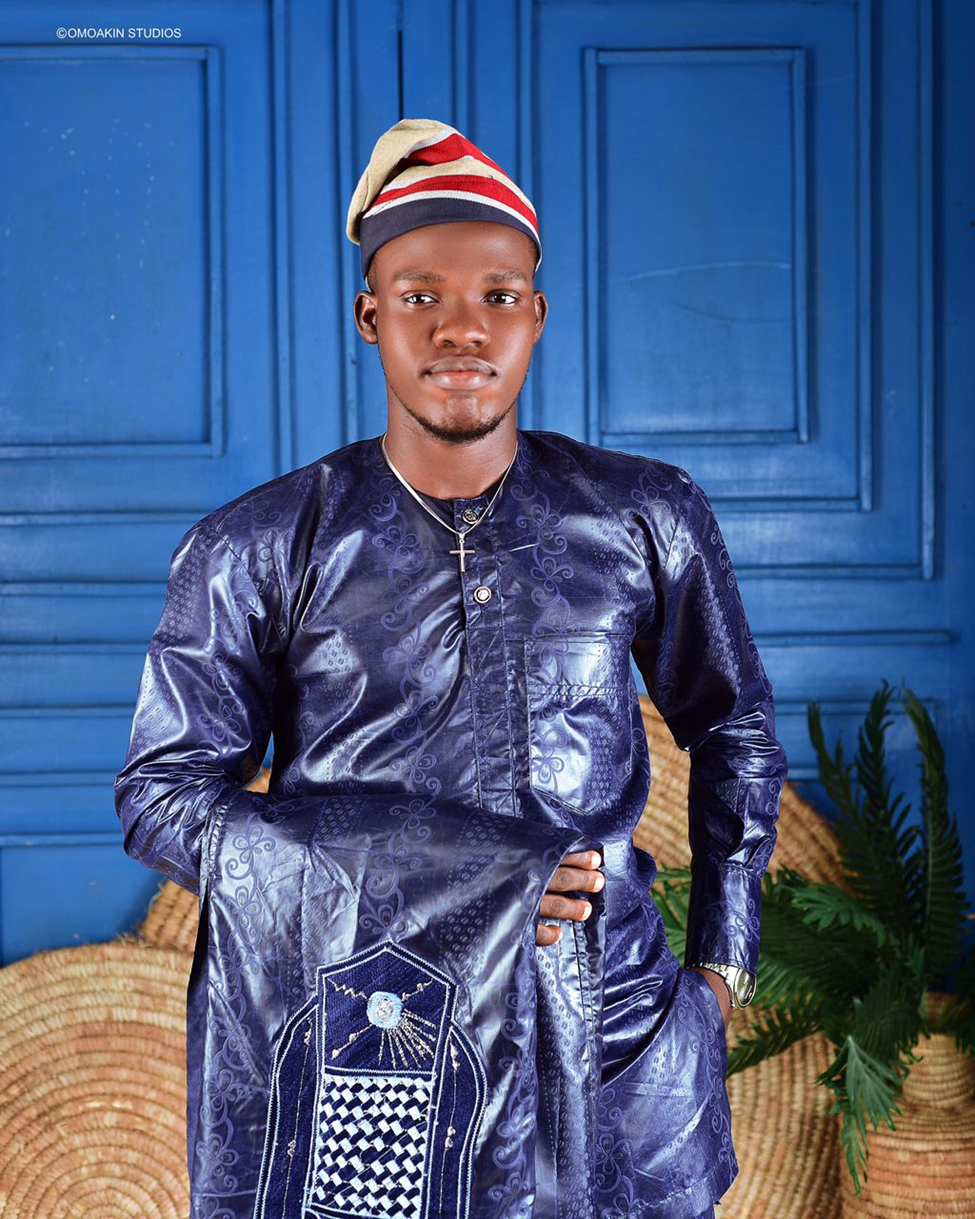
Ayodeji Ajagbe

Interview.

Book Title: Living in Ibadan, Writing for the World
You recently revealed the cover of your debut poetry anthology, and it’s truly stunning.
The creative process behind the book cover design started with a lot of brainstorming and sketching. I wanted to create a cover that would represent the themes of the anthology in a visually striking way. I worked with my art illustrator to explore different ideas and concepts, and eventually we landed on the final design.
Can you share some of the creative process behind the cover design, and what it represents?
My art illustrator was able to bring my vision to life in a way that exceeded my expectations. I’m so happy with the final result, and I hope readers will be too.
What was the thought process behind the imagery and color scheme?
The imagery is meant to evoke a sense of wonder and possibility, while the color scheme is meant to be warm and inviting. I wanted the cover to feel like a welcoming invitation to enter the world of the poems.
Pidgin English is a unique and fascinating language. What made you decide to write your poetry anthology in Pidgin English, and how did you approach the process of writing in this language?
I wanted to do something entirely different from what I’ve been doing before. I was drawn to the expressive power and cultural significance of Pidgin English, and I wanted to explore the possibilities of writing poetry in this language.
Were there any particular challenges or surprises along the way?
It was both a challenging and rewarding experience, as I had to find new ways to express myself and to convey the essence of my poetry. The biggest surprise was the emotional impact that writing in Pidgin English had on me. I felt a deep connection to the words and a sense of uniqueness that I had not experienced before. It was an unforgettable and transformative experience.
Your poetry anthology is set in Nigeria, a country with a rich and complex history. How has living in Nigeria influenced your writing and your perspective as a poet?
My experiences living in Nigeria have had a profound impact on my writing. The hardships faced by the people of Nigeria have had a deep impact on my writing. The struggles of everyday life, the lack of opportunity, and the inequality that many people face have all shaped my perspective and influenced the themes of my poetry.
How do you think your experiences in Nigeria have shaped the themes and ideas explored in your poetry?
I’ve tried to give voice to the experiences of the people of Nigeria, and to express the hope and resilience that I’ve witnessed in the face of hardship. My poetry is a reflection of the human spirit, and I hope it conveys the strength and dignity of the Nigerian people.
Many poetry anthologies are written in standard English. Why did you choose to write your anthology in Pidgin English, and what do you think the advantages are of writing in this language?
I chose to write in Pidgin English because I felt that the vibrant and expressive nature of Pidgin English would lend itself well to poetry. It has a musicality and rhythm that is quite unique and powerful.
Do you feel that Pidgin English lends itself well to poetry, and why? How does it differ from writing in standard English?
The flexibility of the language allows for a more free and creative expression of ideas. I also felt that writing in Pidgin English would be a way to bring this language and its speakers to the forefront, and to celebrate the beauty of Nigerian culture.
How does the Pidgin English used in your anthology differ from the dialects used in other parts of the world?
I think it is very important to understand that Pidgin English is a dialect that has evolved over time, and it varies from place to place.
English is a universal language that can be understood by people from all cultures, or is it more specific to Nigeria and West Africa?
I think it is very important to understand that Pidgin English is a dialect that has evolved over time, and it varies from place to place. While some of the words and expressions used in my anthology may be understood by people from other parts of the world, I think the language itself is specific to Nigeria and other West African Countries.
How do you think using Pidgin English will affect the reception of your poetry anthology?
I also think that the use of Pidgin English in my poetry will give it a unique voice and perspective that will be appreciated by readers who are interested in Nigerian culture and history. I’m excited to see how my poetry is received by people from different cultures and backgrounds.
What was your experience growing up as a writer in Nigeria?
As a writer growing up in Nigeria, I didn’t have access to a rich literary community. In fact, I felt isolated from other writers and it was difficult to find a place where I could express myself freely.
Did you have access to a rich literary community, or did you feel isolated from other writers?
However, this lack of access to a literary community also forced me to find my own voice and style as a writer. I used my experiences and observations to create stories that reflected my unique perspective and worldview.
How did you find your voice as a writer, and what role did the Nigerian literary scene play in that process?
I used my experiences and observations to create stories that reflected my unique perspective and worldview. I felt that my story was a way to connect with others and to express the thoughts and emotions that I couldn’t share in any other way.
How does your identity as a Nigerian writer shape your perspective and approach to writing?
My identity as a Nigerian writer shapes my perspective and approach to writing in a number of ways. First and foremost, my experiences growing up in Nigeria have informed my worldview and the way I view the world around me.
Do you feel a responsibility to represent the Nigerian experience in your work, or do you feel free to write about whatever inspires you?
I also feel a strong responsibility to represent the diverse and multifaceted experiences of the people of my country. While I’m free to write about whatever inspires me, I also feel a sense of duty to use my writing to shed light on the stories and experiences of those who are often overlooked or underrepresented.
How do you balance your personal experiences and observations with your responsibilities as a writer?
I believe that it’s possible to balance my personal experiences and observations with my responsibilities as a writer by remaining authentic and true to myself while also using my platform to share the stories of others. In this way, I hope to create a dialogue that is both personal and universal.
What do you hope readers will take away from your poetry anthology?
I hope that readers of my poetry anthology will take away a sense of connection and understanding of the human experience.
What kind of experience do you hope they will have when reading your work?
My ultimate goal as a writer is to use my words to create a space where people can feel seen and heard, and where they can explore their own identities and perspectives.
Are you hoping to evoke certain emotions or inspire particular thoughts and ideas?
I hope to evoke a wide range of emotions in my readers, from joy and laughter to sadness and introspection.
What’s your ultimate goal as a writer?
I also hope to inspire a sense of curiosity and wonder, and to encourage readers to reflect on their own lives and experiences.
What’s the most rewarding part of the writing process for you?
Is it the initial spark of inspiration, the feeling of flow as the words come together, or the sense of satisfaction.
When the poem is finally complete, What do you find most satisfying about the creative process?
For me, the most rewarding part of the writing process is the feeling of satisfaction when the poem is finally complete. There’s something so special about looking at a piece of writing and knowing that it came from you, and that you created something beautiful and meaningful. It’s a sense of pride and accomplishment that is difficult to describe. It’s not about the initial spark of inspiration, or the feeling of flow as the words come together. Those are important parts of the process, but the true satisfaction comes from seeing the finished product and knowing that you’ve created something that will last beyond you.
What do you do when you’re not writing?
When I’m not writing, I enjoy spending time indoors, reading, listening to music and spending time with friends and family.
Do you have other creative outlets, or do you find that writing takes up most of your creative energy?
I find that having other creative outlets, like photography and singing, helps to keep my mind active and inspired.
Do you think having other creative pursuits helps or hinders your writing, or does it not make a difference?
I don’t think these pursuits hinder my writing, but rather they help me to recharge my batteries and come back to my writing with a fresh perspective.
Do you think it’s important for writers to have other interests besides writing?
I do think it’s important for writers to have other interests besides writing, as it can help to prevent burnout and keep the creative juices flowing.
Similar Posts by The Mt Kenya Times:
- Mt Kenya Times ePAPER October 22, 2026
- Ruto heads to Harare for COMESA summit on trade and regional security
- Mudavadi and Wetangula walk out as Sifuna speaks at Nabwera memorial
- Police accountability on trial as seven officers face probe over journalist’s arrest
- Learners, teachers graduate from thrive for good organic farming training
About the Author