
After Gaining Citizenship, Kenya’s Pemba Community Now Shift Focus to Securing Political Rights
 The Mt Kenya Times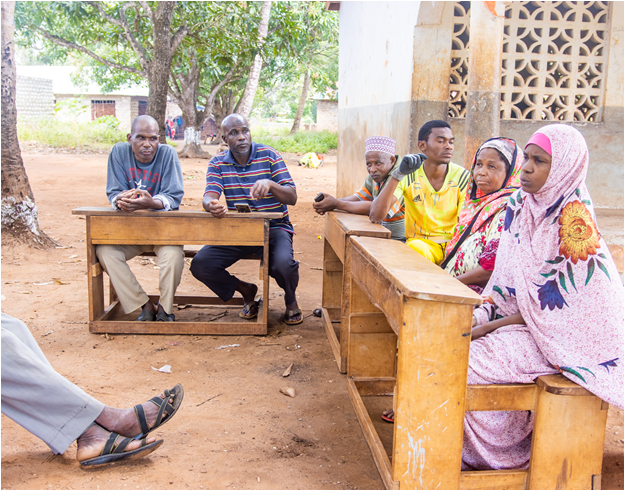
Members of the Pemba community during an interview at Kichaka Mkwaju village in Lunga Lunga Sub-County, Kwale County. Photo/ Allan Kai
By Jackson Ambole Okata
Worth Noting:
- “For a long time we have felt politically ignored and secluded. We have not had people from the community seeking leadership positions and those elected from outside have not had our interests at heart because we were considered outsiders but now we are hopeful that we will change things’’ Mahamud noted.
- For young people like Ismale Kombo, 25 and Juma Mbwana 29, recognition and official issuance of identification documents renewed their hope of a promising future of equal political rights and opportunities.
- “We will no longer use forgery as a means of getting identification documents which in turn block us from accessing so many services. The Pemba youth can now venture out there and confront the world without any fears of being asked where they come from. Our forefathers might have failed to secure our political rights, but our generation will’’ said Kombo
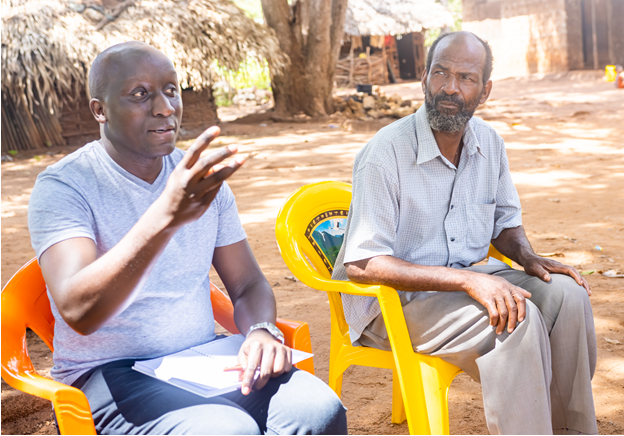
Rashid Mahamud, 54, serves as the community Chairperson of Kichaka Mukwaju village in Lunga Lunga Sub County of Kwale County and has lived through Kenya’s post-independence elections. A member of the Pemba community, Mahamud says the community has never fully felt part of Kenya’s political process since they have been considered and viewed as ‘visitors’ for long.
“The Pemba have never been excited about elections because many of us don’t take part in it either by voting or seeking positions. Our participation has been low key because even those seeking elective positions have never seen the Pemba community as a reasonable voting bloc’’ Mahamud said.
But with the recognition and final registration of the Pemba community as a Kenyan ethnic tribe, Mahamud opines that things are about to change as the community shifts focus on ending political exclusion.
“For a long time we have felt politically ignored and secluded. We have not had people from the community seeking leadership positions and those elected from outside have not had our interests at heart because we were considered outsiders but now we are hopeful that we will change things’’ Mahamud noted.
Recognized as Kenyans
On 30 January 2023, President William Ruto, through a special Kenya Gazette issue ,recognised the Pemba community as one of Kenya’s ethnic communities opening doors for them to be issued with national identity documents and registered as citizens. Six months later on 28 July 2023 President Ruto presided over a ceremony to officially launch the registration process for all 7,000 members of the Pemba community. The recognition and registration of the Pemba community as Kenyan nationals under the law put an end to the community’s decades of statelessness.
When he formally recognized the Pemba as an ethnic group in Kenya, President Ruto noted that the Constitution affirms national pride in ethnic, cultural and religious diversity as being the bedrock of the country’s unity.
“Articles 11 and 44 of the Constitution of Kenya enshrine the duty of the government to promote and protect the diverse cultural heritage of Kenya,” the President noted in a Gazette Notice dated 30 January 2023.
Women in Leadership
Jamila Mohamed is a member of the Pemba community and a human rights activist. She has been at the forefront helping Pemba women get identification documents and birth certificates for their children. According to Jamilla, issuance of identification documents will open opportunity doors for Pemba women which she observes have been locked for ages.
“Having identification documents will make our women more bold and usher them into opportunities they have missed. We will have our women accessing education and scholarship opportunities and this is how we will shape and nature young women leaders for the future’’
Jamilla adds that Pemba women will now proudly involve themselves in community,civil society and political leadership processes like other women in Kenya.
“Empowerment of our women and girls begins with recognition and identification.The political rights of the Pemba women are now guaranteed with the issuance of identification cards’’ Jamilla noted.
For Tima Kirua, a women leader, the political future of the Pemba community is bright after the recognition and registration. Kirua is confident that soon the community will be able to see her daughters elected in the county and national assemblies.
“It is very possible to have the first female Pemba member of parliament and we expect to see our young women leaders get nominations and other political appointments’’ said Kirua.
Politics and Land Rights
For young people like Ismale Kombo, 25 and Juma Mbwana 29, recognition and official issuance of identification documents renewed their hope of a promising future of equal political rights and opportunities.
“We will no longer use forgery as a means of getting identification documents which in turn block us from accessing so many services. The Pemba youth can now venture out there and confront the world without any fears of being asked where they come from. Our forefathers might have failed to secure our political rights, but our generation will’’ said Kombo
Kombo Kopa Kirua, is in charge of land issues within the Kichaka Mkwaju pemba community and observes that political representation will help them solve the long running land problem the community faces.He notes that having none of their own in political positions has greatly affected their quest to secure their land rights for years.
“Now that a way of getting representation has been created, I believe our people will soon get into positions and offices of leadership and help the community solve the land ownership problem’’ said Kombo.
The Kichaka Mkwaju community is currently engaged in a court battle with a section of land grabbers who are laying claim on part of the community’s land(906 Hectares). The community wants the government to grant them land ownership documents to enable them secure what they term as their ancestral inheritance.
Courage to Demand for Representation
Shaame Hamisi Makame, 54, chairs the Kenya Pemba community. He notes that they now have the courage to demand local administrative units that can effectively serve the Pemba people.
“We have enough numbers to enable us to get an administrative unit and have our own chiefs and their assistants. Having our local administrative units will make it easy for our people to access government services including registration of births and deaths and even identification cards’’ said Makame.
According to Makame, the Pemba now have a voice of demanding services from political leaders.
“Politicians will now come and we will make demands and ask questions whenever need be. Gone are the days when politicians assumed that the Pemba did not matter politically’’ he said.
“Initially it was hard for us to demand for certain rights because of the fear of being dismissed as non-kenyans’’ he added.
Juma Hassan, 40, has been stateless since birth and says he went down on his knees and thanked God when he received his identity card. He observes that initially, they viewed any political activity in Kenya like outsiders because many politicians assumed that the Pemba votes did not matter.
“For long we have been confined to fishing as the only thing we could do better but now with the full recognition now, I can boldly and proudly seek and leadership position just like any other Kenyan’’ said Hassan
For many others like Suleiman Mwidau, having legal identification documents now gives them power to stand up and demand for political inclusion.
“We will now have a voice of contributing to the political disclosure as a community and we will fully involve ourselves in deciding what is politically fit and right for us. The Pemba people will no longer be considered as political nobodies’’ observes 36-year-old Mwidau, also a fisherman.
Mombasa based political analyst John Charo, observes that granting recognition to the Pemba community will make them an attraction for politicians during elections and opens doors to the birth of political leaders from the community.
“The process was both legal and political and definitely it will have some political outcomes. It will not be a surprise to see Pemba people getting nominated to the county or national assembly and many potential leaders will emerge from the community. Politicians in Kilifi and Kwale will also be keen to consolidate the pemba vote in their favour and this will work in favour of the community because now they have a bargaining power’’ said Charo
Statelessness in Kenya
The recognition of the Pemba community followed that of other previously stateless communities, including the Makonde from Tanzania and Mozambique in 2017, and the Shona from Zimbabwe in 2020.
In Kenya, after independence, stateless communities were required to provide proof that they had been born in Kenya and to show their parental lineage. However, in the spirit of Pan-Africanism, the Kenyan government had, immediately after independence, directed the registration as citizens of people born or residing in Kenya but who could not prove their parental lineage within two years which sawa some 20,000 people apply to register as Kenyan citizens.
Some African communities, including the Pemba, however missed out on the opportunity. Although they possessed the colonial and independent Kenya identity cards famously known as Kipande, the Pemba became stateless immediately after the 1st generation national identity cards were introduced.
As a result of their marginalization and exclusion from Kenya’s political and socio-economic spheres the Pemba people could not access healthcare services, education and other social services, could not register births, businesses, bank accounts, and sim cards, and were excluded from formal employment, their marriages were also unrecognized under Kenyan law.
The Pemba people began to demand recognition and protection of their human rights in the 1970s and 1980s. During the reign of former President Mwai Kibaki, members of the Pemba community were allowed to apply for identification cards in a process that, however, did not go beyond the taking of fingerprints.
The Constitution of Kenya 2010 provides for the registration of stateless people and, in 2011, parliament passed a new Immigration Act that required the registration of stateless people within five years. However, by 30 August 2016 the registration of stateless persons had not taken place.
Charo however warns that the Pemba community might still face political exclusion if they do not come out too strongly to fight for their space.
“In Kenyan politics it is always survival for the fittest. They must position themselves well and speak in one voice as a community if they are to attain and secure their political interests. They need to have a political lead figure for the community’’ Charo said.
Similar Posts by The Mt Kenya Times:
- Mt Kenya Times ePAPER September 24, 2026
- The kingmaker’s last move: Uhuru’s 2027 gambit
- Kalonzo warns IEBC over 2027 poll
- Kenya leads Africa’s clean cooking push with $600M investment drive
- Kenya takes its case to the world: Ruto at the UN
About the Author


