The Mt Kenya Times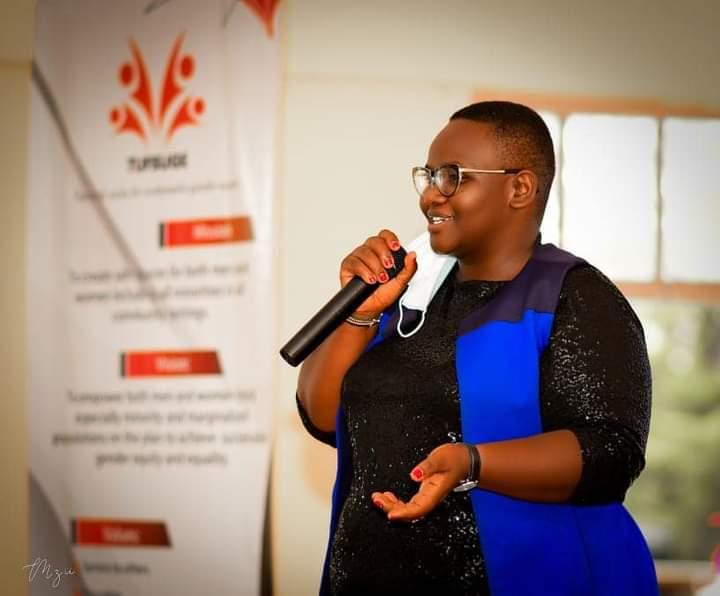
Ms. Nyaramba: Families, especially those with money, collude to take away everything from widows
By Elizabeth Angira
Worth Noting:
- “It is frustrating that at my age,(what is her age?) My children and I do not have a place to call home and yet my husband left us with a house and land to till,” she says.
- Invisible Women, Invisible Problems. That is how the United Nation (UN) sums up the story of widows in the world.
- When her husband suddenly died 23-years-ago, Ms. Margret Obiri endured humiliation, deceit and abuse that resulted to dis-inheritance of her property.
- “The moment the mourners left after my husband’s burial, my children and I became pariahs to his family and all manner of abuses were hurled at us but we had no one to tell,” says Ms. Obiri who was left with three children.

When Ms. Beatrice Nyasuguta’s husband passed on in 2000, she was devasted for losing a partner, father of her five children, friend, comforter, critic and supporter.
“Words cannot fully explain my pain from the moment I saw his lifeless body. I felt empty,” she says with a quivering voice. But she had two reasons that lessened her pain.
“Our lovely children and my late husband’s family, who had been supportive and treated me with dignity even after his death,” she says.
Little did Nyasuguta know that her cordial relationship with her in-laws was short-lived. Days after her husband’s burial, they turned around and this was just but the beginning of making her life a living hell. “They became hostile to me, started calling my children and I all manner of names to the extent of even accusing me of having bewitched my late husband,” she ruefully says.
They set on fire the grass-thatched mud-walled house her husband had left her and kicked her and her children out.
“I did not have a place to go except my parents’ home,” says Nyasuguta, “although they welcomed me, I felt like I was a burden to them.”
To underline her late husband’s family resolve to completely get rid of her, her in-laws went ahead and brought another woman to inherit his land.

“I reported the matter to the local administration, a matter that went to court but until now, I have not gotten back my land,” she says..
But she hopes one day she will get justice.
“It is frustrating that at my age,(what is her age?) My children and I do not have a place to call home and yet my husband left us with a house and land to till,” she says.
Invisible Women, Invisible Problems. That is how the United Nation (UN) sums up the story of widows in the world.
When her husband suddenly died 23-years-ago, Ms. Margret Obiri endured humiliation, deceit and abuse that resulted to dis-inheritance of her property.
“The moment the mourners left after my husband’s burial, my children and I became pariahs to his family and all manner of abuses were hurled at us but we had no one to tell,” says Ms. Obiri who was left with three children.
To most women, the death of a husband often leaves them depressed, emotionally tortured, and have to endure financial hardships despite remaining stoic in fending for their families single-handedly.
The International Widows Day and statistics
This is why the UN, which estimates that there are more than 258 million widows in the world, since 2011 has been observing International Widows Day on June 23 annually, “to draw attention to the voices and experiences of widows and to galvanize the unique support that they need.”
The World Bank estimates that one in ten African women above the age of 14 is widowed.
The Atlantic Fellows for Social and Economic Equity, which brings together activists, policymakers, researchers, and practitioners at the International Inequalities Institute of the London School of Economics, estimates that there are eight million widows in Kenya, comprising nearly 15 per cent of the population.
Property, social justice and livelihoods
Property, especially land, remains an emotive issue, a powder keg that sets off conflicts between family members and communities in Africa, more so when it involves a widow and there is no written Will.
The UN notes that as widows move through their own experiences of grief, loss, or trauma after the death of a spouse, they may also face economic insecurity, discrimination, stigmatization, and harmful traditional practices on the basis of their marital status.
“In many countries, widows do not have equal inheritance rights, and they may be stripped of their land, evicted from their home, or even separated from their children,” states World Bank.
Ms. Ruth Moraa, another widow, was not kicked out of the family but her in-laws ordered her to demolish the matrimonial house and move to a secluded place where she was free to put up a house.
“They wanted to sell the piece of land on which my husband had constructed our house since it was near a road,” she explains.
She obeyed their order to avoid provoking them into kicking her out completely.
“I struggled to construct a small house at the site they instructed me and helplessly watched as they sold my husband’s piece of land and squandered the proceeds without buying for my children even an exercise book, “she says.
The UN warns that widows may be denied access to other inheritance, bank accounts, and credit, which can have significant financial impacts for them, their children, and future generations.
What is worse, if the widows resist or enlist the help of government the in-laws may resort to threats and even acts of violence, a case in point is Ms. Nyasuguta whose house was razed to the ground.
Some widows have lost their lives or those of their sons who are viewed as future threats or even entire families wiped out.
Ms. Alice Otieno, not real name, says her only son was poisoned by a close family member if a bid to eliminate him as the heir of his late father’s property.
“If we had not used a boda boda (motor cycle) to rush him to hospital and the doctors at the Jaramogi Oginga Odinga Teaching and Referral Hospital in Kisumu had not attended to him fast, the poison could have killed him,” say Ms. Otieno.
She requested we hide her identity for fear of reppraisals from her in-laws whose determination to disinherit her at all costs has forced her to send her son to live with her brother in Nairobi to keep him off harm’s way.
Widowers
Widowers may share their pain with the widows but their lot is not that bad.
“I tested the pain of losing a spouse and I wish society would understand what it means to be left with young children as a single parent and respect widows and their property,” says Mr. John Mokua, a widower.
Mr. Mokua,* not a real name, says that it is not easy to cope with greedy in-laws having been a victim of his wife’s family, which demanded a share of the couple’s property.
He resisted because he feared they may cut him off his children’s life thereby interfering with the upbringing he and his late wife had been giving them.
Culture
Mr. Samwel Bosire, the Secretary General of the Abagusii Council of Elders, says the Gusii Community’s customs dictated that society takes care of and support widows.
“Whatever a dead man left behind, including land, belonged to his widow and children and they were entitled to inherit it,” he says.
Even if he died and left his wife and children without a source of livelihood, it was the obligation of his family to support them. They were expected to give the widow a cow to prevent her from poverty and failling to provide for the orphaned children.
The community also dictated that the family picks one of her late husband’s brothers or cousins to inherit her (amochie nyomba), a widely prevalent practice among many African societies, though the tradition has been discarded by majority of them.
“She could not get remarried (outside her late husband’s immediate family) since society branded such a woman (who got remarried) an outcast (ritinge) and disowned her since the children belong to the dead husband,” he explained.
Mr. Bosire says widowers were allowed to remarry.
“Widows who did not have sons were allowed to bring a ‘daughter-in-law’ to a son who never existed to inherit the land her husband left her,” he says.
Societal greed
Kisii Young Democratic chairperson Ms. Esnahs Nyaramba says such cases can also arise when a polygamous man dies before distributing his wealth among his wives.
“The widows would be accused of being witches and evicted or even lynched by greedy in-laws to disinherit them, “she says, “the situation gets worse when a widow refuses to be inherited.”
It does not matter the social status of the families.
“Families, especially those with money, collude to take away everything from widows,” she says.
Lawyer Evans Machera says poor resource allocation and management including property that is not well demarcated and documented in the face of lack of order due to ignorance and corruption, largely contribute to conflicts within families upon the demise of a loved one and in most cases the husband.
“Some widows want to sell or actually sell properties of inheritance behind the back of their in-laws,” he says. “That gives the in-laws an opportunity to intervene and they often gang up against the widows.”
Mr. Bosire dismisses the rising cases of widows being disinherited in Kenya and across Africa as going against African traditions and modernity.
“It is immoral, inhuman and unbridled greed to throw out a widow so that you inherit your late son’s or brother’s land,” he says, “and such actions should be condemned in no uncertain terms.”
Constitution and law
The UN has put in place international conventions and protocols, such as the Convention on the Elimination of All Forms of Discrimination against Women (CEDAW) to tackle women’s rights, including inheritance of widows.
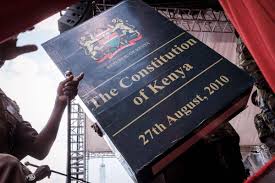
Mr. Wilkins Ochoki, the Chairman of the Law Society of Kenya South West Branch, says the Constitution, which prohibits all forms of discrimination, allows children to inherit land from their parents.
“Written laws take precedence over customary laws and, therefore, traditional beliefs are not considered in succession matters,” says Mr. Ochoki, “Matrimonial Property and Law of Succession (Amendment) Acts do not advocate for one to be disinherited of their land and property because of gender.”
Dr. Bernard Mogesa, Kenya National Commission on Human Rights (KNCHR) Chief Executive Officer, says lack of enforcement of the laws on land ownership by women remains the greatest challenge.
He attributes the situation to, among others, low levels of awareness among women.
“Even where remedies are available, the wheels of justice turn very slowly because the Judiciary is faced with an ever-increasing caseload and securing remedial action from the courts takes many years,” he says.
He adds that Alternative Dispute Resolution (ADR) system is in many instances dismissed by the parties that lose their cases thereby reducing its application.
He says amendments are being made to the Succession Act to render some cultural practices, such as widow inheritance and ritual cleansing, illegal in Kenya.
“The amendments will see the provision on protection of widows from immediate eviction from their matrimonial homes included,” he says.
The law will include protection of their property rights, access to socio-economic opportunities and protection against outlawed cultural practices
Solution
Mr Ochoki and Mr Machera say the long-term solution to the problem is for couples to have a Will.
Similar Posts by The Mt Kenya Times:
- Pan-African leaders call for borderless Africa and urgent continental unity
- Pan-African leader calls for unity, youth empowerment and economic transformation
- Wantam or Tutam: The then what next?
- Gachagua escalates war with Ruto, questions his security
- Uhuru draws the line
About the Author