Private Security Actors, Should Embrace Public Participation Forums
 The Mt Kenya Times
By: Dennis Wendo
Worth Noting:
- Judiciously, chapter 8 of the Constitution of Kenya, establishes the legislature as the grand law-making body. Article 94(5) precludes all other persons or bodies from making provisions except under authority conferred by the Constitution or by legislation.
- It is only in certain isolated cases that parliament may pass an Act without making provisions relating to the essential matters of implementation. In such a scenario with the law in force, it is left to the executing body to propose provisions for the Act.
- Notably, parliament under strict supervision may also delegate its legislative authority to certain Government agencies for purposes of coming up with subsidiary legislation.
The Private Security Regulation Act, 2016 set forth regulations and a framework for cooperation between the private security services industry and the state agencies that deal with security in accordance with the values and principles set out in the Constitution of Kenya 2010.
The industry now anchored under the Ministry of Interior and National Administration established Private Security Regulatory Authority (PSRA), whose mandate is to ensure effective administration, supervision, regulation and control of all the private security services as well as formulate and enforce standards for the conduct in the republic of Kenya.
In November 2019, the parliamentary committee on delegated legislation annulled the proposed Private Security (General) Guidelines, 2019 drawn by the Ministry of Interior and meant to operationalize the Private Security Regulation Act, 2016. The committee cited a lack of public participation in the process of formulating the guidelines as the principal rationale for declining the regulations in entirety. The report was adopted by parliament.
Judiciously, chapter 8 of the Constitution of Kenya, establishes the legislature as the grand law-making body. Article 94(5) precludes all other persons or bodies from making provisions except under authority conferred by the Constitution or by legislation. It is only in certain isolated cases that parliament may pass an Act without making provisions relating to the essential matters of implementation. In such a scenario with the law in force, it is left to the executing body to propose provisions for the Act. Notably, parliament under strict supervision may also delegate its legislative authority to certain Government agencies for purposes of coming up with subsidiary legislation.
For close to 5 years, the operations of the private security industry in the country have appeared to be in vacuity. Sectoral actors have continued to apportion unending incriminations against each other and to the Government at large. These rifts and wrangles including court battles have deterred reforms in the industry.
The majority of private security service providers operate below the required minimum threshold standards. The trickle down effect has yielded preferential non- competitive tendering processes through under-cutting, minimum concern to the general welfare of workers and corruption among other vices in the sector.
Whether viewed as escapism or not, stakeholders continue to attribute the challenges and impunity in place as an output of non- existence of sectoral guidelines.
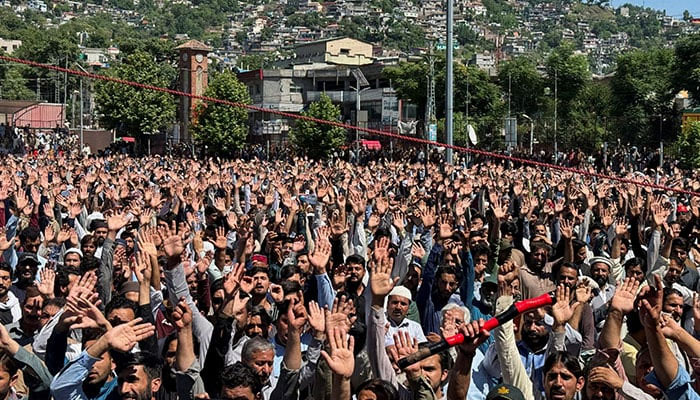
The Ministry of Interior and National Administration is re-envisioning the establishment of private security (General) guidelines, 2024 as provided for under the provisions of the Private Security Regulation Act No.13 of 2016. This is a fresh opportunity for the private security providers, employers, employees, consumers of private security services, Unions and the general public to mold the desired footpath by actively submitting their views, proposals and memoranda to the cabinet Secretary, Ministry of interior and National Administration or at any of County Commissioners offices in the 47 Counties. The window for submission is bound to elapse by 12th March 2024. All actors are on notice to provide their input in particular on clauses touching on the procedure for the appointment of members of PSRA board, the general guidelines, fidelity fund operations and use of animals in private security services.
The gravity of public participation is captured in Article 118 of the Constitution. It is therefore salient for employer associations such as KSIA, PROSAK, MSIA, PSIA, the workers Union; KNPSWU and the labor Centre; COTU(K) to conceptualize and embrace public participation as a foundational principle of democracy. It is fundamental to the functioning of a democratic system of governance as stated in chapter 1 of the Constitution of Kenya.
Notably, citizenry public participation both at the county and national government levels remains a grey area of concern and continues to be an outcry to a majority with many citing lack of awareness, involvement and deliberate skewing of such forums for self-interests. Citizen involvement in policy-making and implementation strengthens and deepens good governance. International and regional accords to which Kenya is a signatory are spurring governments to take steps to improve transparency and accountability through public participation.
Stakeholders need not to be at the fence but actively engage, critic the proposed new regulations and adopt that which is objectively addressing the concerns of the private security sector in fairness.This will go along way in realizing good governance, mechanisms of checks and balances as well as avenues of sealing corruption loopholes. It will further encourage the players to have meaningful input into the decision-making process and provide the opportunity for communication between agencies making decisions and the public.
Dennis Wendo
Integrated Development Network
Email: dambehi@gmail.com
Similar Posts by The Mt Kenya Times:
- Diaspora Times Global Sep 26 – Oct 2, 2026
- RS South Africa supports next-generation edge AI with NVIDIA Jetson Orin Nano 2
- AFRICLOUD opens Lagos region and local-currency payments across African markets
- Fine Spinners targets Kenya’s US apparel supply chain with $5m investment
- Nuclear energy debate must begin with public trust and shared responsibility
About the Author