The Commission on Revenue Allocation(CRA), Launches Model Tariffs and Pricing Policy
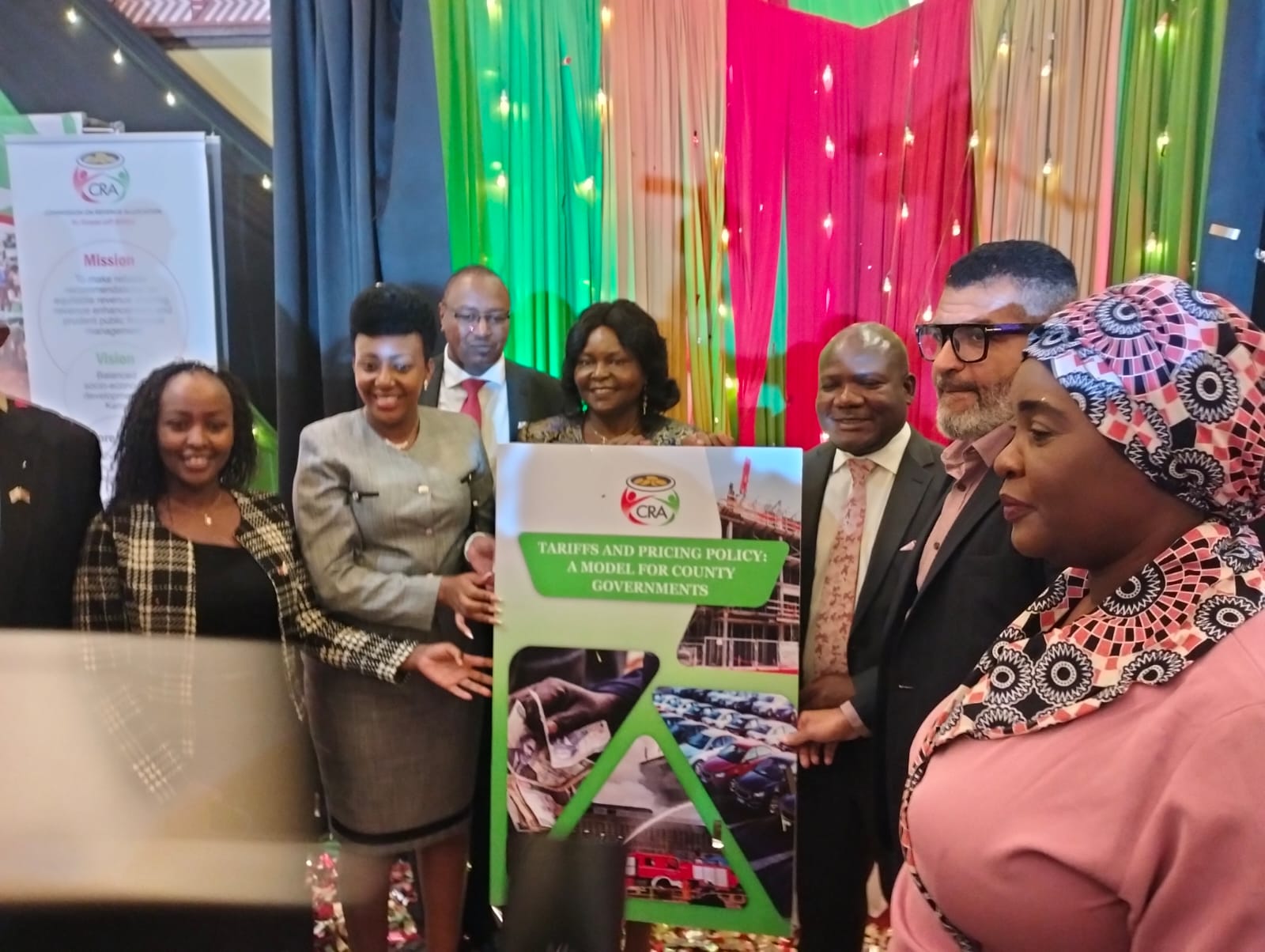
Launch of the model tarrifs and pricing policy in Nairobi
By Aoma Keziah and Cynthia Masibo,
The Commission on Revenue Allocation (CRA) has introduced a groundbreaking Model Tariffs and Pricing Policy during a high-profile event in Nairobi. This policy aims to standardize and streamline tariff structures across various sectors, enhancing equity, efficiency, and transparency in revenue generation and allocation.
The launch event drew an array of key stakeholders, including government officials, county representatives, industry leaders, and civil society members. The new policy promises a comprehensive framework for setting and regulating tariffs, ensuring that pricing is fair and accurately reflects the cost of services provided.
In his keynote address, Governor Ferdinand Barasa, representing the Chairperson of the Council of Governors (COG), Ann Waiguru, emphasized the policy’s importance in bridging gaps and enhancing revenue potential. Barasa highlighted the need for equitable tariff structures to foster better service delivery and economic development. He also called on the Kenya Revenue Authority (KRA) to reconsider the high Value-Added Tax (VAT) rates, which have been a burden on both consumers and service providers.
“This policy will provide a much-needed framework for us to manage and regulate tariffs more effectively. It will also help us improve service delivery to our residents,” noted Abdullswamad Sheriff Nassir, Governor of Mombasa County. County representatives expressed strong support for the initiative, seeing it as a critical tool to address disparities in service delivery and revenue collection.
The policy outlines detailed guidelines for setting tariffs in essential sectors such as water, electricity, transportation, and telecommunications. It includes provisions for periodic reviews to ensure tariffs remain aligned with evolving economic conditions and cost structures. This dynamic approach is intended to keep tariffs fair and reflective of actual service costs, promoting sustainability and customer satisfaction.
Governor Barasa also addressed issues related to land rates and the adjustment of revenue schemes, emphasizing the importance of counties preparing their finance bills and managing their own-source revenue within their budgets. These measures are crucial for the financial autonomy and efficient governance of counties.
The CRA has committed to a collaborative approach for the policy’s implementation, involving all stakeholders to ensure a smooth transition. To facilitate this, the CRA will conduct training sessions and workshops to educate relevant personnel on the new guidelines and procedures. This initiative aims to build capacity and ensure that the policy is applied uniformly across all sectors and regions.
As Kenya moves forward with this Model Tariffs and Pricing Policy, it is expected to play a pivotal role in enhancing revenue mobilization, promoting fairness in service delivery, and supporting the overall economic development of the nation. The policy represents a significant step towards a more equitable and efficient system of revenue generation and allocation, benefiting both service providers and consumers.
The launch marks the beginning of a new era in Kenya’s approach to tariff and pricing policy, with the CRA at the forefront of ensuring that the principles of fairness, transparency, and efficiency are upheld in the country’s economic framework.
Similar Posts by Aoma Keziah:
- Nationwide Youth Business Drive Enters Last Lap With New Nyota Trainings
- Green Light From Washington Sets G42 On Fast Track to Build Region’s Most Powerful AI Network
- Safina Eyes Kariobangi North Seat in Intensified Push Before Poll Day
- KEBS Opens Talks With Manufacturers On New Standards Levy Order 2025
- Kenya, Uganda And South Sudan Chart Way Forward On East Africa Rail Corridor
About the Author

 The Mt Kenya Times