Lawyer Mbiyu Kamau calls on UK and Kenya to review defence partnership
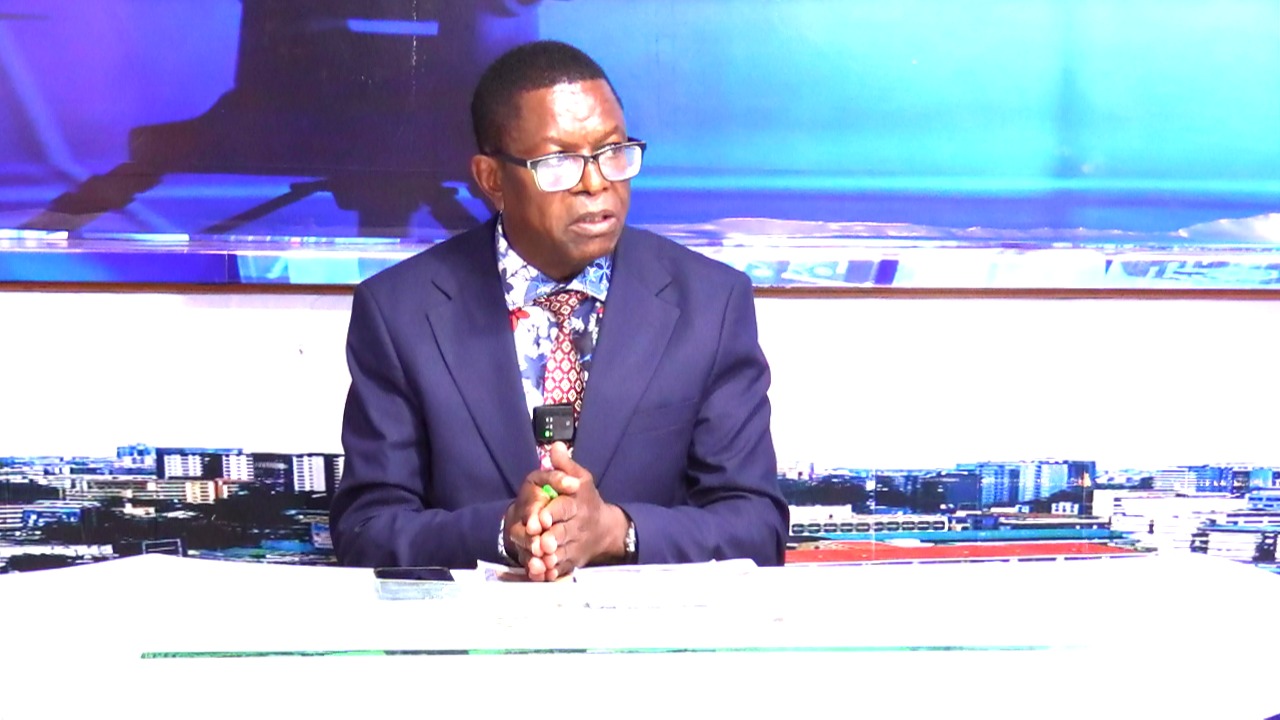
Lawyer Mbiyu Wa Kamau during the interview with RT TV. Photo/courtesy.
By MKT Reporter
Human rights lawyer Mbiyu Kamau has challenged the governments of Kenya and United Kingdom to review their partnership in the wake of reports that sexual exploitation and abuse continues to be meted against residents by the foreign soldiers training in the country.
Kamau says that despite the British government announcing a zero-tolerance policy, no soldier has been dismissed for sexual abuse in the Kenya.
In an interview with Moscow based RT Television, Kamau, an ardent human rights crusader, said it is time the defence partnership was reviewed to make Kenya has more say on what should be done to British soldiers who commit sexual atrocities when in the country.
He noted that although there were financial benefits that Kenya was getting from the British soldiers training in the Kenyan soil and were many UK firms based in the country and providing jobs to citizens, such cooperation should not be construed to mean some people were more superior than others.
“Cooperation should not be taken that some people are more superior than others. The host country should be the one to dictate on what should be done to those who violate laws,” Kamau said.
Agnes Wanjiru case and justice concerns
The lawyer has been representing the family of Agnes Wanjiru who was sexually abused, murdered and her body dumped into a septic tank in Nanyuki by a British solder in 2012.
The case on the soldier’s extradition is set for hearing in November.
“No money is enough to buy human dignity,” Kamau said, adding that there is no amount of money that can be equitted with human dignity.
Push for accountability and Kenyan oversight
Kenya and UK are set to review the Defence partnership this year.
The lawyer said that during the review proces, those concerned should clearly address the failure to honour the zero-tolerance policy as it seems to be non-existence now.
Kamau who is credited by many Kenyans for daring to pursue the UK soldier case said he hoped to introduce a motion in Parliament seeking to have Kenya have more say on what happens on their land as compared to where foreigners dictate.
This, he said will be done in the next parliament, once he secures the Juja parliamentary seat which he has declared interest in.
The last Kenya-UK Defence Cooperation agreement, signed in 2021, allows up to 10,000 troops a year to train at British Army Training Unit (BATUK) in Nanyuki.
Inquiry findings and gaps in enforcement
The interview was based in an internal inquiry into the conduct of foreign military personnel stationed in Kenya between July 2022 and June 2025 that identified multiple allegations of sexual exploitation and abuse (SEA).
In the Sennen inquiry, it was revealed that a total of 35 reported cases were recorded during this period, all of which were investigated under existing defence policies that mandate zero tolerance for such behavior.
The governing policy framework explicitly defines Sexual Exploitation and Abuse (SEA) as unacceptable conduct and establishes a general presumption that personnel found responsible should face termination of service.
It also requires that all allegations be investigated promptly and thoroughly. Despite these provisions, none of the investigated cases resulted in dismissal from service.
While some individuals were subject to disciplinary measures, all were allowed to remain in the armed forces.
Existing rules permit exceptions to dismissal in certain circumstances, provided they are authorized at a senior level.
Concerns over reporting, enforcement and credibility
The findings raise concerns about the consistency between policy and practice. Although the framework emphasizes strict accountability, the absence of dismissals suggests that enforcement may be more flexible than intended. This has led to questions about whether the “zero-tolerance” approach is effectively implemented or whether outcomes are determined on a case-by-case basis that allows leniency.
Further concerns relate to the relatively low number of reported cases.
 It is suggested that the true scale of the issue may be underrepresented due to systemic challenges in reporting. The current approach relies heavily on internal reporting mechanisms and whistleblowing, which may not consistently capture incidents. Additionally, barriers such as lack of incentives, fear of repercussions, and difficulties in proving allegations may discourage victims or witnesses from coming forward.
The inquiry also indicates that transactional sexual activity involving personnel may still be occurring, despite the introduction of stricter policies. This suggests ongoing gaps in prevention, monitoring, and enforcement mechanisms. As a result, the issue is not only one of individual misconduct but also of institutional effectiveness and credibility.
The situation has broader implications for international defence cooperation and public trust.
Ongoing negotiations regarding military partnerships have brought increased scrutiny to accountability measures and legal frameworks governing foreign troops. In particular, questions have been raised about whether existing systems adequately ensure justice for affected individuals and communities.
Criticism has focused on the perceived gap between investigative processes and tangible outcomes. Concerns include the possibility that investigations may result in administrative responses rather than legal or disciplinary consequences that reflect the seriousness of the allegations. This has implications for deterrence, victim confidence, and the overall integrity of institutional responses.
In response, measures have been introduced to strengthen oversight and prevention.
These include mandatory training on SEA prior to deployment and updated operational guidelines reinforcing expected standards of conduct. Authorities have also stated a commitment to continuous review of policies to ensure that enforcement aligns with stated principles.
Overall, the findings highlight tensions between policy intent and practical outcomes, as well as structural challenges in addressing and preventing sexual exploitation and abuse. The situation underscores the need for stronger accountability mechanisms, improved reporting systems, and clearer alignment between disciplinary actions and established zero-tolerance commitments.
Similar Posts by The Mt Kenya Times:
- Seven women’s rights organisations in Africa launch coalition for gender equality and media sustainability
- Carrying babies while studying: The real struggles of student parents on Kenyan campuses
- Ruto: Why are some African leaders hesitating on the Lamu refinery?
- Your certificate has no power of its own: It borrows power from the brand you are killing
- Kinoti Marete backs Samburu security operation, rallies Meru aspirants to PPK
About the Author