The Mt Kenya Times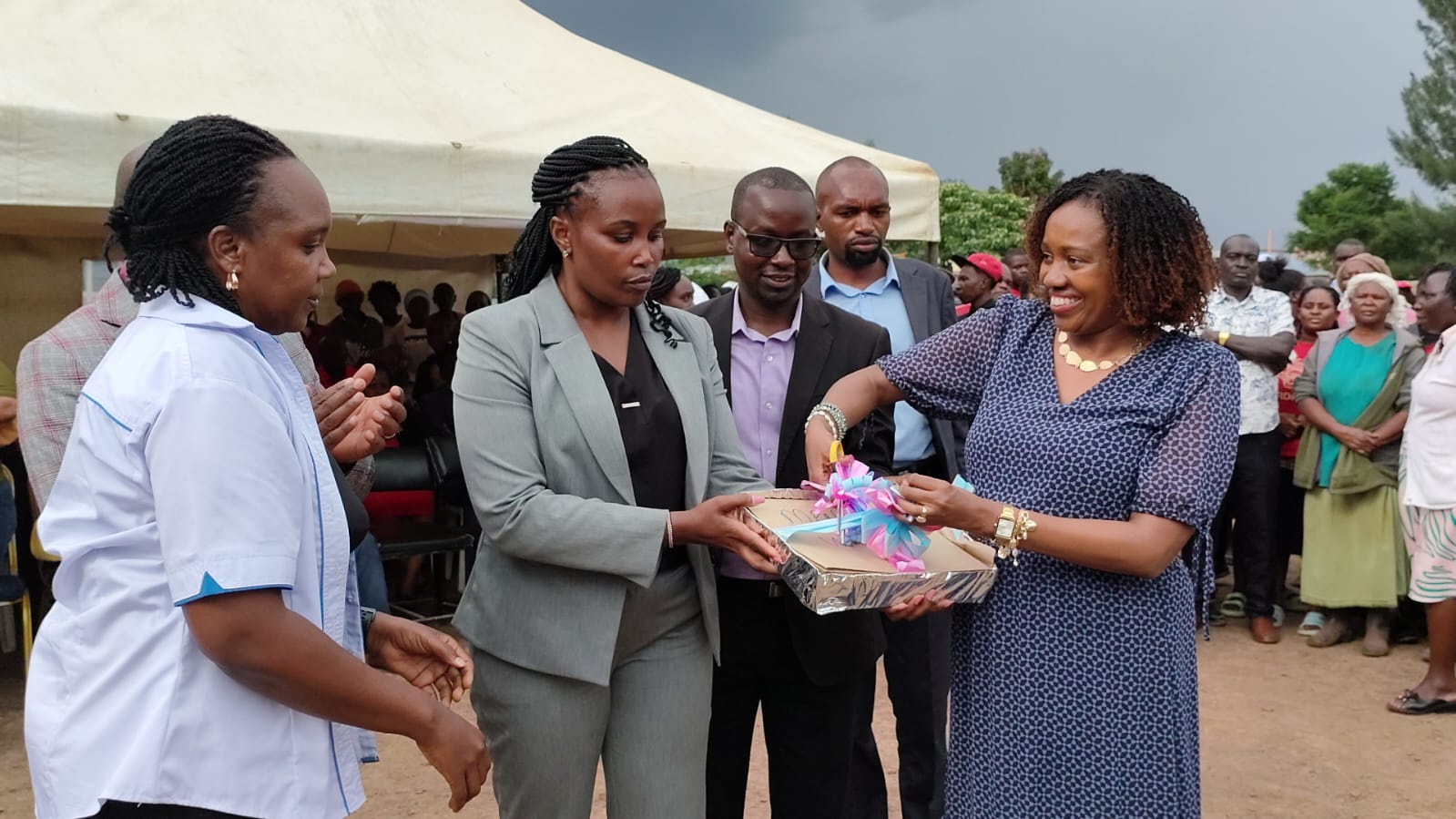
Governor Susan Kihika launching bursary distribution drive. Photo/Suleiman Mbatiah

By Suleiman Mbatiah
Nakuru County has increased its bursary allocation to KSh447 million for the 2025/2026 financial year, releasing KSh284.4 million to more than 57,000 learners to expand access and curb dropout rates.
The first tranche reached 57,231 beneficiaries across universities, colleges, vocational centres, secondary schools, and special institutions, ensuring coverage across all eleven sub-counties in a broad effort to strengthen equitable education access.
The allocation rises from KSh440 million last year and more than doubles the KSh177.8 million disbursed during Governor Susan Kihika’s first year, signalling sustained prioritisation of education financing and learner support.
Beyond bursaries, the county awarded 69 full scholarships across various education levels, with Naivasha receiving 13, Bahati 12, Rongai 10, Subukia eight, and Nakuru Town West five among other sub-counties.
“This milestone reflects our unwavering commitment to Expanding access to education and ensuring that no child in Nakuru County is left behind due to financial constraints,” Governor Kihika said.
Secondary school students formed the largest share, with 42,724 learners receiving KSh163.4 million, followed by 4,719 university students receiving KSh33.7 million and 5,655 college students awarded KSh44.9 million.
Vocational trainees numbering 3,477 and 656 learners in special schools also benefited, reinforcing the county’s commitment to inclusive education by supporting learners with diverse needs through targeted financial and institutional interventions.
At sub-county level, Naivasha received the highest allocation, with 8,300 students sharing KSh43.1 million, followed by Njoro with 6,703 beneficiaries receiving Kshs 31.5 million and Nakuru Town West allocations.
Bahati Sub-County recorded 5,885 beneficiaries receiving KSh25.6 million, while ward-level distribution saw Kiamaina, Lanet/Umoja, and Bahati wards leading in allocations, reflecting targeted support to high-need and densely populated areas.
The programme targets improved access, retention, completion, and transition rates across education levels, while mitigating poverty, supporting special needs learners, and promoting vocational training to enhance youth employment and practical skill acquisition.
“We must not allow bright, promising minds to fade away due to lack of opportunity,” Kihika said, emphasising the need for collective responsibility among stakeholders to sustain education access and long-term learner success.
In early childhood education, the county manages 1,073 ECDE centres and has constructed 230 classrooms, 82 toilets, equipped 311 classrooms, and built 12 kitchens to improve learning environments.
An enriched daily porridge programme boosted ECDE enrolment from 58,000 to 66,000 learners, alongside provision of KSh17 million in instructional materials and employment of 192 teachers while confirming 306 others.
More than 3,000 teachers undergo annual Competency-Based Curriculum training, with the county investing in continuous professional development to ensure alignment with national standards and consistent quality across early learning institutions.
In vocational training, the county disbursed over KSh480 million in capitation grants, provided tools worth KSh67 million, and invested over KSh120 million in workshops, training rooms, and dormitories.
Training centres increased from 33 to 43, with enrolment rising from 2,000 to 6,850 trainees, while more than 4,000 graduated in 2024 and over 3,000 are expected to graduate in November 2026.
The county has integrated digital learning, modernised training programmes, and partnered with international organisations to align courses with labour market demand, while expanding co-curricular participation to national level competitions.
“Education remains the most powerful tool we can use to transform lives and shape the future of our county,” Kihika said, urging broader partnerships to support inclusive and sustainable education development.
Similar Posts by The Mt Kenya Times:
- Sengwer youth: When will Kenya stop treating a minority like an afterthought?
- When young lives become disposable
- The day death refused to be scammed
- Statement win at the Gtech: Brentford outclass Chelsea to claim all three points
- When disability funds become a frontier for accountability: Kenya’s PWDs refuse to be invisible
About the Author