
UDRM-A And NPM/NPDF Has Sparked Significant Controversy About The Credibility Of The Mediation

By: John Kariuki
Worth Noting:
- The expulsion of these movements has raised alarms about the impartiality and inclusiveness of the Tumaini Peace Initiative. Many believe that the decision undermines the spirit of inclusivity that is essential for a credible peace process. The leadership crisis within SSUNA should not, in the view of UDRM and NPM, justify the termination of any party’s participation in the peace talks, especially when these differences have no adverse effect on the peace process itself.
- The parties are calling on the mediation leadership and the Government of Kenya to intervene and resolve this issue amicably. They urge the mediators to allow UDRM and NPM to participate as independent movements, which they believe will restore trust and enhance the credibility of the peace initiative.
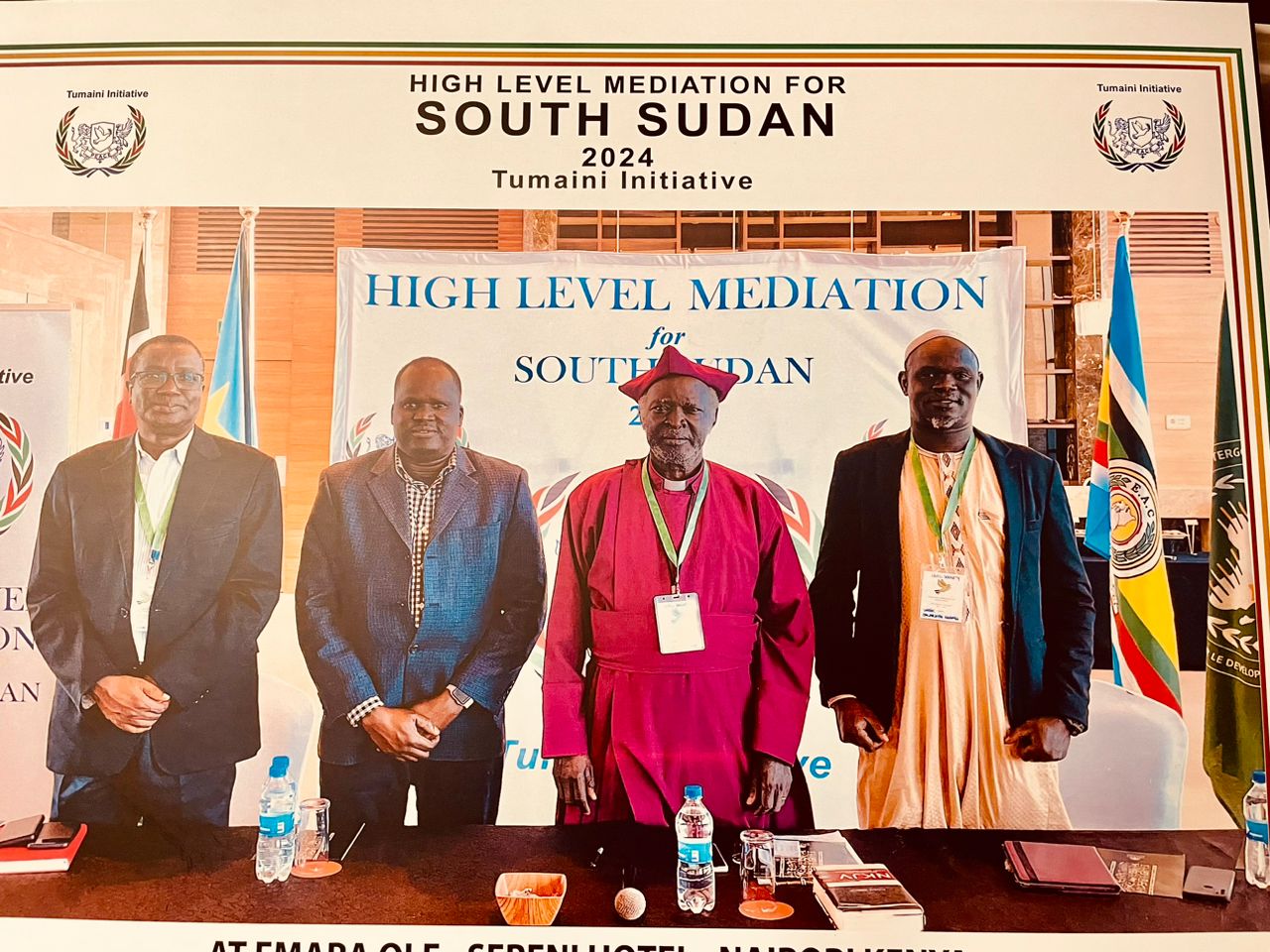
The recent expulsion of the United Democratic Revolutionary Movement/Army (UDRM-A) and the Nailotia Peoples Movement (NPM/NPDF) from the Tumaini Initiative of High Level Mediation has sparked significant controversy and raised serious questions about the credibility of the mediation process both regionally and internationally.
The Tumaini Peace Initiative, aimed at fostering peace and stability in South Sudan, has faced a setback following the exclusion of these two significant opposition movements. The expulsion was reportedly influenced by internal leadership conflicts within the South Sudan United National Alliance (SSUNA), a coalition that includes the SSPM/A, UDRM-A, NPM/NPDF, and the National People’s Movement.
According to Honorable Dr. Joseph Madak, Secretary General and Chief Mediator, the decision to remove UDRM-A and NPM/NPDF was driven by leadership issues within SSUNA, where decisions were made without the inclusion of all leaders representing the alliance’s movements. This has been perceived as a move influenced by the SSUNA Chairman, rather than an impartial mediation effort, leading to a substantial erosion of trust in the process.
The UDRM, which had formally withdrawn from SSUNA citing lack of inclusivity, had requested to be included in the peace talks as an independent entity. This request, however, was denied by the mediation leadership, causing discontent among the expelled parties. UDRM and NPM have expressed their unwavering commitment to the peace process and have rejected their expulsion, labeling it as unfair and procedurally flawed. They argue that they were not given the opportunity to discuss their withdrawal from SSUNA with the mediation team, a step they consider crucial for transparent and fair mediation.
The expulsion of these movements has raised alarms about the impartiality and inclusiveness of the Tumaini Peace Initiative. Many believe that the decision undermines the spirit of inclusivity that is essential for a credible peace process. The leadership crisis within SSUNA should not, in the view of UDRM and NPM, justify the termination of any party’s participation in the peace talks, especially when these differences have no adverse effect on the peace process itself.
The parties are calling on the mediation leadership and the Government of Kenya to intervene and resolve this issue amicably. They urge the mediators to allow UDRM and NPM to participate as independent movements, which they believe will restore trust and enhance the credibility of the peace initiative. This inclusion is seen as vital not only for the South Sudanese people but also for the regional and international communities invested in South Sudan’s stability.
In a joint statement, the leaders of UDRM and NPM appealed to President Salva Kiir Mayardit of South Sudan and President William Ruto of Kenya, emphasizing that the peace process, initiated in good faith, is now at risk of being co-opted by a few opposition groups with narrow agendas. They warned that the current trajectory could derail the efforts to achieve lasting peace in South Sudan, urging donor communities to take note of the process’s deviation from its intended inclusive approach.
The expulsion, dated June 11, 2024, by Chief Mediator General Lazarus Sumbeiywo (Rtd.), has indeed placed the Tumaini Peace Initiative in a precarious position. If unresolved, this decision could severely impact the initiative’s standing and effectiveness, casting doubts on its ability to mediate complex conflicts impartially and inclusively.
The call for an inclusive and fair mediation process remains strong, with many advocating that the only path to genuine peace in South Sudan lies in the representation and participation of all relevant parties, free from political maneuvering.
Similar Posts by The Mt Kenya Times:
- Mt Kenya Times ePAPER October 17-18, 2026
- Ruto bets billions on Kerio Valley — with one eye on 2027
- Ruto’s health ministry kills Murang’a’s digital hospitals
- Kenya bets on Mount Kenya to drive a billion-shilling tourism revival
- Do you have a wealth vision? Or are you just working until you die?
About the Author

Raila Odinga: From an Ethnic Luo Kingpin to Kenya Statesman and People’s President
Prof. Deng Vanang
October 15th, 2025 to go down the memory lane of history. Not Kenya’s history. It is world’s history embodying kenya. The history of sombre reflection on the exemplary life, life-threatening struggles and sudden passing of Kenya’s Greatest patriot, pre-eminent giant of the Greater Nilotic family of East-West Africa, devoted Pan-Africanist and world class politician, Rt. Honorable Raila Amolo Odinga.
Raila delved deep into Kenyan nation conscience. He was Kenya personified in epitomizing suffering for the common man with magnanimity and immortalizing his life in Kenya’s struggle for social justice embedded in democracy, while turning arch-rivals without bitterness into close allies as he was inspiring hope for millions of Kenyan poor yearning for a better future.
He left behind a big family he tutored and inspired that crisscrosses vast lands and high seas stretching from Africa to Asia, America to Europe and Australia to mideast.
A truly homegrown son of Great rift valley of East Africa lying beneath the twin mounts of Kenya and Elgon towering over and above the calmly flowing Great Lake Victoria.
In this beautifully shaped diverse family are billions of students in Raila extra-ordinary large, open and free of charge university of liberation politics no physical space on earth can accommodate.
Where the teacher was none other than Raila. His chalk was the word and black board his enigma.
All contained political accumens weaved in strategies and tactics to combat common man daily struggles that subsumed his 40 years tireless political sojourn.
His next acrobatic moves in the face of imposibilitties turned possibilities became the subject of political discourse and vetting.
He scaled the heights from the rock bottom of an abrasive, fiery ethnic Luo politician of the 1990s up to Raila the Kenya’s polished statesman and the people’s president in the turn and quarter of the century. I christened this acrobatic long jump Raila Odinga’s political miracle.
His star rose up sky high and shone brighter when he piggybacked physically incapacitated Emilio Mwai Kibaki to power as Republic of Kenya’s 3rd President upon retirement of long serving President Daniel Torotich Arap Moi in 2002.
In Kenya as second home to millions of fellow South Sudanese, I experienced the Harambee enduring legacy of Grand Jomo, unifying peaceful warmth of Daniel Moi’s Nyayo, Kibaki’s economic leap forward, Uhuru gentlemanly politics, Ruto galvanizing oratory and Raila Odinga’s breathtaking social justice crusade. Became living witness of dynamic politics of young turks among whom Raila Odinga, George Anyona, Michael Kijana Wamalwa, Professor Peter Anyang Nyong’o, James Orengo, Paul Muite, Kiraitu Murungi, Gitobu Imanyara, Mukhisa Kituiy were the senior most. It is not an exclusive men’s club shaping Kenya alone into mesmerizing wonder it is today. Some notable and fearless women of high calibre were and are still in tow in late Professor Wangari Maathai of green belt movement, Martha Karua and Charity Ngilu. Not forgetting Dr. Stephen Kalonzo Musyoka who in 2002 with his fine touch of servant leadership crossed over from ruling KANU to claim his rightful space in the young turks corner that was gradually growing older in age, social stature and immense political influence. Outside Raila’s open classroom sessions, I and fellow South Sudanese have known Raila’s Kenya as land of many firsts in discovery as a cradle of mankind and in innovation through revolutionary banking in Mpessa. While to Africa, a beacon of Africa second liberation and hard-won democracy thanks to Odinga family’s combined patriotism and zeal in the face of once sustained physical perils, social isolation and economic deprivation. Raila’s Kenya is where the world’s second and Africa’s longest civil war was brought to an end through an equally more complex, but successfully implemented and concluded Sudan’s Comprehensive Peace Agreement, CPA in 2005 that culminated in today’s independent South Sudan attributed to Moi’s loving kindness, Kalonzo Musyoka stud diplomacy and Major-Gen Lazarus Sumbeiywo’s military discipline.
Raila’s Kenya is intertwined in destiny with South Sudan in a variety of more obvious ways beyond culture and memory. South sudan is kenya and kenya is South Sudan. We both share the land border and Great Lake Victoria sourcing the Mighty River Nile and delicious Nile perch, shifting sands of Ilemi Triangle and hallow of Gregory rift, gains and losses, ancestry and families, home and away longings and feelings.
The same home and away feelings and longings I and many silent, but grieving South Sudanese share today to say sorry for unexpected departure of our leader, elder and father figure Tinga, Jakom, nyundo, Agwambo, ROA and finally Baba the Statesman, the Right Honorable Prime Minister Raila Amolo Odinga.
Last but not least, people of Kenya remember Raila and entire Odinga family’s good deeds than a few bad ones.
Take note one day, one time of repaying Odinga family with desired servant leadership Raila and father Jaramogi couldn’t secure when alive as the only reward they can appreciate and bless with fullness of their hearts, while looking down over Kenya in spirit.
God bless Kenya! God bless South Sudan!
Prof. Deng Vanang
Chairman, United Democratic Revolutionary Movement, UDRM,
Co-Chair, Coalition of South Sudan Opposition Movements, CSSOM
E-mail: dvanang@gmail.com
Thanks once again Mount Kenya Time for covering this milestone political news story.
Prof. Deng Vanang
Chairman, United Democratic Revolutionary Movement – UDRM