Passion Fruit Juice

By: Lawrence Mutegi
Worth Noting:
- Passion fruit vines are usually grown from seeds. After planting, the seeds germinate in 2-3 weeks. The seedlings are transplanted when they are 25cm high.
- Training is vital in regulating yield and supporting the vine during its economic life. The vines are trained to a single unbranched shoot from the base of the plant up to the trellis height. At this point, the two vigorous shoots are allowed to grow on the trellis in opposite directions. Pruning of vines encourages new growth resulting in a standard and higher yield of fruits. Pruning is usually done after the fruits are harvested.
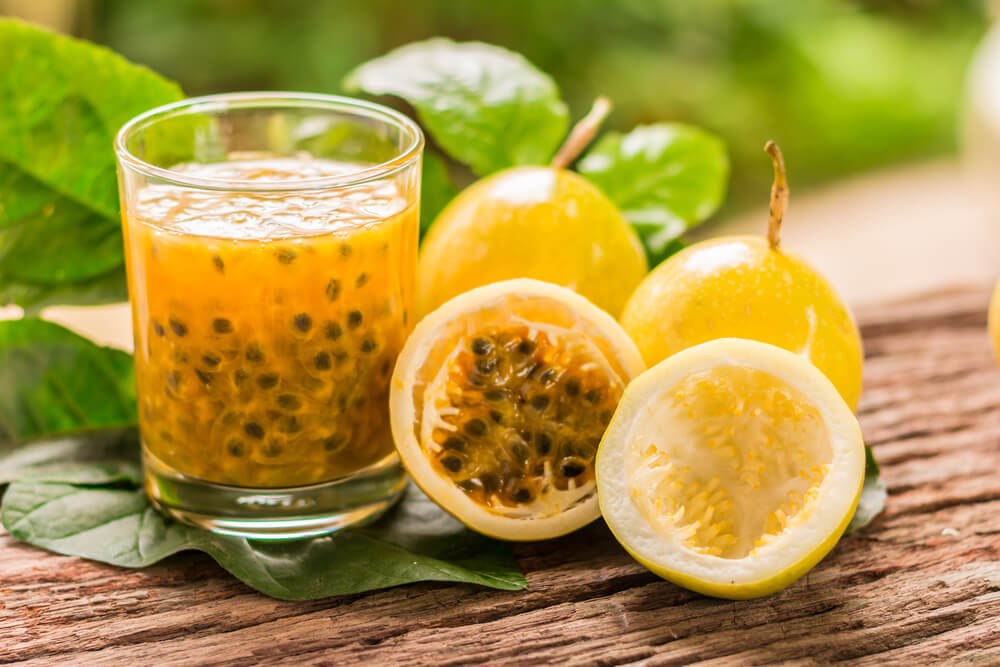
The passion fruit (passiflora edulis), the family Passifloraceae, is a fruit native to Brazil. There are two main types of passion fruit; yellow and purple passion. The purple fruit has a better aroma and flavor and has a slightly higher juice content. The yellow passion fruit has a more vigorous vine, and the fruit usually is larger than the purple variety with a thicker fruit wall.
Description
The passion fruit is a vigorous climbing vine that clings by the tendrils to almost any support.
It can grow 15-20 ft.
Climatic requirements
They prefer moderate temperatures throughout the year and are sensitive to severe frost. The average maximum temperature should not exceed 290c; they prefer high relative humidity and a well-distributed rainfall of not less than 1200mm/year.
Soil requirements
The passion may grow on many soil types, but light-heavy sandy loams with a pH of 6.5-7.5. Deep soil preparation is essential because shallow root systems in compacted soils. Soil should be thoroughly prepared to improve the drainage because the plants are sensitive to wet soils. The soil should be rich in organic matter and low in salts. If the grounds are too acidic, lime should be added to reduce the acidity.
Preparation of land
Planting sites experiencing high winds should be avoided as the wind damages the vines and makes it more challenging to train them to the trellis. Pits of 45cm*45cm are dug at a spacing of 3m*2m. The holes are filled with a mixture of three parts of topsoil and one piece of manure.
Propagation
Passion fruit vines are usually grown from seeds. After planting, the seeds germinate in 2-3 weeks. The seedlings are transplanted when they are 25cm high.
Training and pruning
Training is vital in regulating yield and supporting the vine during its economic life. The vines are trained to a single unbranched shoot from the base of the plant up to the trellis height. At this point, the two vigorous shoots are allowed to grow on the trellis in opposite directions. Pruning of vines encourages new growth resulting in a standard and higher yield of fruits. Pruning is usually done after the fruits are harvested.
Pest and diseases
The fruit fly punctures the immature fruits during development. The affected fruits become woody and deformed, reducing pulp content. Spider mites feed on leaves, and tender fruits lead to defoliation and the formation of tiny leaves. Thrips can also lead to the deformation of fruits and reduced weight and pulp content. Diseases that can affect plants include wilt, brown spot disease, and root rot.
Harvesting
The vines start bearing fruits at 10 months of planting and reach optimum by 16-18 months. The fruit matures about 75 days after flowering and will fall naturally to the ground. As the fruit ripens, the skin color will change from green to purple or yellow, depending on the variety of the passion fruit. The fruit is harvested manually by cutting or clipping the fruit off the vine.
Uses of the passion fruit.
The fruit is eaten when ripe. It is also used in fruit salads and beverages. Seeds can also be used to make oil for domestic and industrial uses. In Kenya, a kilogram of the fruits goes for about Ksh.70-100.
Similar Posts by The Mt Kenya Times:
- Mt Kenya Times ePAPER October 26, 2026
- Sakaja challenges Kamukunji police over Eastleigh suspect bail
- Muturi demands binding livestreaming rules for 2027 polls to prevent repeat of 2022 chaos
- NTSA calls for road safety to be declared a national disaster after 24 die in Mtito Andei crash
- Ruku turns on Waiguru over deputy president ambitions: ‘That seat is not being contested for’
About the Author